ADVERTISEMENT
Midnight Sanctuary: Designing a Moody Bedroom for Deep Sleep
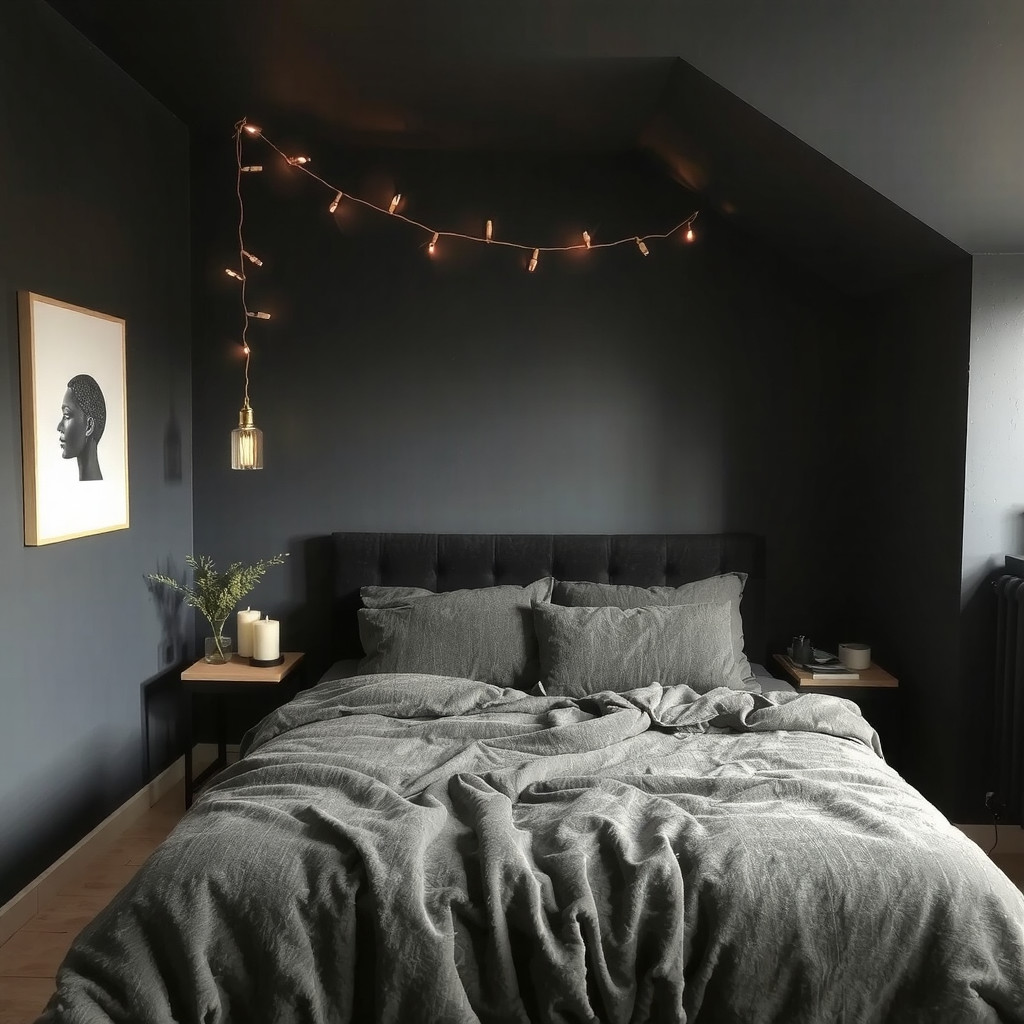
Forget the age-old advice that small spaces must be white and bright. When it comes to the bedroom, the goal is not to expand the space visually, but to deepen the quality of rest it provides. Embracing dark, moody hues creates a cocoon-like effect that signals to your brain that it is time to unwind. By enveloping yourself in shadows—think midnight blues, charcoal grays, and forest greens—you create a physical boundary against the chaos of the day.
Layout and Positioning
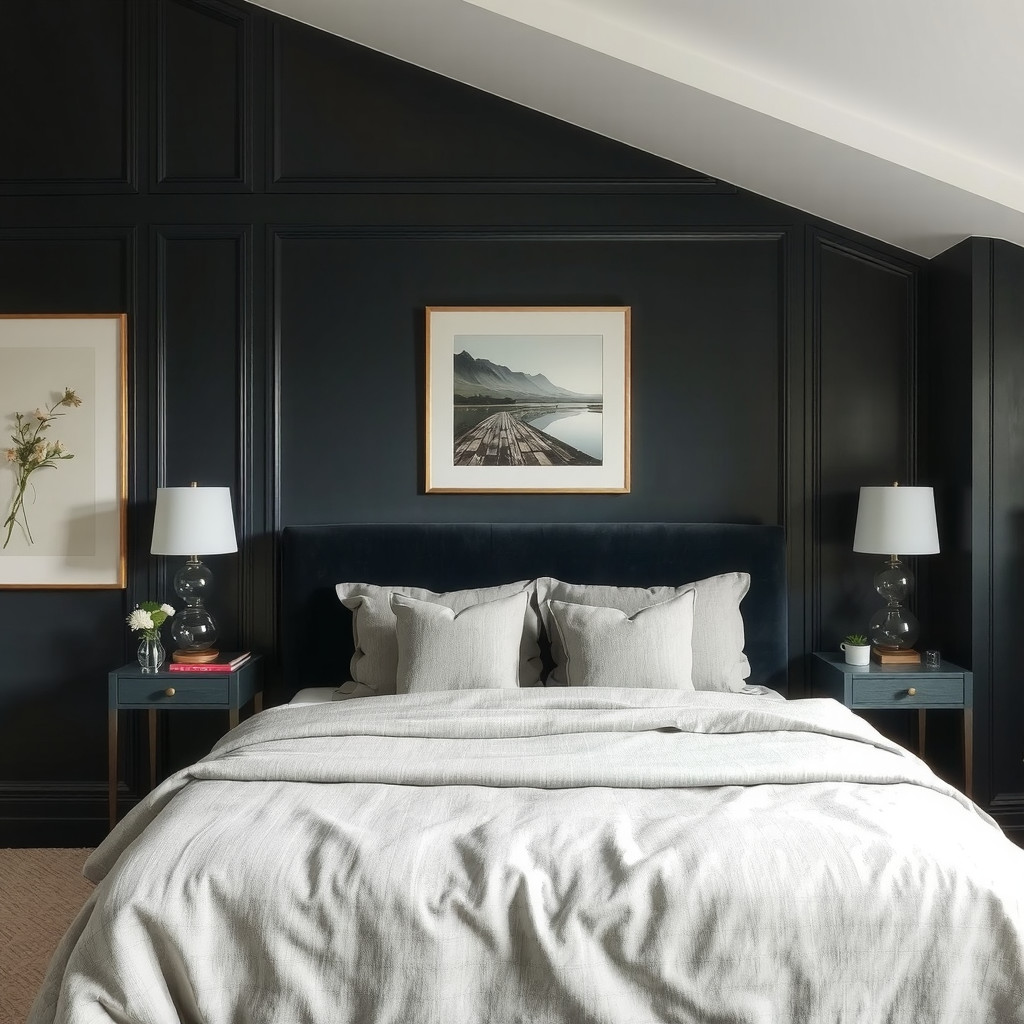
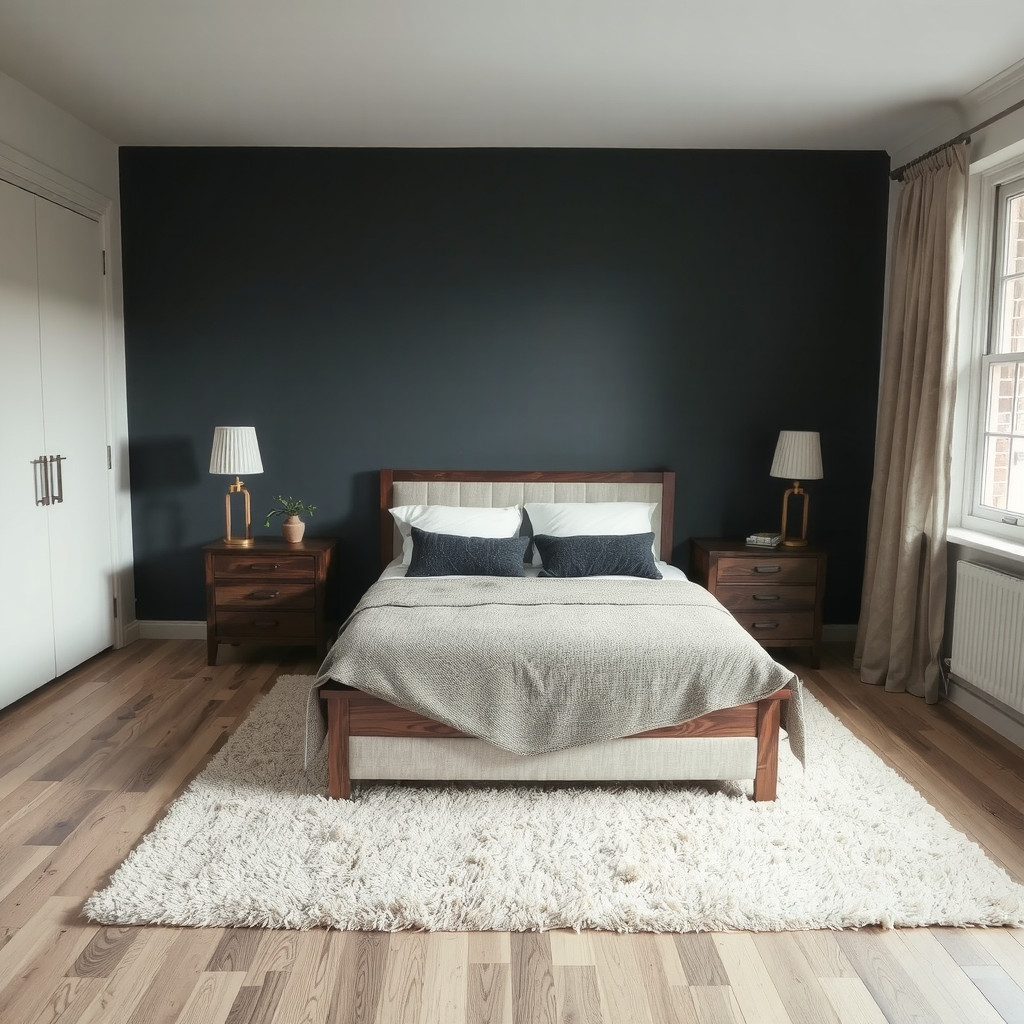
In a room dominated by dark colors, the arrangement of furniture becomes the skeletal structure that holds the design together. Because dark walls can visually advance, making the room feel more intimate, it is vital to maintain a sense of flow. Center your bed as the undisputed anchor of the space. Ensure there is ample walking room on either side to prevent the “cave” effect from becoming claustrophobic.
Keep the perimeter relatively clear. Unlike airy rooms where clutter can sometimes blend in, in a dark room, silhouettes are stark. Use low-profile furniture to allow the expanse of the dark walls to stretch upwards, creating an illusion of height even in a cozy setting.
Materials and Textiles
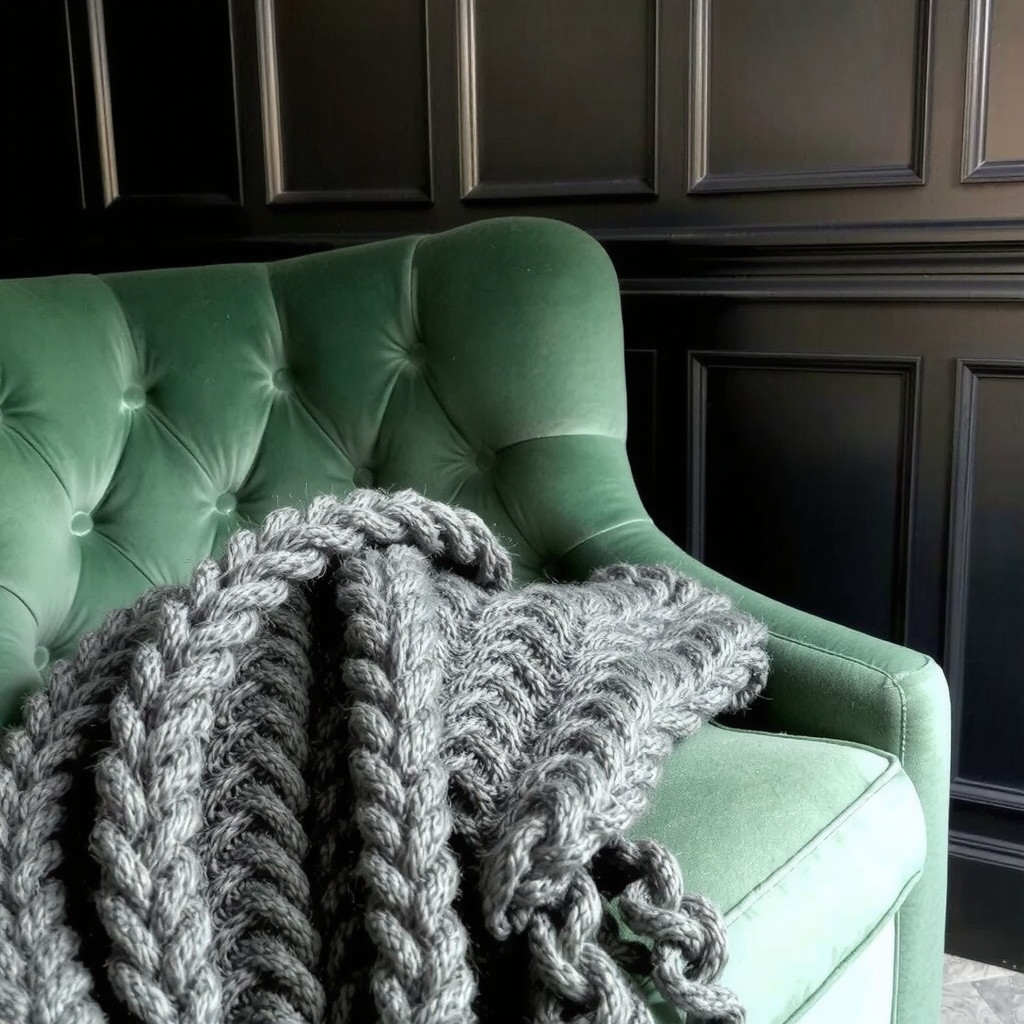
Dark paint is flat on its own; it requires texture to come alive. Without tactile variety, a dark room can feel void-like. You want to layer materials that catch the light differently. Velvet is a perfect companion for moody palettes because of its sheen and depth. Consider a tufted velvet headboard in a jewel tone that subtly contrasts with your wall color.
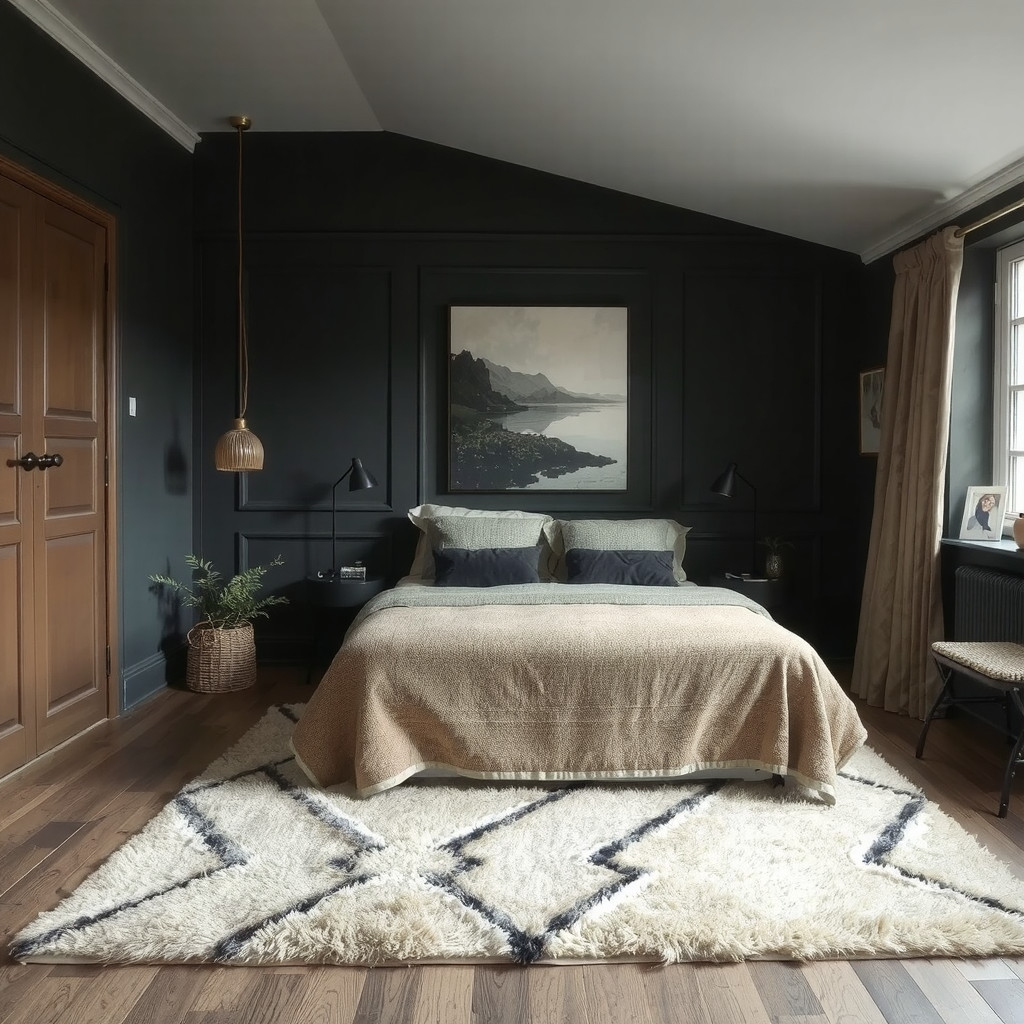
Mix these plush fabrics with natural, grounding elements. Dark stained walnut, charred timber, or even matte black metal adds necessary rigidity. For bedding, opt for washed linen in varying shades of your primary color. The wrinkled, matte finish of linen softens the severity of dark walls, inviting you to dive in.
Focal Points
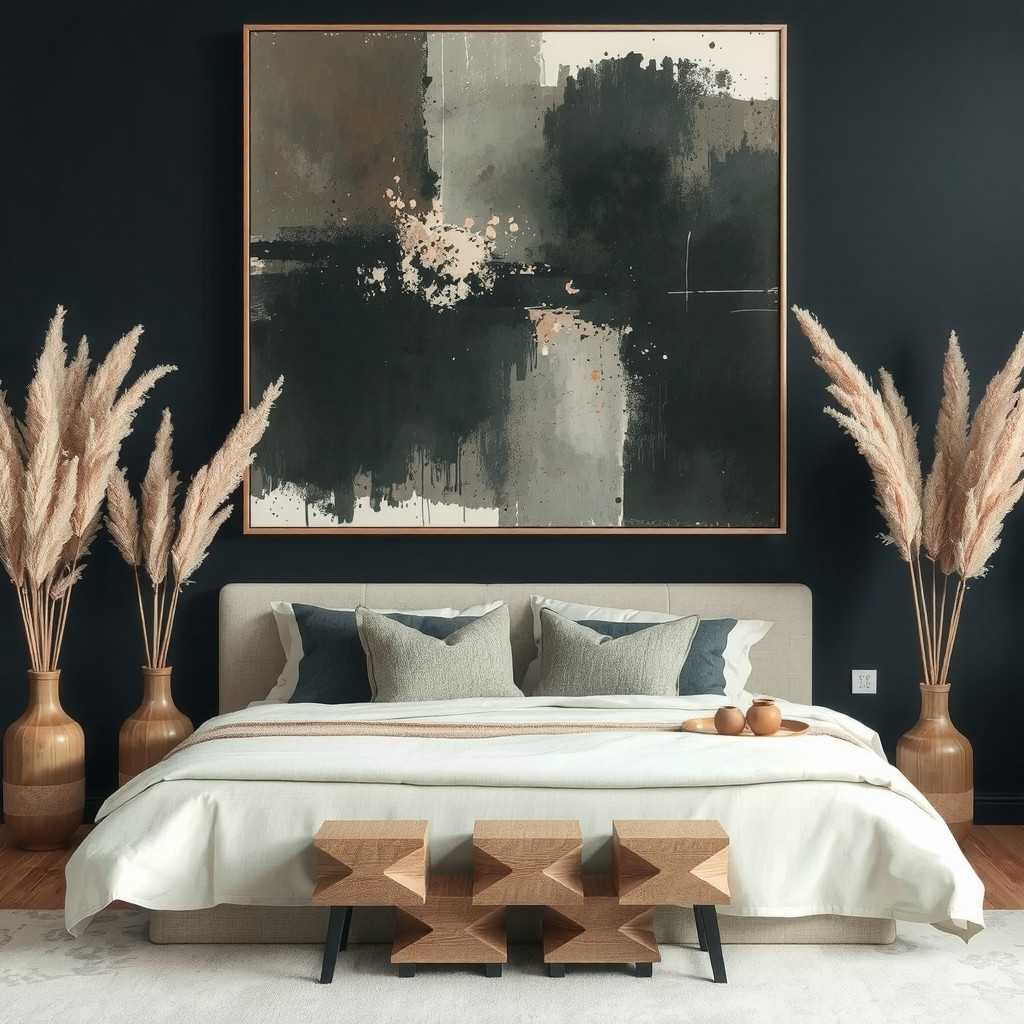
Every room needs a moment of drama. In a dark bedroom, this is often the interplay between the wall color and a singular statement piece. If your walls are a deep navy, consider an oversized piece of art with hints of gold or cream to break the monotony without shattering the mood. Alternatively, an architectural feature like wainscoting or shiplap painted in the same dark hue adds shadow lines and complexity without introducing a new color.
Lighting
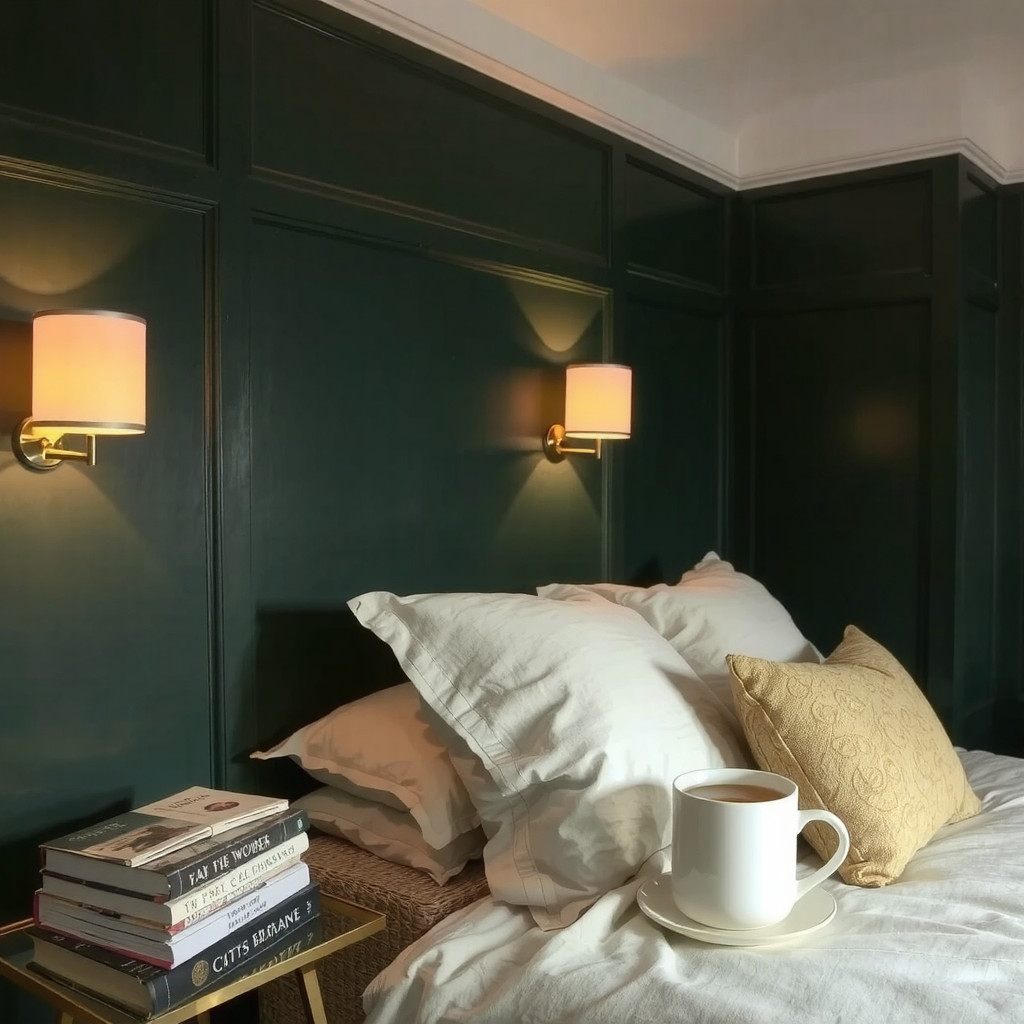
Lighting is the heartbeat of a dark interior. You are not trying to banish the dark; you are sculpting it. Avoid a single overhead fixture, which can flatten the room and create harsh shadows. Instead, layer your illumination. Use warm-toned bulbs (2700K or lower) to enhance the richness of the wall color.
Sconces with metallic finishes—brass, copper, or antique bronze—act as jewelry for the room. They reflect light even when turned off and glow beautifully against a dark backdrop when on. Install dimmers on every switch to control the intensity of the “twilight” vibe you are creating.
Greenery
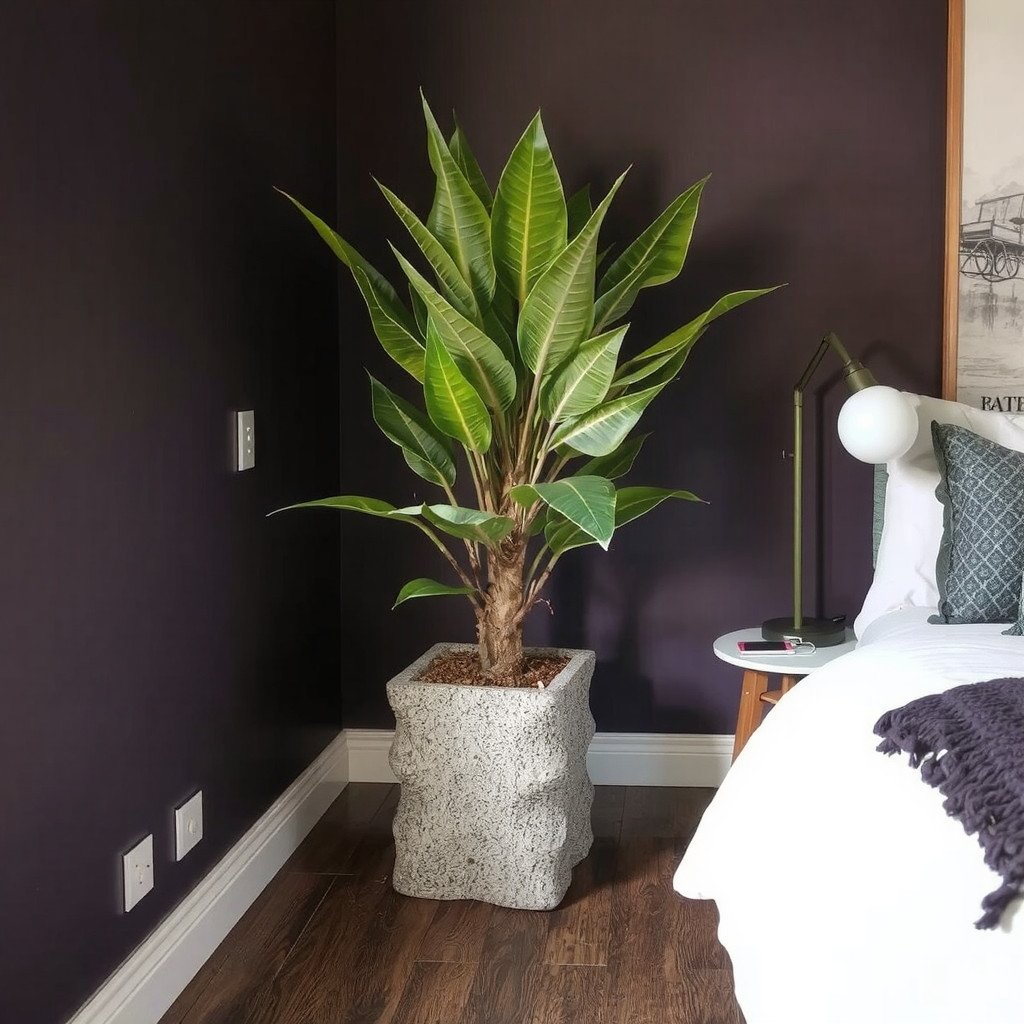
Bringing nature into a dark space prevents it from feeling sterile or tomb-like. Plants offer a burst of life and a pop of color that looks exceptionally vibrant against dark backgrounds. The chlorophyll green of leaves sings against charcoal or plum walls.
Choose structural plants like a Snake Plant or a Rubber Tree that can hold their own against the visual weight of the room. Place them in corners where shadows deepen, or on a dresser where the leaves can catch the spill of a lamp.
Tips
- Sample First: Dark colors change drastically with light. Paint large swatches and observe them at night with your artificial lighting.
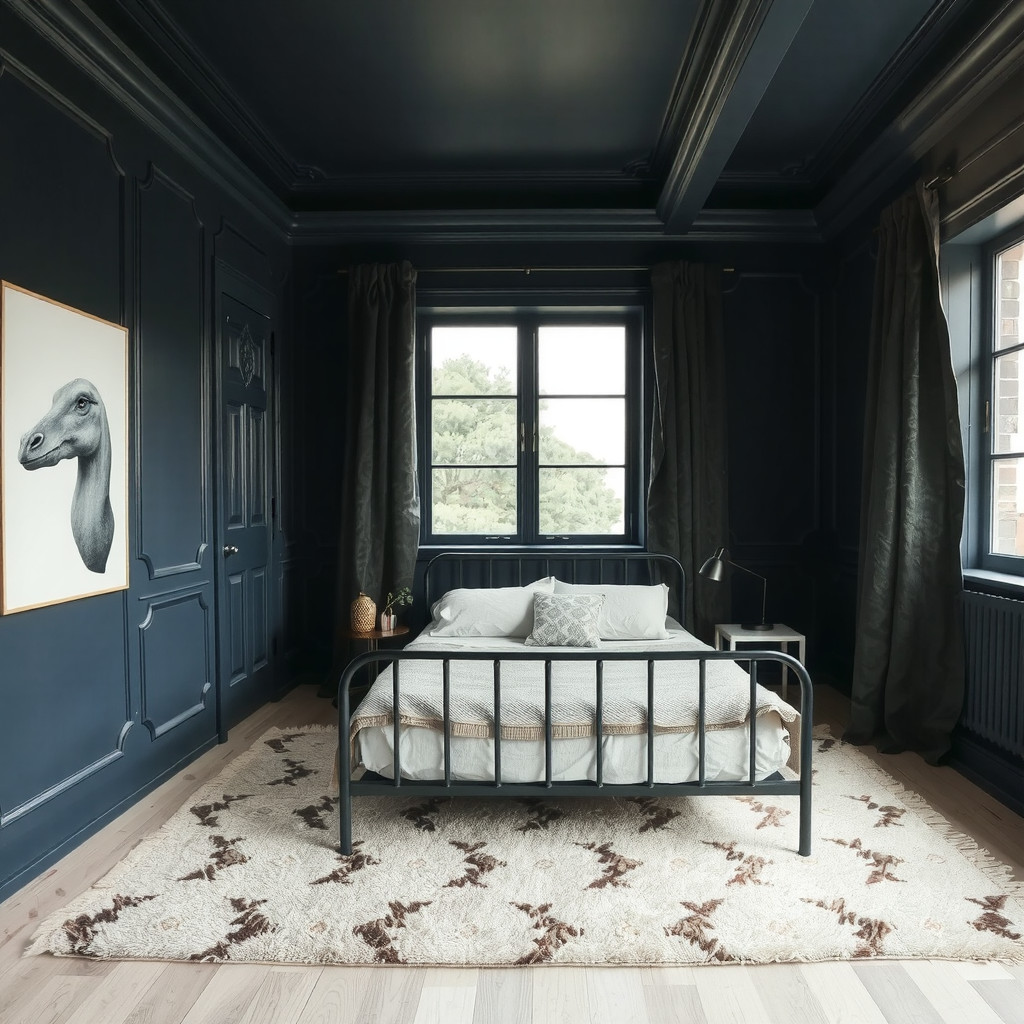
- Don’t Fear the Ceiling: Painting the ceiling the same dark color as the walls blurs the boundaries of the room, heightening the cocoon effect.
- Reflective Accents: Incorporate mirrors or metallic decor to bounce light around and prevent the space from feeling too heavy.
- Warm Undertones: When choosing grays or blacks, opt for those with warm brown or red undertones to keep the room feeling cozy rather than cold.
ADVERTISEMENT