ADVERTISEMENT
Introduction
Transforming your sleeping quarters into a restorative sanctuary often begins with a touch of nature. Bringing the outdoors in does not merely fill empty corners; it infuses the air with freshness and creates a visual calm essential for deep rest. You do not need a horticultural degree to achieve this lush aesthetic. By selecting resilient, low-maintenance botanical companions, you can curate a bedroom oasis that thrives on benign neglect while purifying your breathing space.
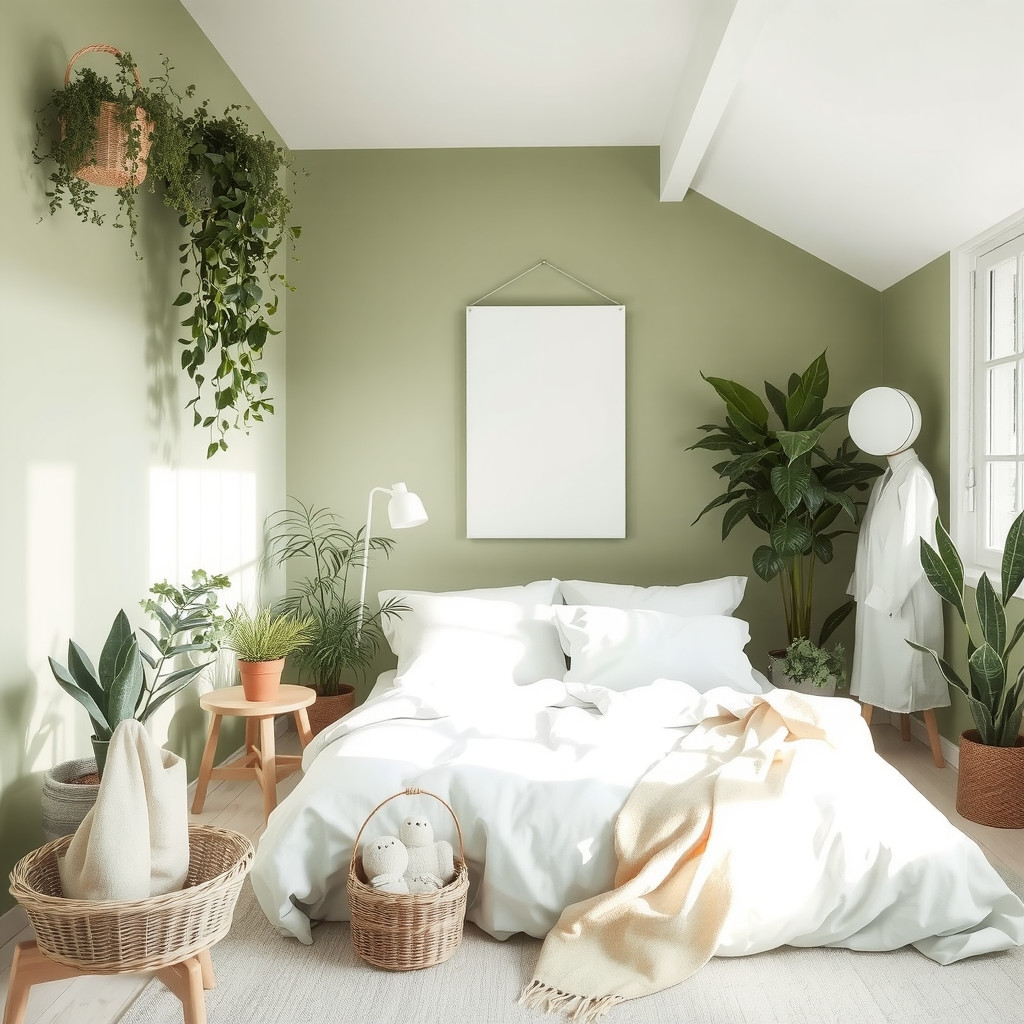
The key lies in choosing plants that adapt to the typically lower light conditions of a bedroom and require infrequent watering. This approach allows you to focus on the tranquility they provide rather than a demanding care schedule. Imagine waking up to the gentle sight of verdant leaves and breathing in cleaner air every morning. It is an effortless upgrade that pays dividends in relaxation and style.
Layout and Positioning
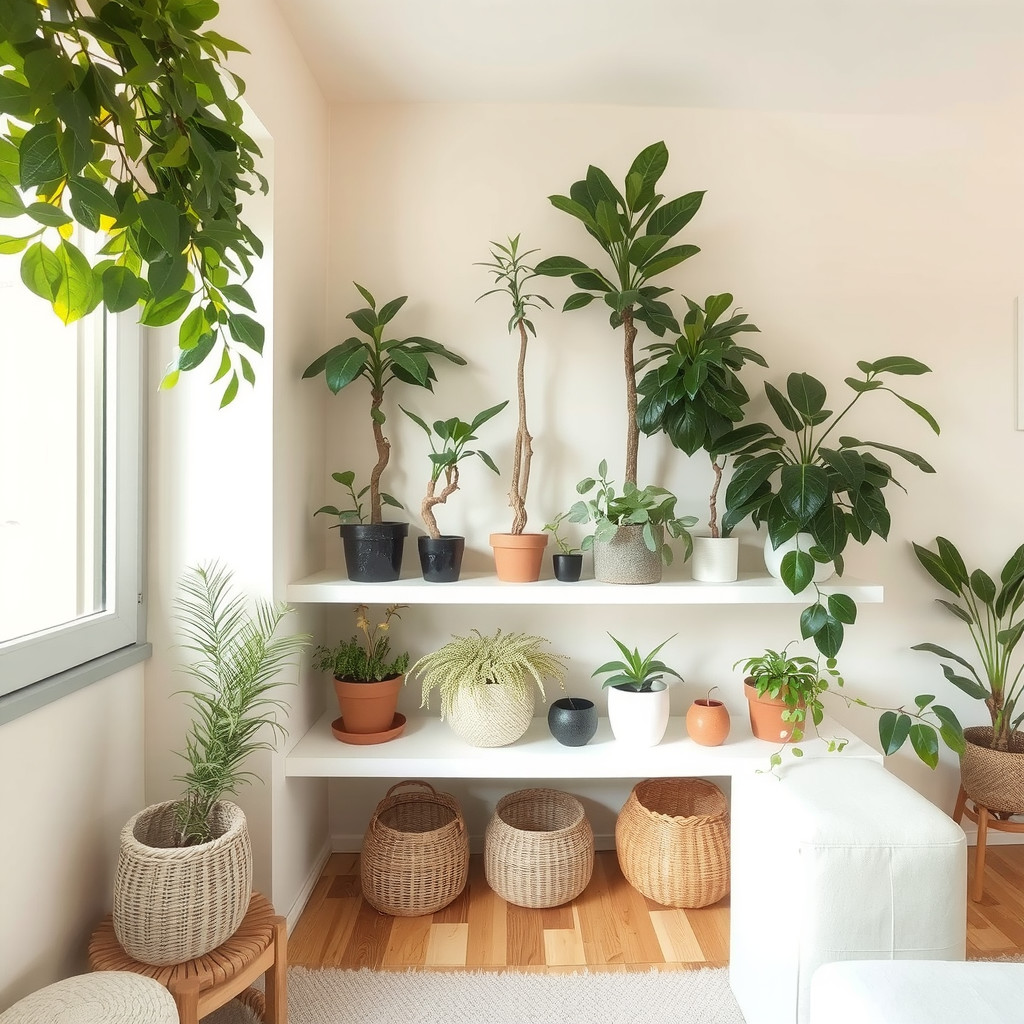
Strategic placement is crucial to ensuring your green additions enhance rather than clutter your peaceful retreat. Instead of overcrowding your bedside table, look to the vertical planes of your room. Floating shelves installed above the headboard or on adjacent walls provide a perfect stage for trailing varieties, drawing the eye upward and making the ceiling feel higher.
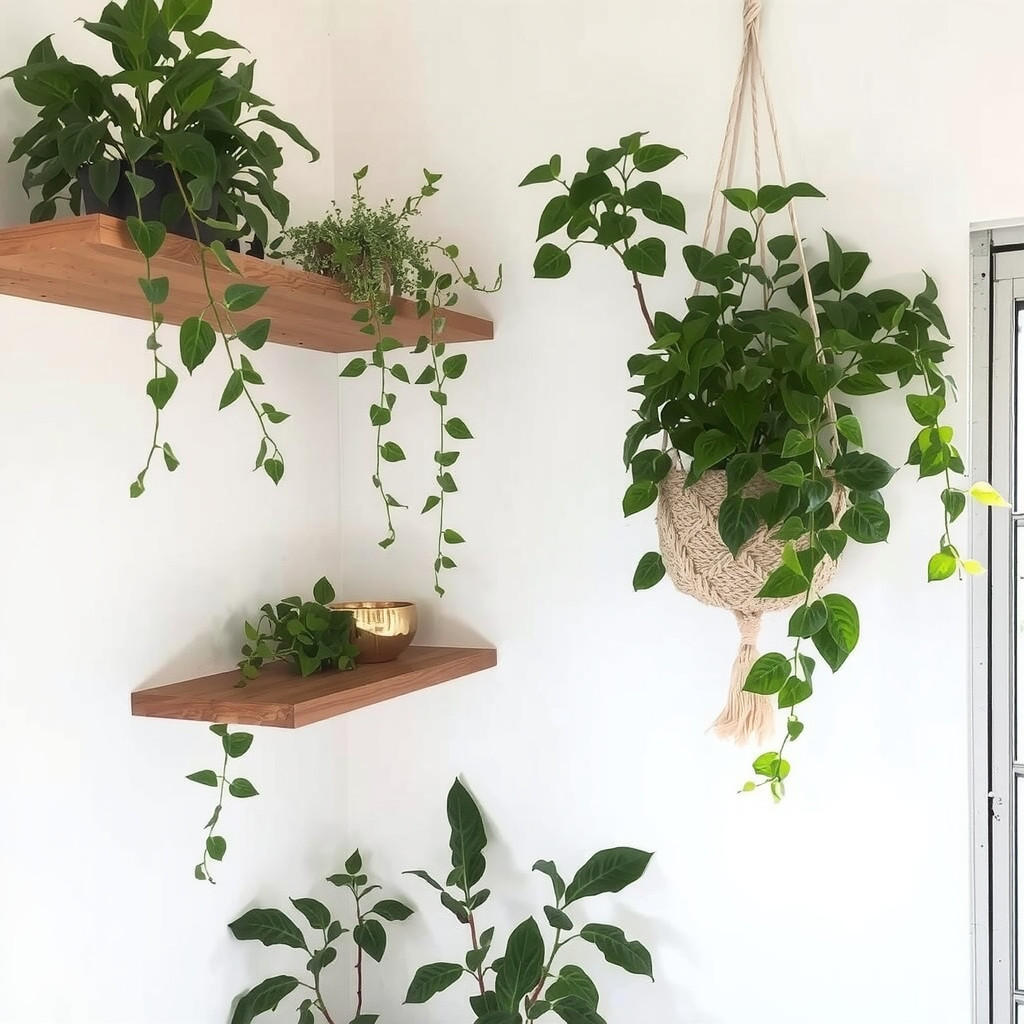
For smaller footprints, consider utilizing utilizing unused corners. A sleek plant stand can elevate a medium-sized pot, turning a dead zone into a vibrant vignette. If floor space is at a premium, hanging planters near a window can create a living curtain of privacy. The goal is to integrate greenery so it feels like an organic extension of the room’s architecture, creating a flow that guides your gaze softly around the space.
Materials and Textiles
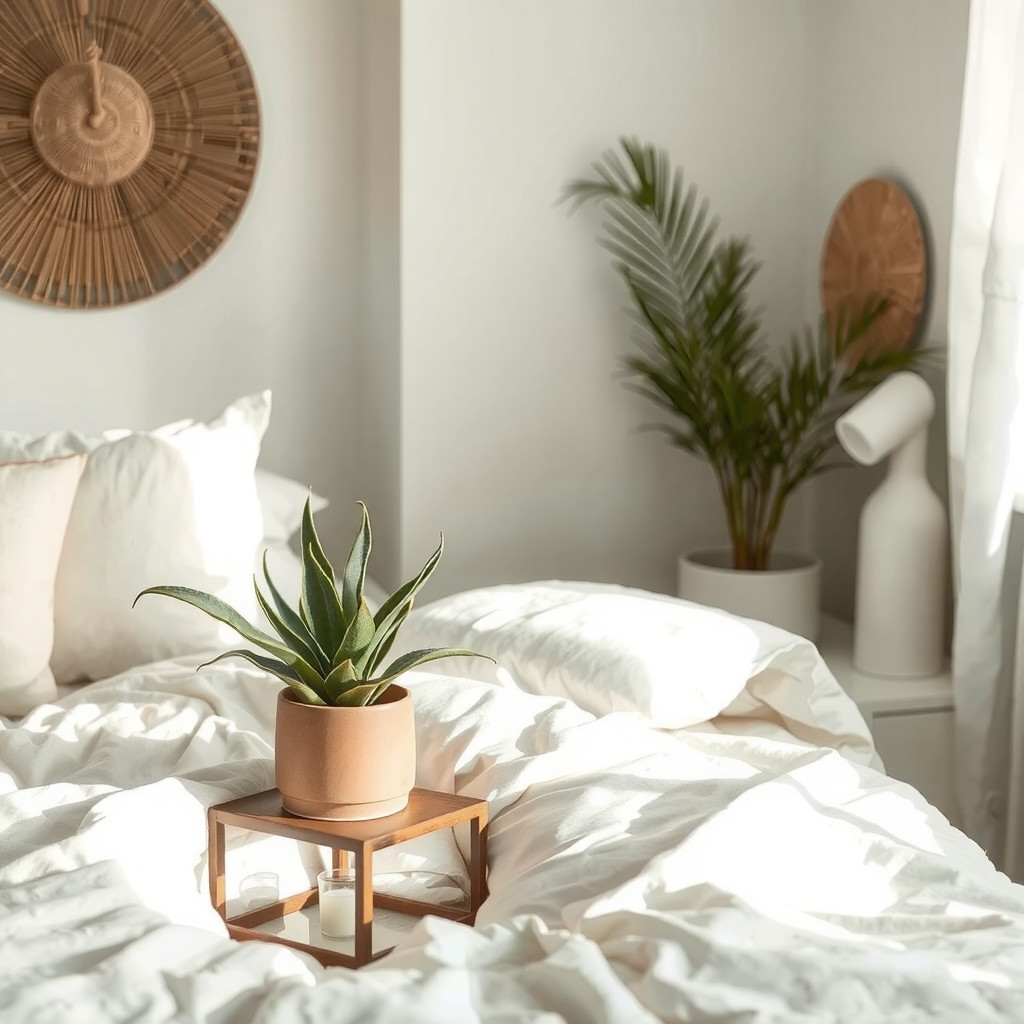
The vessels housing your plants are just as important as the foliage itself. To maintain a soothing bedroom atmosphere, prioritize natural, tactile materials that ground the space. Terracotta pots, unglazed ceramics, or stone vessels introduce an earthy texture that contrasts beautifully with the softness of your bedding.
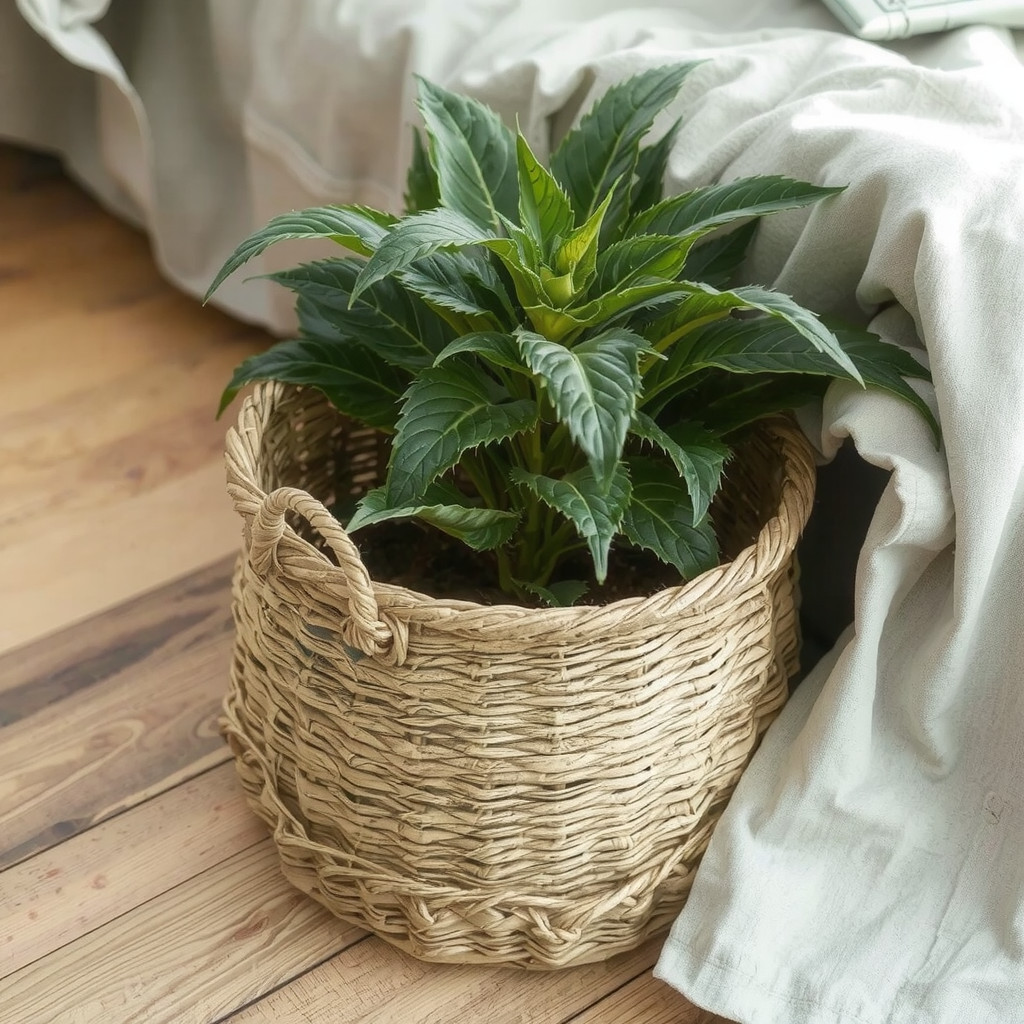
Pair these rigid structures with the plush comfort of bedroom textiles. A woven seagrass or jute basket holding a floor plant adds warmth and sits harmoniously against a wool rug or linen duvet. This interplay between the crisp, structural lines of the leaves and the cozy, malleable fabrics of the room creates a sensory balance that feels both curated and effortlessly lived-in.
Focal Points
Every room needs an anchor, and a substantial, sculptural plant can serve as a stunning focal point. Rather than scattering many small pots, which can sometimes feel chaotic, choose one or two statement specimens to command attention. A tall, vertical plant draws the eye up and adds a sense of grandeur without occupying a large footprint.
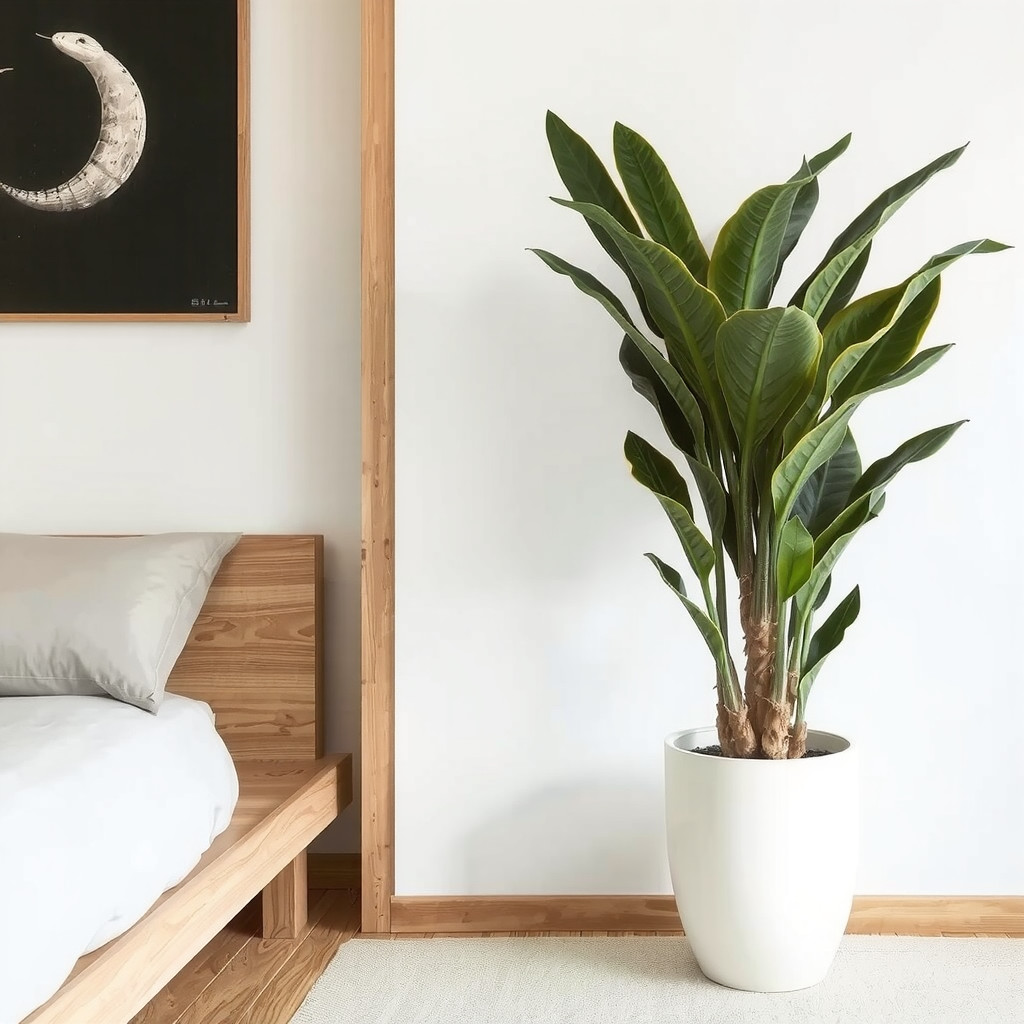
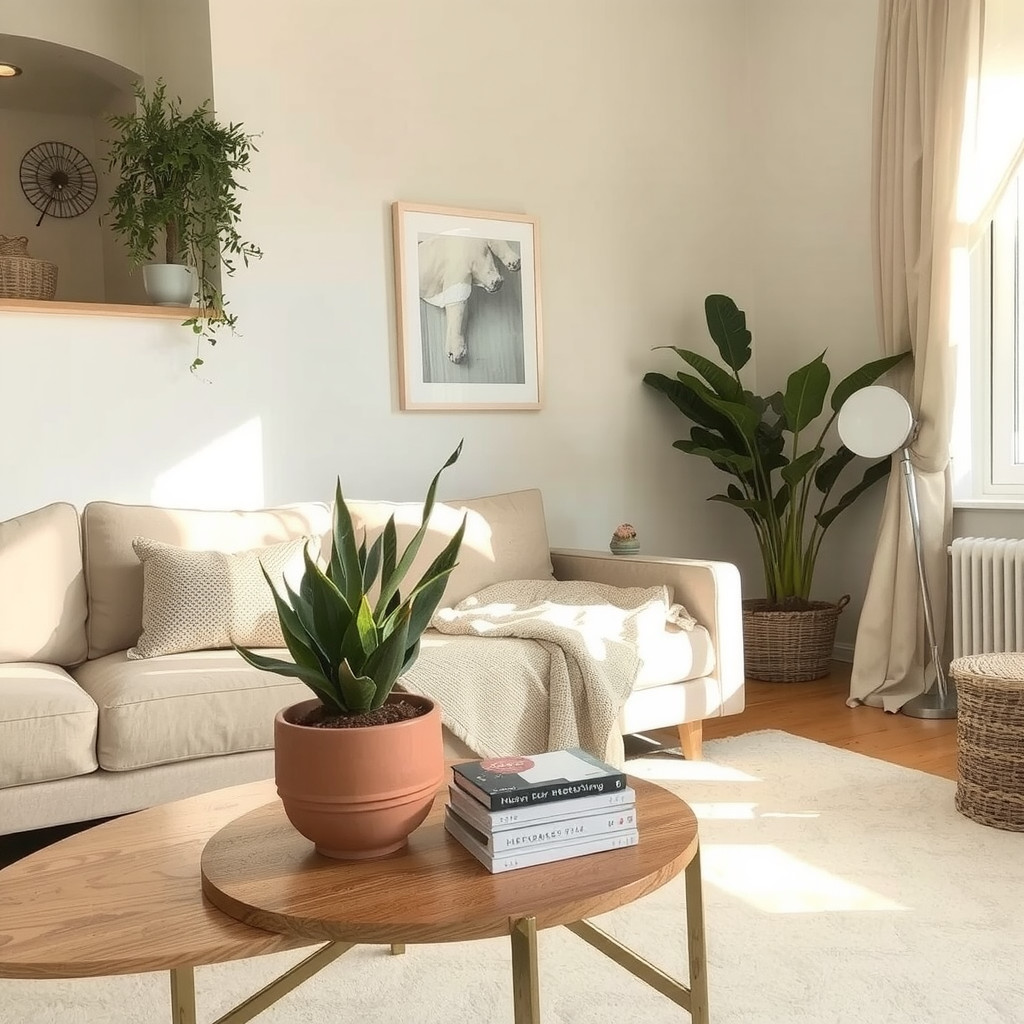
Position this statement piece where it can be admired from the bed but doesn’t obstruct pathways. The silhouette of the plant becomes a piece of living art. Whether it is the sword-like leaves of a Snake Plant or the broad, glossy foliage of a Rubber Tree, a singular, robust botanical feature creates a sense of stability and intentionality in your design scheme.
Lighting
Bedrooms are often sanctuaries of soft, diffused light, which fortunately aligns with the needs of many low-maintenance species. Avoid harsh, direct sunbeams that can scorch leaves and disrupt the soothing ambiance. Instead, embrace the gentle filtration provided by sheer curtains or blinds.
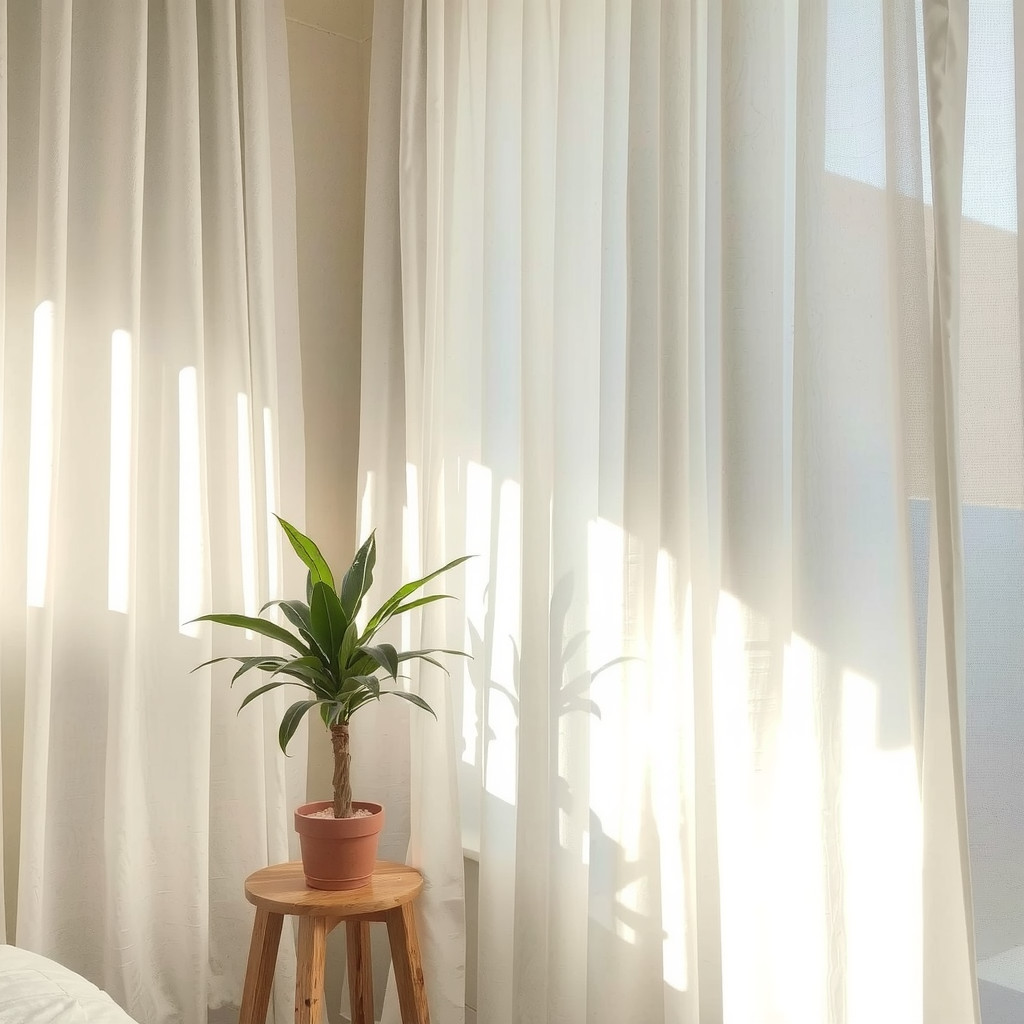
Observe how the light travels across your room throughout the day. East-facing windows offer gentle morning sun perfect for most foliage, while north-facing rooms provide the consistent, low light that shade-tolerant plants adore. By matching your plant choices to your room’s natural illumination, you ensure their longevity and maintain the moody, restful atmosphere required for sleep.
Greenery
Selecting the right species is the final piece of the puzzle. For a bedroom, you want plants that work hard so you don’t have to. The Snake Plant (Sansevieria) is a top contender, known for its architectural verticality and ability to convert CO2 into oxygen at night. It is virtually indestructible and tolerates low light with grace.
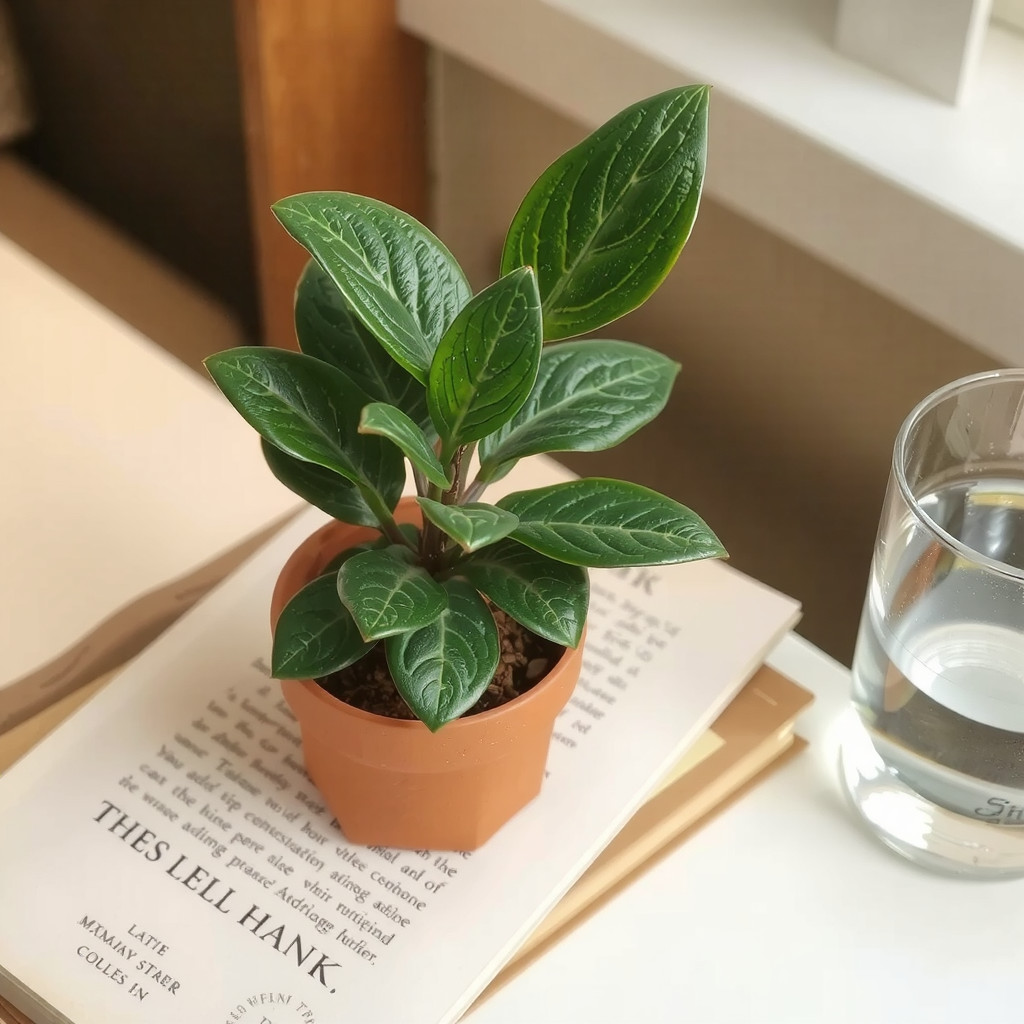
Alternatively, the ZZ Plant offers glossy, deep green leaves that reflect light, adding a touch of polish to darker corners. If you prefer a softer look, the Pothos features cascading vines that look lovely trailing from a high shelf. These hardy varieties bring diverse textures and shades of green, allowing you to paint a living picture that requires minimal intervention.
Tips
- Check Soil Moisture: Feel the soil an inch deep before watering; most bedroom plants prefer to dry out completely between drinks.
- Dust Regularly: Wipe leaves with a damp cloth to keep pores open for air purification and to maintain a fresh, glossy look.
- Rotate Pots: Turn your plants a quarter turn every few weeks to ensure even growth on all sides.
- Group for Humidity: Place plants near each other to create a microclimate that boosts humidity, beneficial for both the plants and your sinuses.
ADVERTISEMENT