ADVERTISEMENT
Introduction
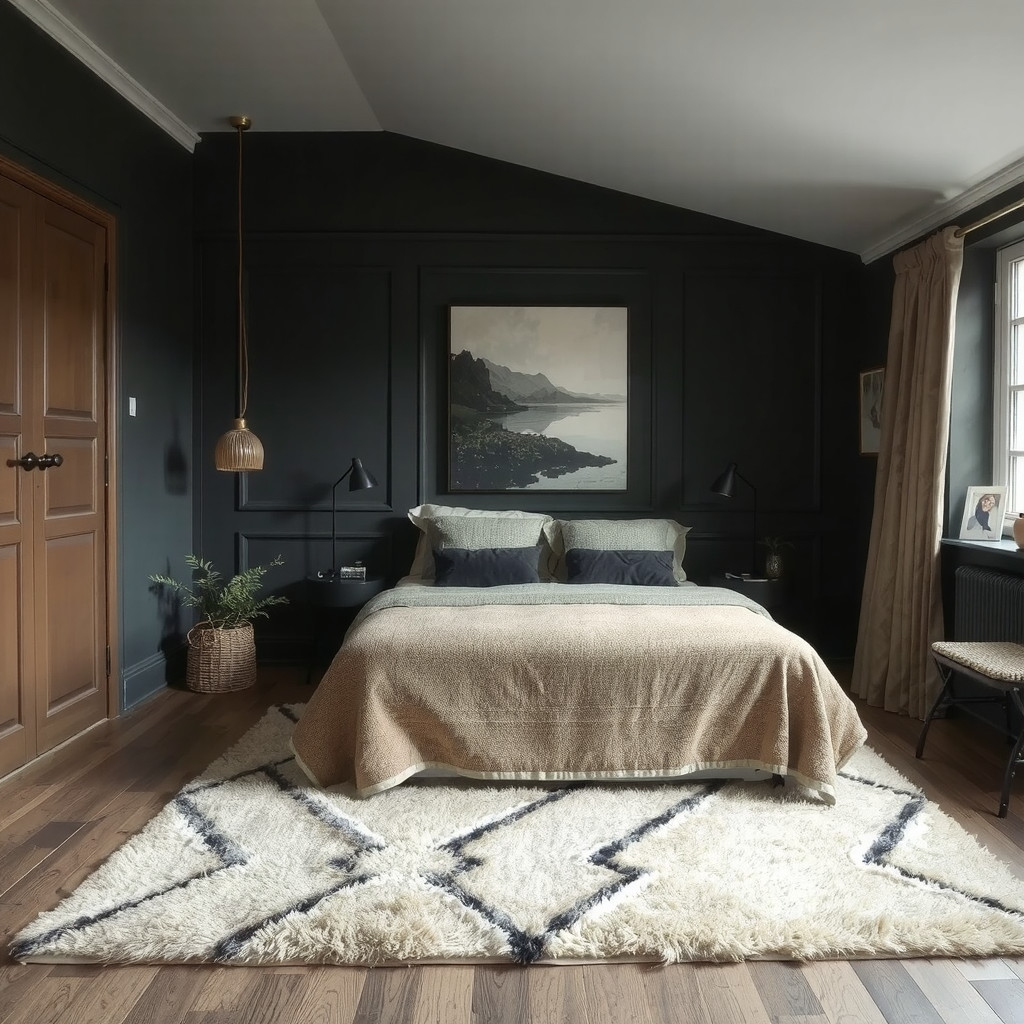
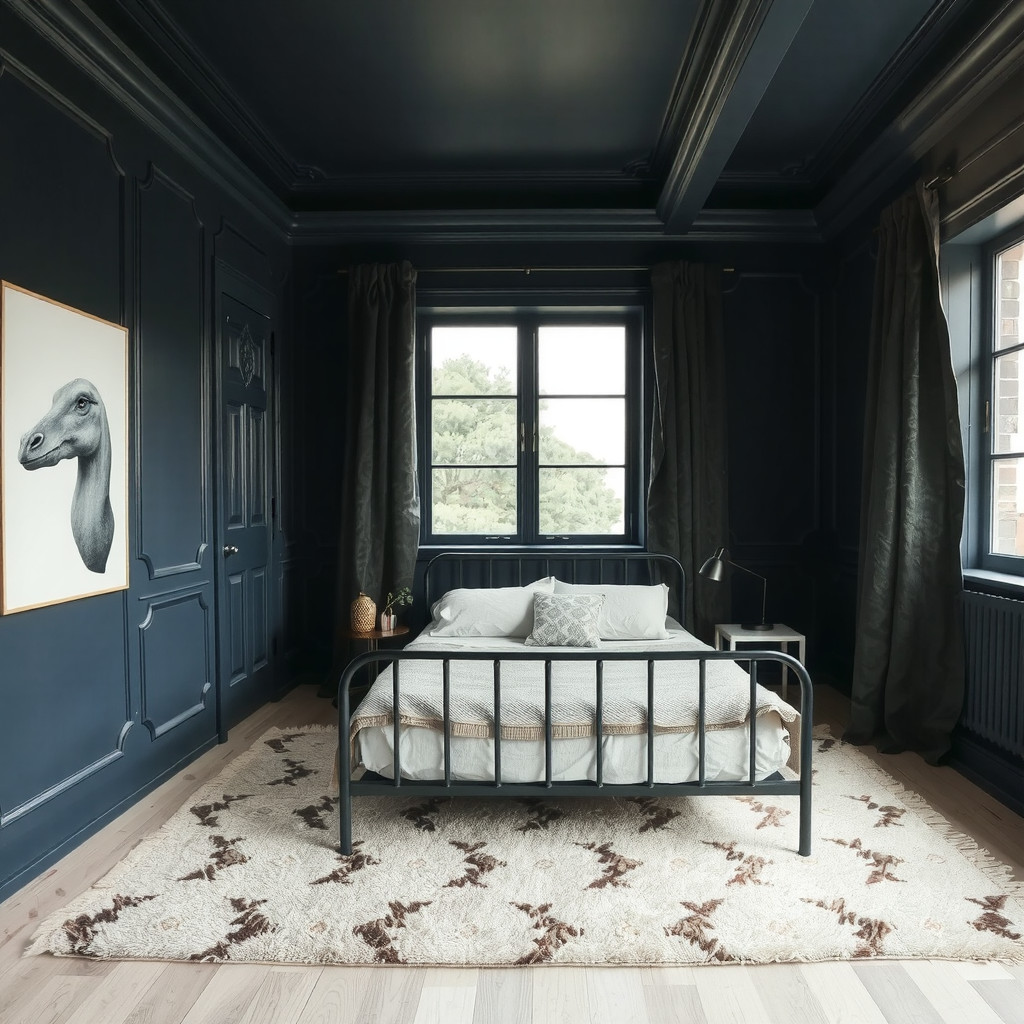
Your bedroom should be a sanctuary—a place where the noise of the day dissolves into soft linens and restful silence. Integrating greenery into this personal retreat does more than just beautify the space; it actively improves air quality and reduces stress levels. However, the last thing you need in your haven of rest is a demanding list of horticultural chores. By selecting resilient, low-maintenance botanical companions, you can cultivate a lush, restorative atmosphere that thrives on benign neglect, allowing you to focus purely on relaxation.
Layout and Positioning
When introducing plants to your sleeping quarters, consider the flow of the room first. You want to enhance the sense of calm, not create an obstacle course between the bed and the door. Position larger floor plants in corners or beside heavy furniture pieces like armchairs or dressers to soften hard edges without encroaching on walkways.
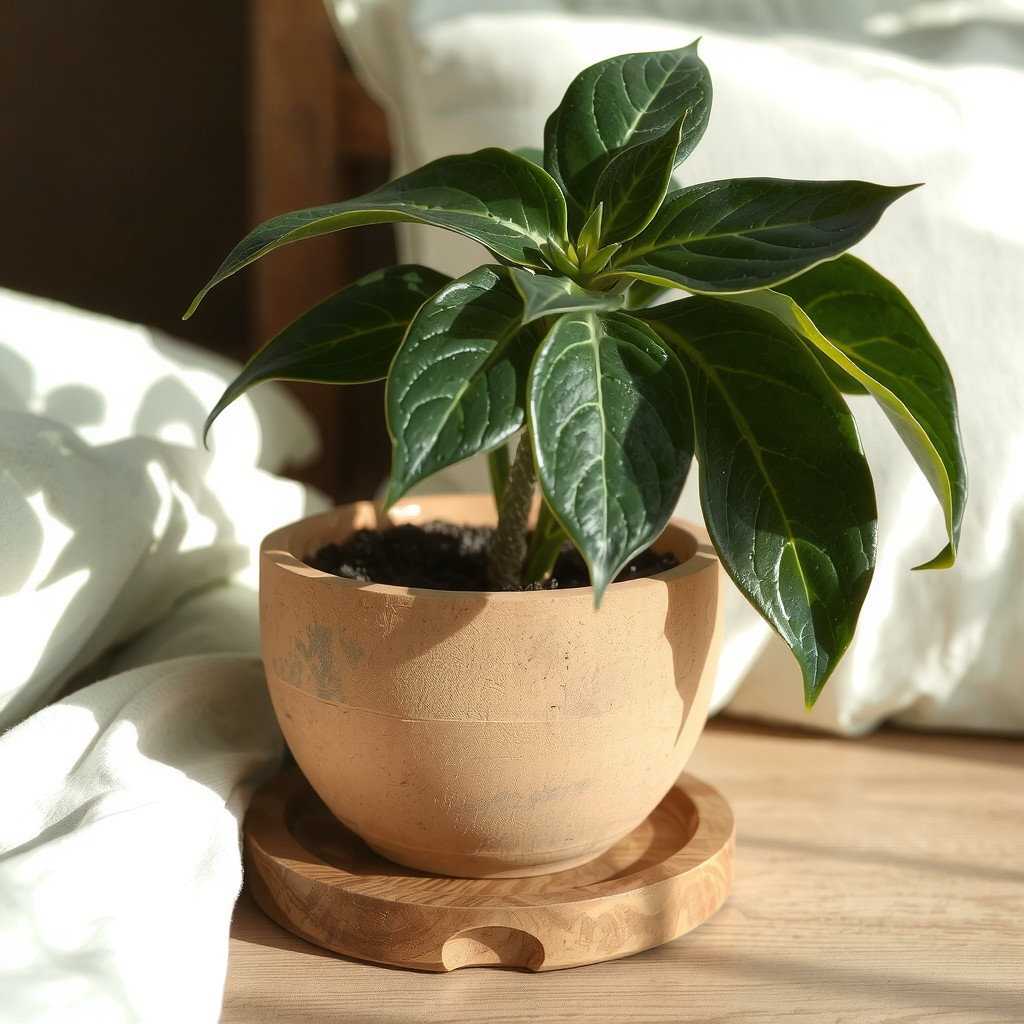
Keep your bedside table uncluttered. A single, compact specimen here is enough to create a connection to nature without fighting for space with your book or water glass. Ensure that plants placed on shelves or high surfaces are stable and won’t cast unsettling shadows at night.
Materials and Textiles
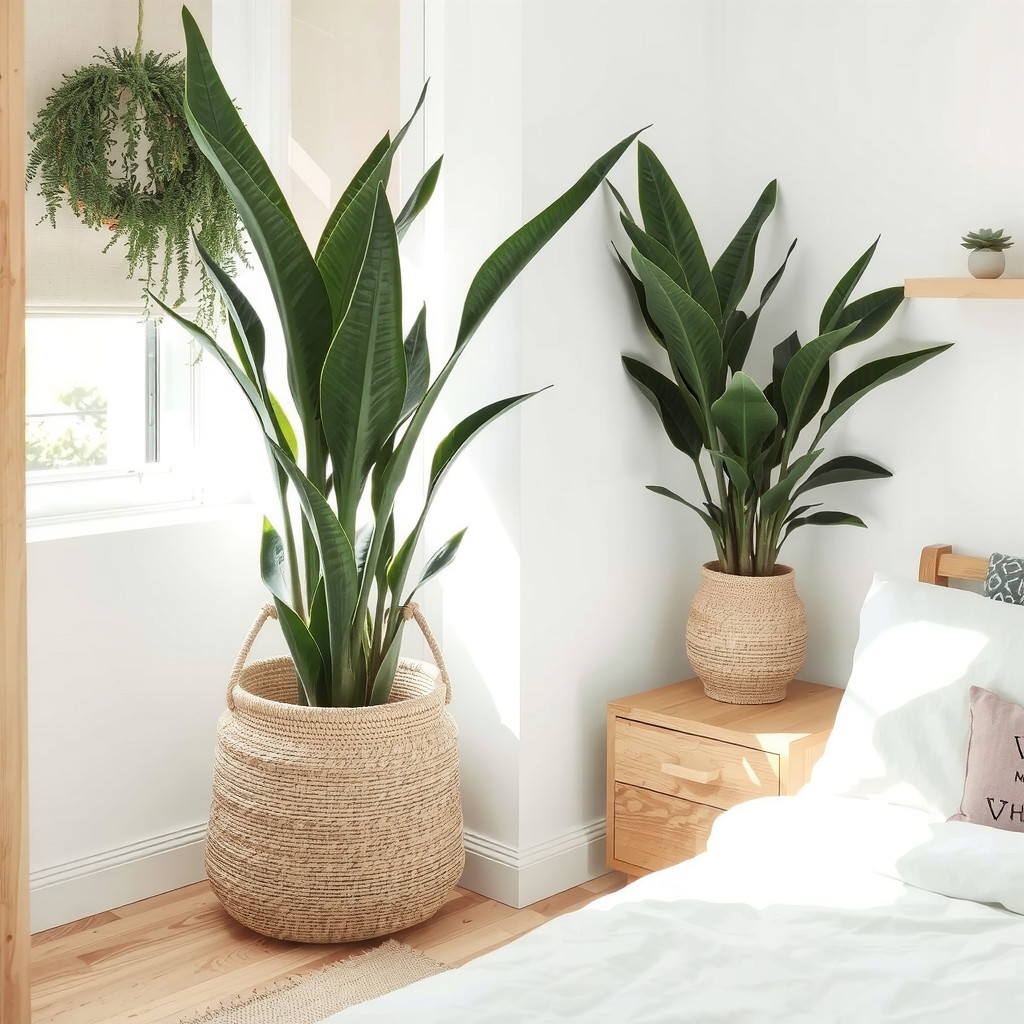
The vessels you choose for your greenery are just as important as the plants themselves. In a bedroom setting, aim for materials that complement the softness of your bedding and drapery. Matte ceramics, woven seagrass baskets, and unglazed terracotta introduce organic warmth that pairs beautifully with cotton, linen, or wool.
Contrast is key here. If your bedding is crisp and white, a dark charcoal pot can add a grounding element. If you have rich velvet throws, a smooth, pale stone planter provides a soothing visual break. The interplay between the glossy living leaves and the static, textured containers adds a layer of sensory depth to the room.
Focal Points
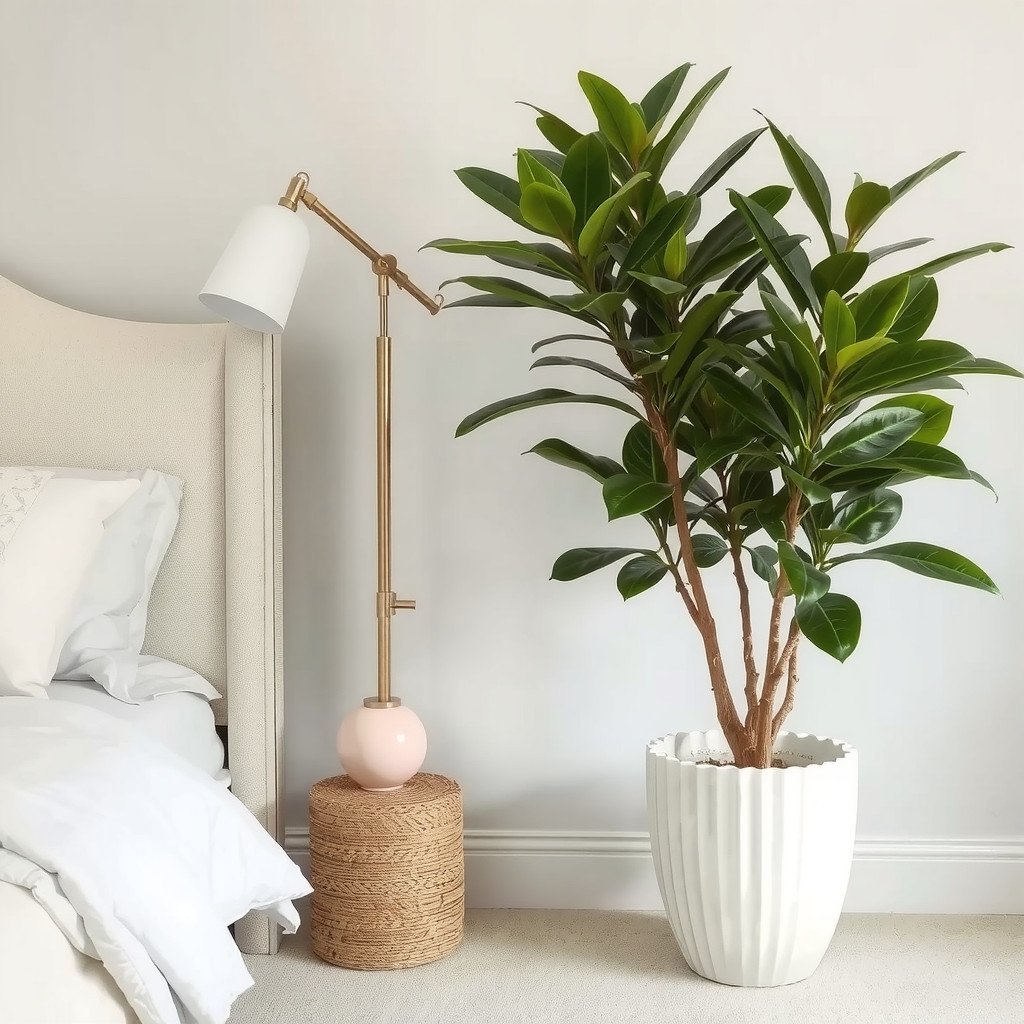
While small accents are lovely, anchoring the room with a significant botanical statement can transform the entire energy of the space. A tall, structural plant draws the eye upward, making ceilings feel higher and the room more airy. This verticality helps to balance the horizontal dominance of the bed.
Choose a corner that feels empty or “dead” and breathe life into it with a specimen that has architectural presence. This creates a deliberate visual anchor that feels intentional rather than cluttered, grounding the room’s design while adding a splash of vibrant life.
Lighting
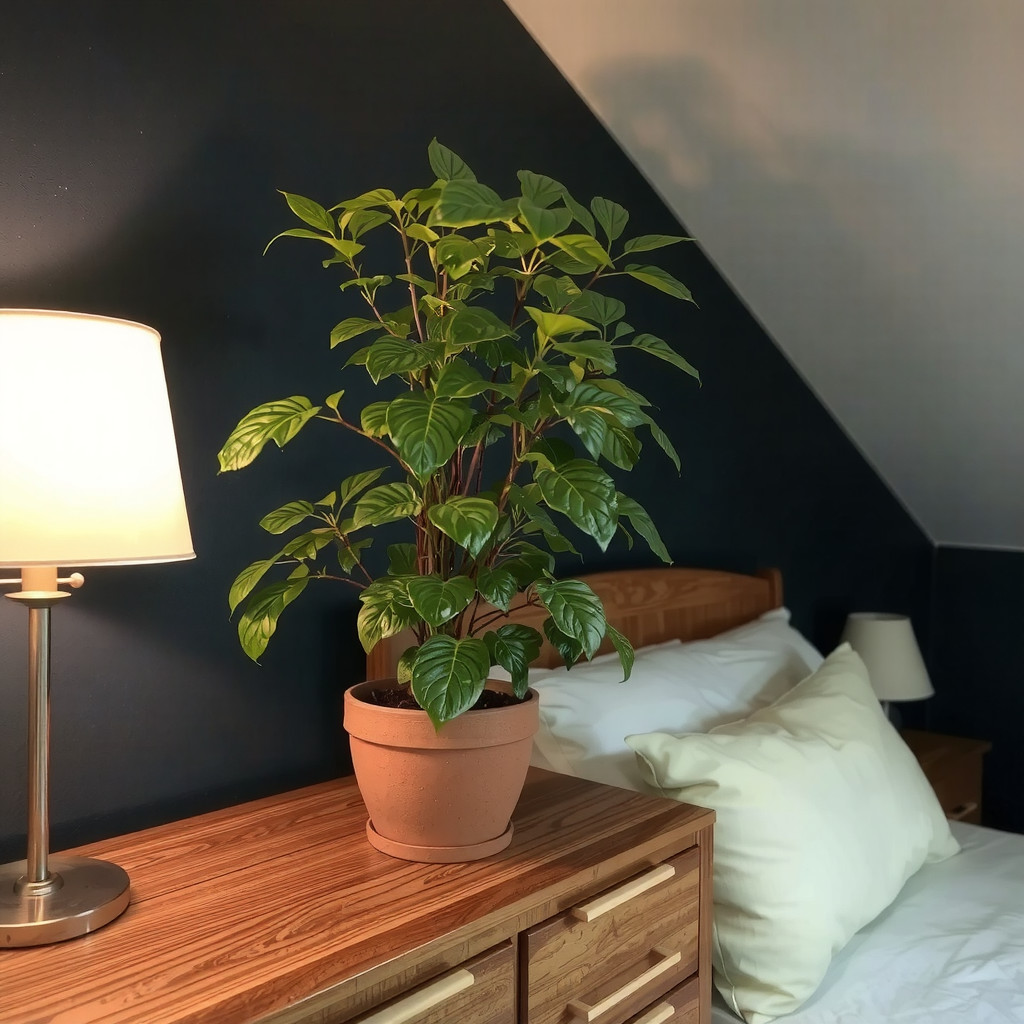
Bedrooms often have variable lighting conditions, ranging from bright morning sun to complete darkness. Understanding your room’s specific light profile is crucial for low-maintenance success. Most “indestructible” plants prefer indirect light, making them perfect for spots a few feet away from the window or in corners that receive ambient glow.
Observe how the light travels across your room throughout the day. If you have south-facing windows, sheer curtains can protect sensitive leaves from scorching. For darker, north-facing rooms, you are not out of luck; many sculptural species thrive in the shadows, adding drama to the dim corners.
Greenery
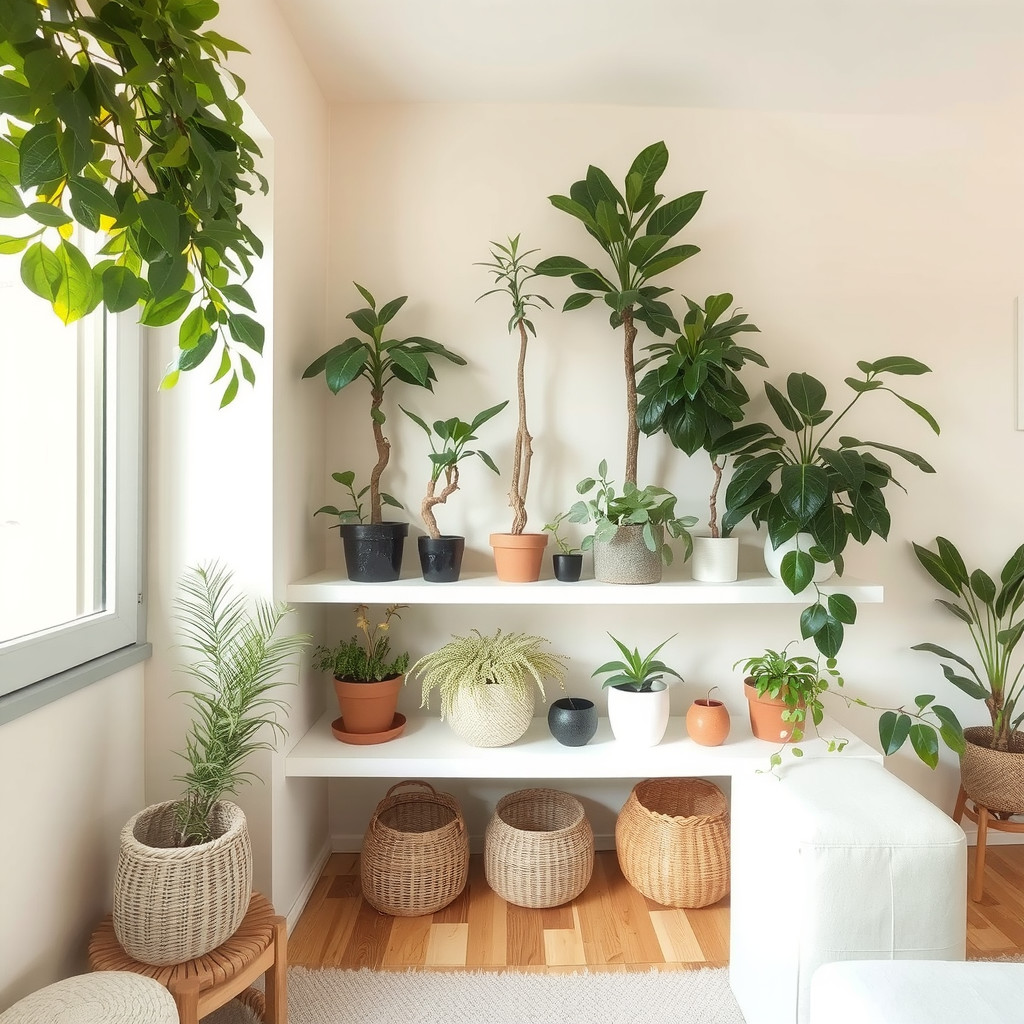
Selecting the right species is the foundation of a low-maintenance indoor garden. For the bedroom, you want plants that work for you, not the other way around. The Snake Plant (Sansevieria) is a top contender; it is sculptural, virtually unkillable, and notably releases oxygen at night. The ZZ Plant is another warrior, tolerating low light and irregular watering with glossy, waxy elegance.
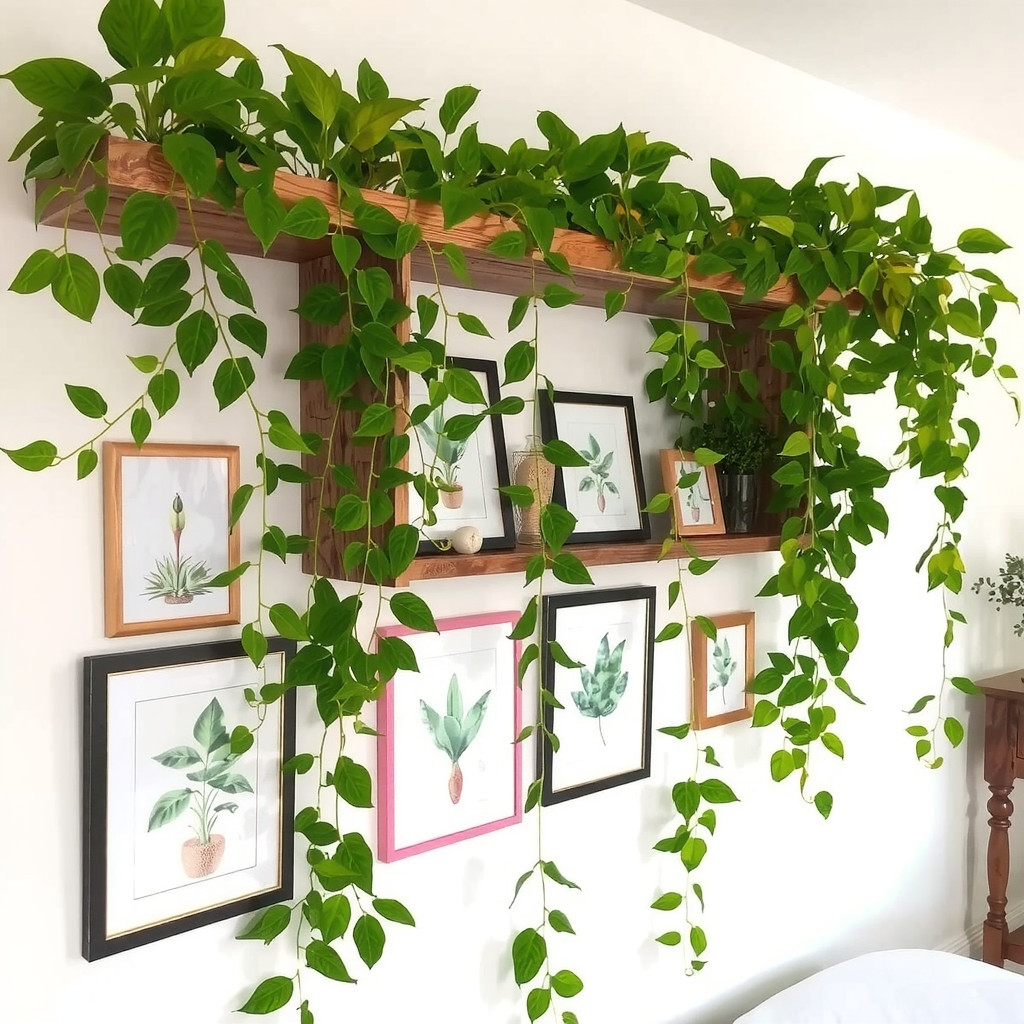
For a softer look, Pothos or Heartleaf Philodendron offer cascading vines that look stunning trailing from a high shelf or hanging planter. These varieties “talk” to you—their leaves will droop slightly when they are thirsty, taking the guesswork out of watering.
Tips
- Water Sparingly: Most low-maintenance plants die from overwatering, not underwatering. Check the soil moisture before reaching for the watering can.
- Dust Regularly: Bedroom dust settles on leaves, blocking light. Wipe them gently with a damp cloth once a month to keep them photosynthesizing efficiently.
- Rotate Pots: Turn your plants a quarter turn every few weeks to ensure even growth and prevent them from leaning toward the light source.
- Group for Humidity: Grouping plants together creates a microclimate with slightly higher humidity, which most tropical varieties appreciate.
ADVERTISEMENT