ADVERTISEMENT
Introduction
Your bedroom is more than just a place to sleep; it is a sanctuary for restoration and quiet contemplation. Infusing this intimate space with living greenery establishes an immediate connection to the natural world, grounding you the moment you wake. However, the serenity of a sleeping quarter should never be disrupted by the stress of complex plant care routines. By selecting resilient, low-maintenance botanical companions, you cultivate an atmosphere of effortless tranquility. These hardy varieties not only purify the air but also introduce organic shapes and calming colors that soften the architectural edges of your room.
Layout and Positioning
Strategic placement is the key to harmonizing plants with your existing bedroom layout without creating clutter. You want to guide the eye gently around the room rather than overwhelming it. Consider the often-underutilized vertical space; a trailing plant placed on a high floating shelf draws the gaze upward, making the room feel loftier and more airy.
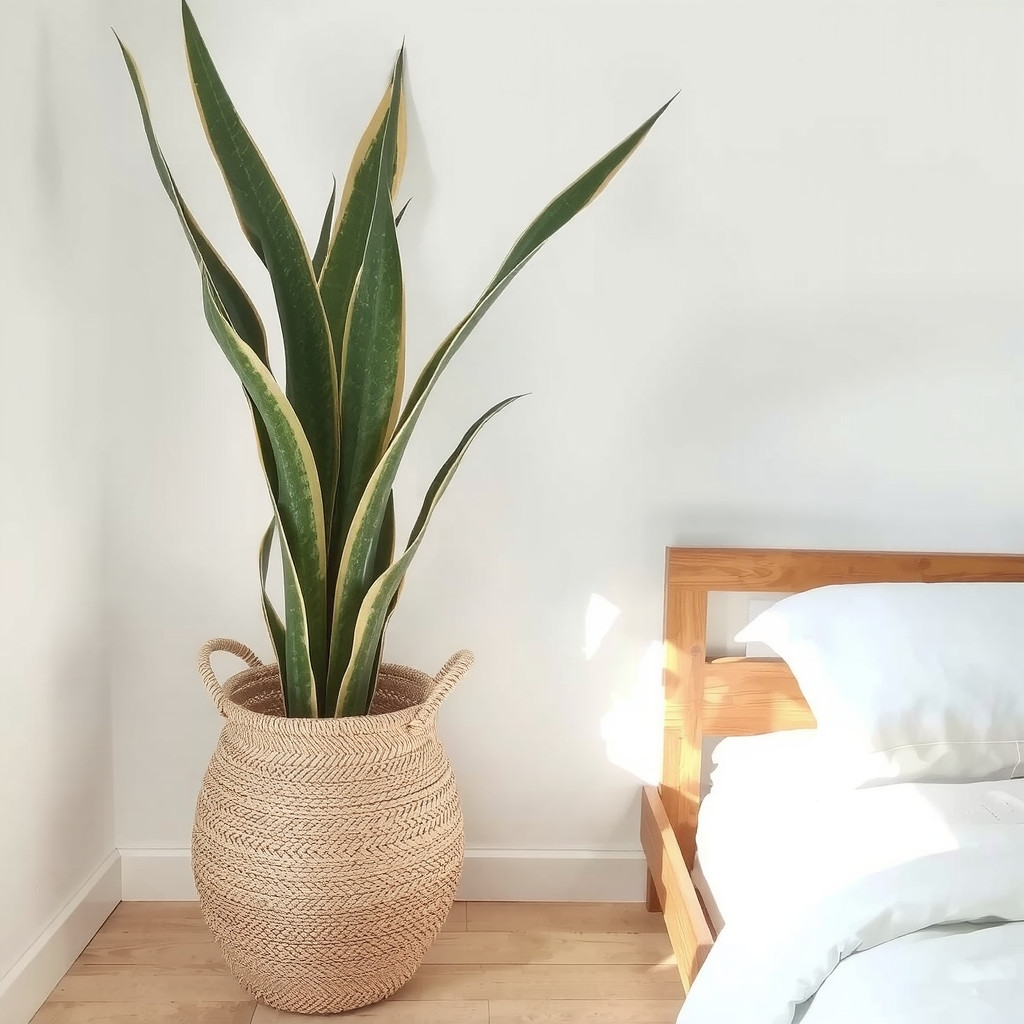
For floor space, utilize corners that often sit empty. A single, substantial floor plant can anchor the room, bridging the gap between your furniture and the ceiling. Ensure you leave ample walkways clear—waking up to navigate a jungle obstacle course contradicts the goal of relaxation. Place smaller potted varieties on nightstands or windowsills, ensuring they are not so large that they crowd your essential bedside items like lamps or books.
Materials and Textiles
The vessels you choose for your plants are just as important as the foliage itself. In a bedroom setting, aim for materials that complement the softness of your bedding and upholstery. Matte ceramics, unglazed terracotta, and woven seagrass baskets introduce warmth and texture that harmonize with cotton, linen, and wool.
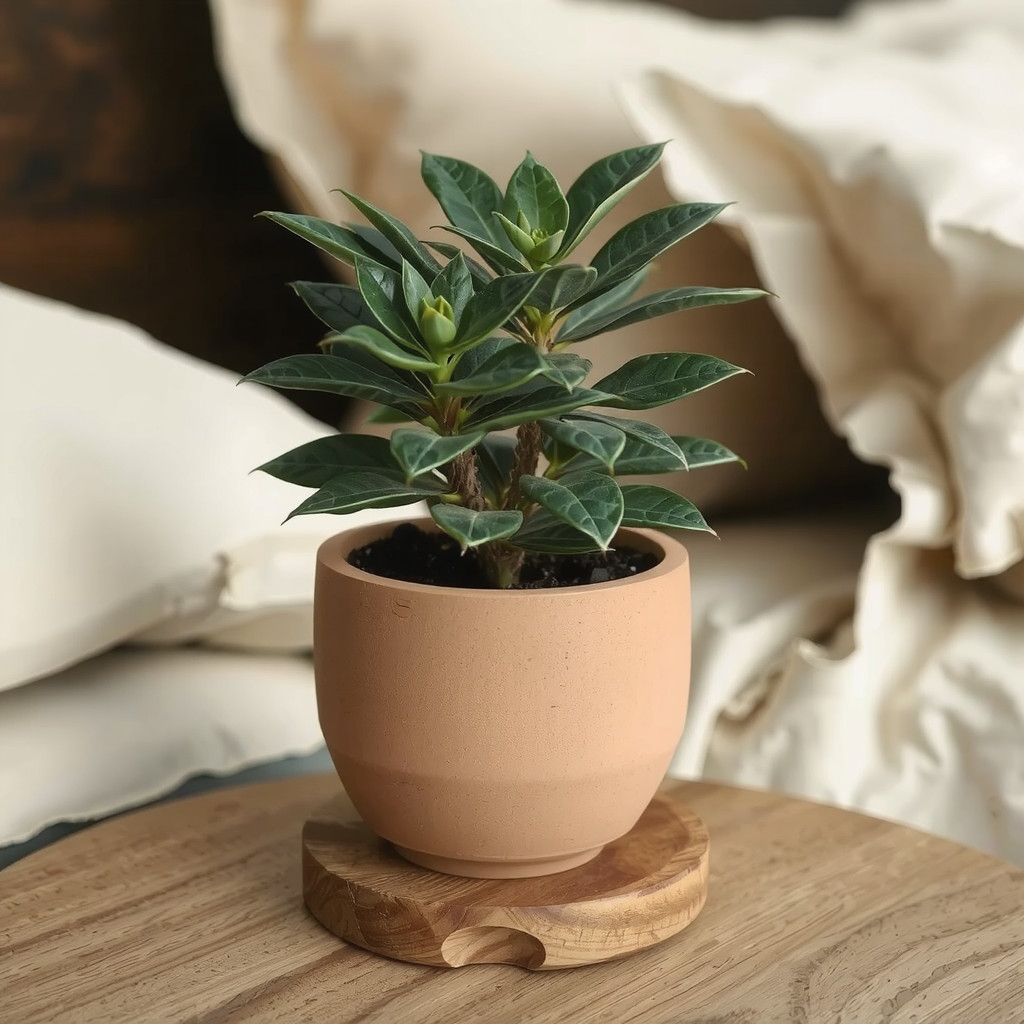
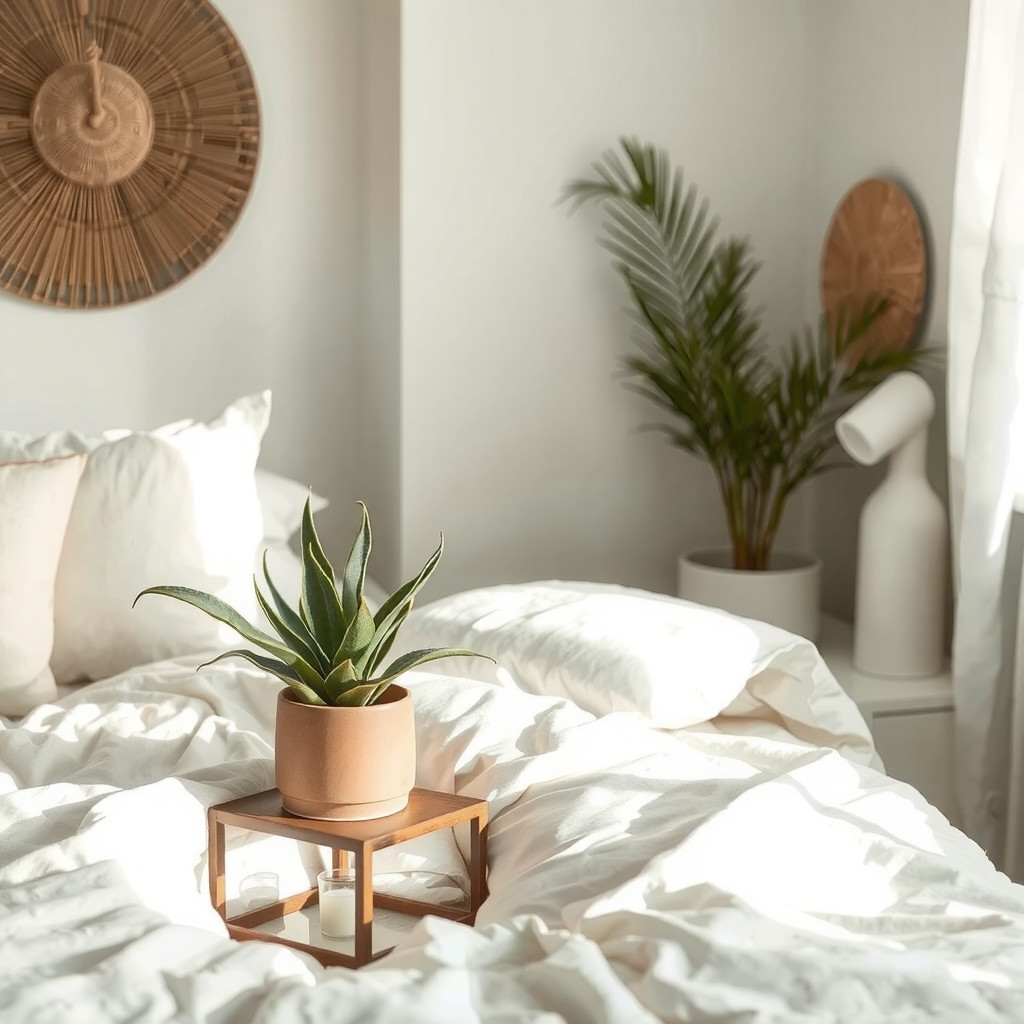
Consider the interplay of textures. The rigid, architectural swords of a snake plant provide a striking counterpoint to the fluid drape of a duvet. Conversely, the glossy, waxy leaves of a rubber tree can add a touch of polish that contrasts beautifully with a rustic, knit throw. Ensure every planter has proper drainage or is used as a cachepot to protect your surfaces from moisture damage, keeping your sanctuary pristine.
Focal Points
While a collection of small pots can be charming, a singular, dramatic focal point often creates a more cohesive and restful aesthetic in a bedroom. A “hero plant” acts as a living sculpture, defining the mood of the space. Large, structural plants with interesting silhouettes work best here.
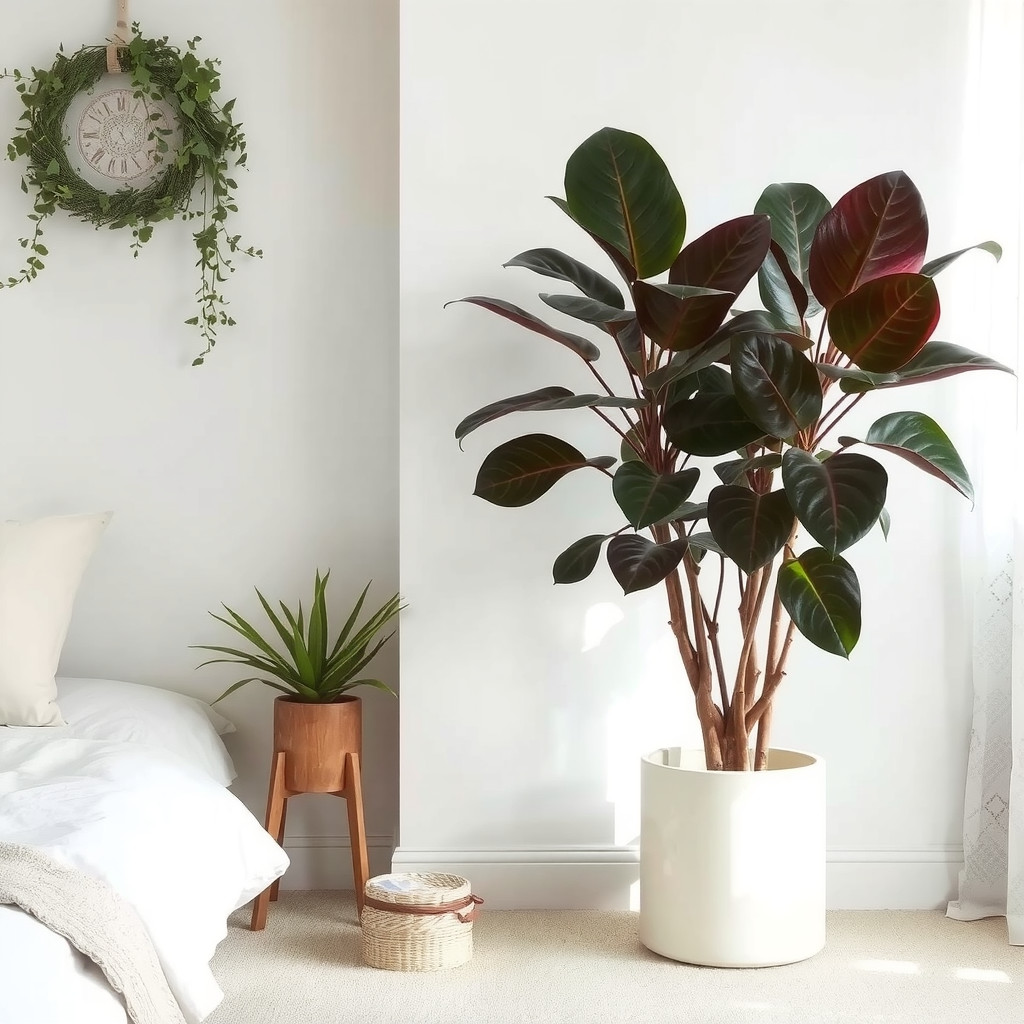
Position a large specimen near a mirror to double its visual impact and bounce more light around the room. This technique adds depth and creates the illusion of a lush, expansive garden with minimal effort. If your room is spacious, a tree-like plant can fill a void and soften the acoustics, contributing to a quieter, more cocoon-like environment essential for deep sleep.
Lighting
Bedrooms often present challenging lighting conditions, typically kept dimmer than other areas of the home to promote rest. Understanding the light your room receives is crucial for low-maintenance success. Fortunately, many resilient plants thrive in the soft, indirect light typical of a bedroom environment.
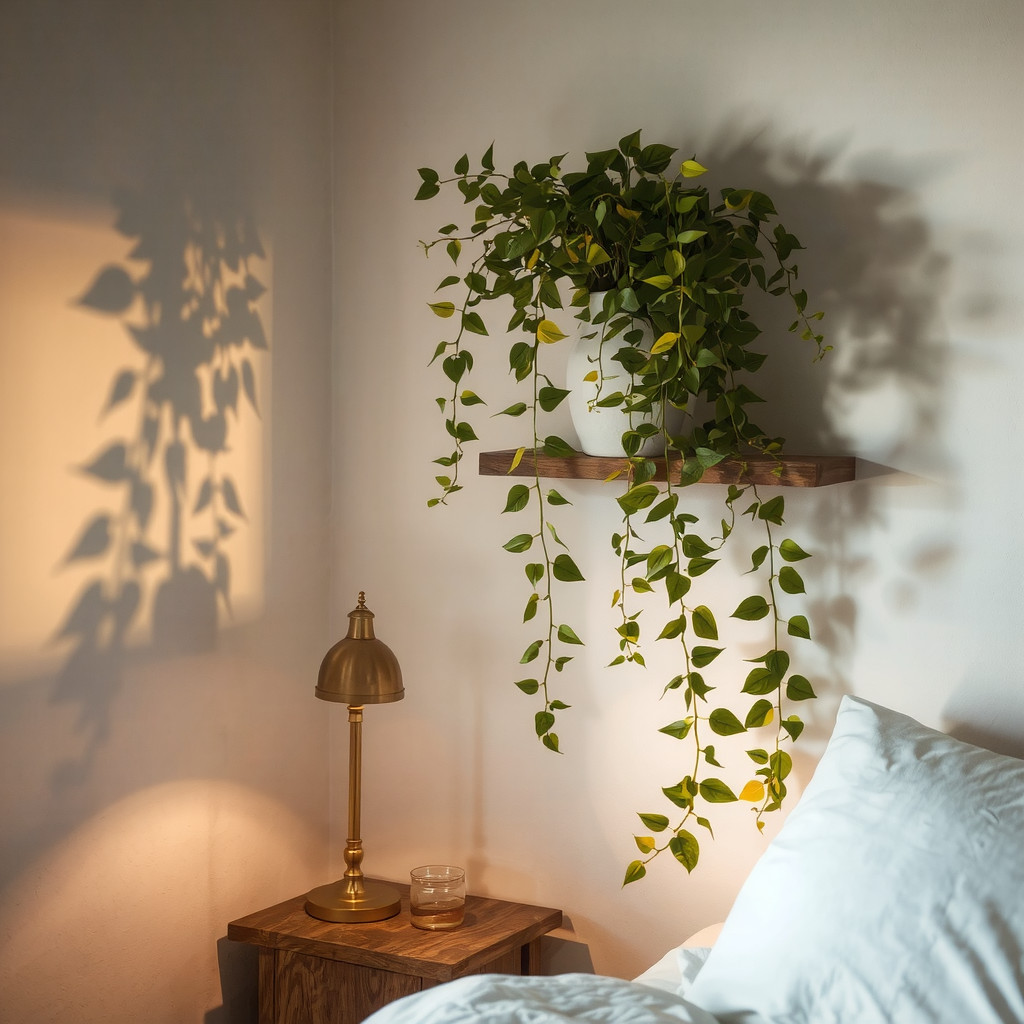
Observe where the natural light falls during the day. An east-facing window offers gentle morning sun, perfect for most foliage, while a north-facing room requires plants that tolerate shade. Artificial lighting also plays a role; a warm table lamp can highlight the verdant tones of your greenery in the evening, turning your plant into a moody, ambient feature rather than just a daytime decoration.
Greenery
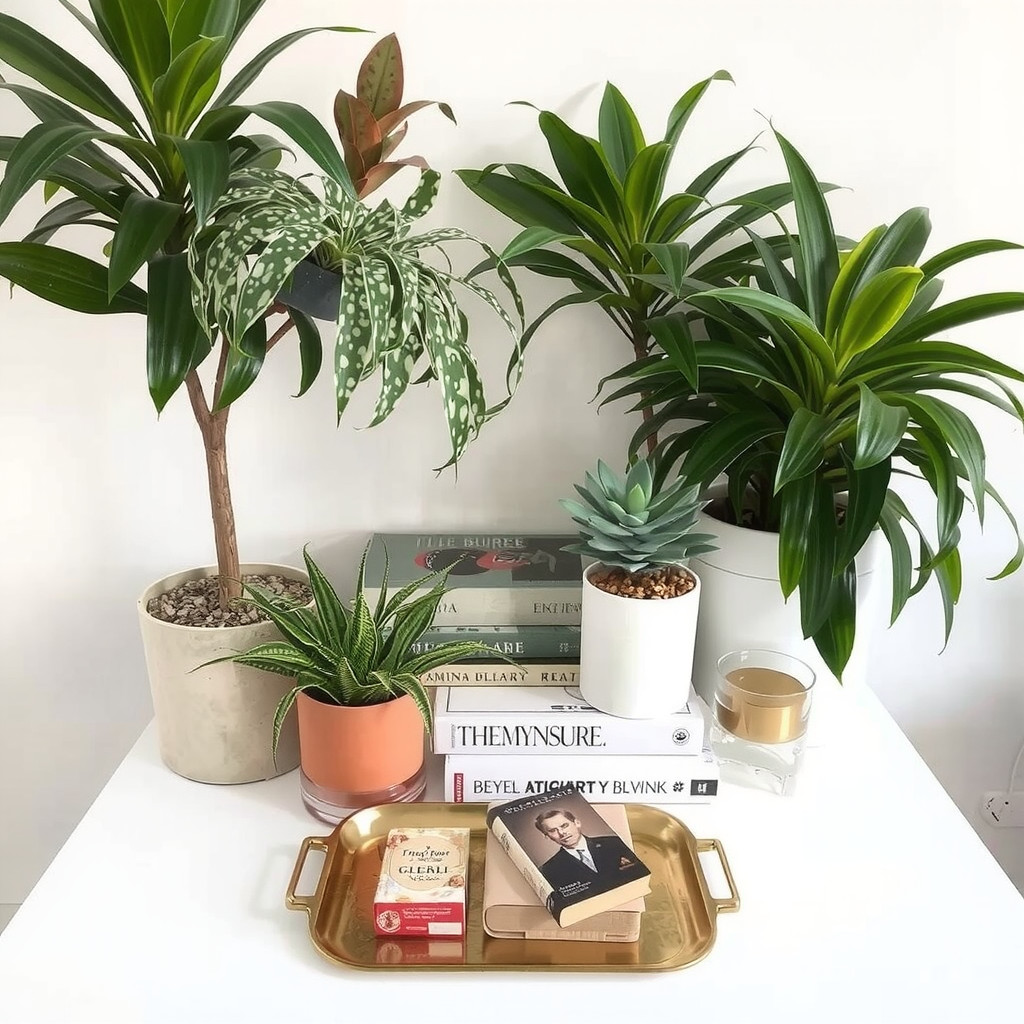
Selecting the right species is the foundation of a low-maintenance indoor garden. You need plants that are forgiving of irregular watering and lower light levels. The Snake Plant (Sansevieria) is a top contender; it is virtually indestructible and is one of the few plants that continues to convert CO2 into oxygen at night. The ZZ Plant is another stalwart, boasting glossy, emerald leaves that thrive on neglect and low light.
For a trailing aesthetic, the Golden Pothos or Heartleaf Philodendron are excellent choices. They communicate their needs clearly—wilting slightly when thirsty—and bounce back immediately after watering. These botanical allies require minimal intervention, allowing you to focus on rest while they quietly work to enhance your environment.
Tips
- Dust Regularly: Bedroom plants can collect dust just like furniture. Wipe leaves with a damp cloth bi-weekly to keep them breathing and looking fresh.
- Water Sparingly: Most low-light plants prefer to dry out completely between waterings. Overwatering is a more common threat than underwatering.
- Rotate Pots: Turn your plants a quarter turn every time you water them to ensure even growth and prevent them from leaning toward the light source.
- Group for Humidity: If your bedroom air is dry from air conditioning or heating, grouping plants together creates a microclimate with slightly higher humidity.
ADVERTISEMENT