ADVERTISEMENT
Creating a Calm Indoor Jungle with Easy-Care Plants
You can turn even the smallest apartment into a soothing indoor jungle using forgiving, beginner-friendly plants. Picture trailing pothos softening sharp corners and an upright snake plant anchoring your favorite chair, all working together to calm your space and your mind. 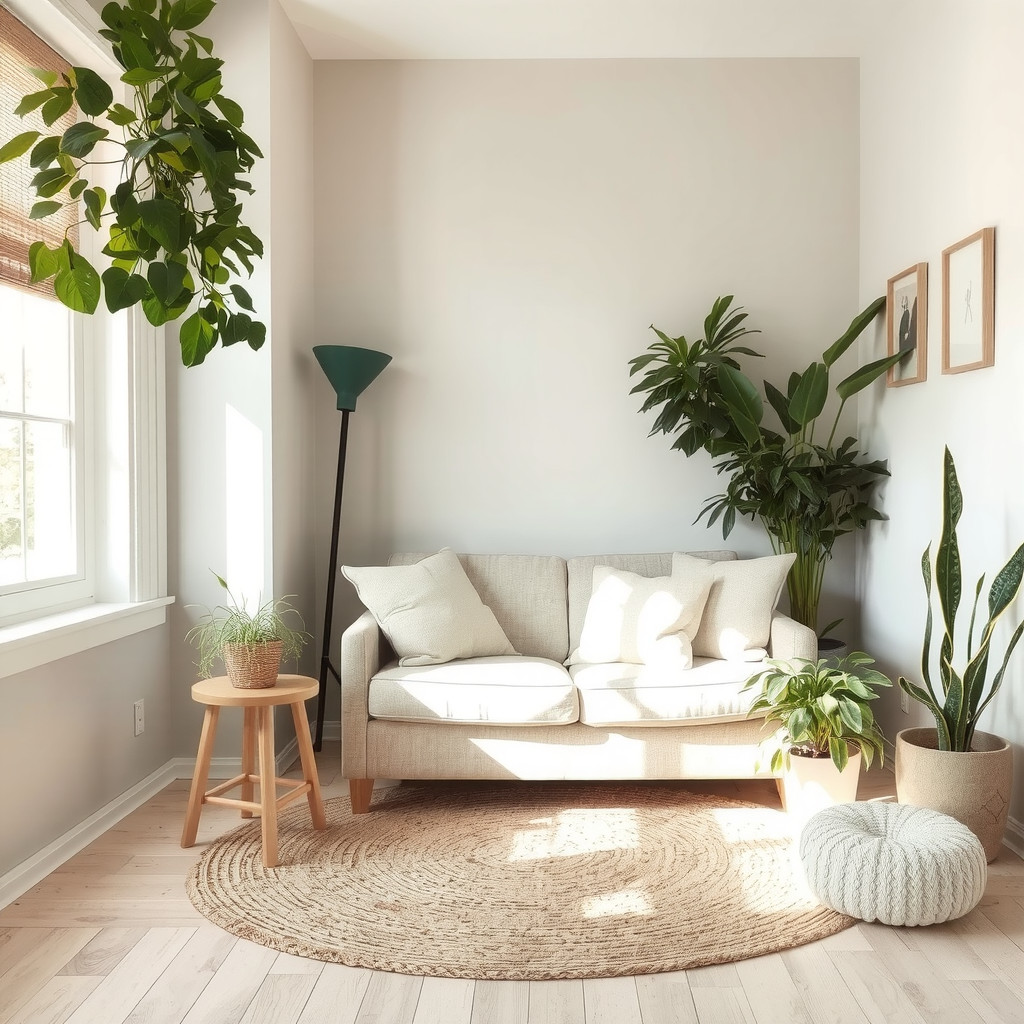
With a few thoughtful choices in layout, textures, and lighting, your first collection of indoor plants for beginners will feel intentional rather than cluttered. You don’t need rare specimens or expert skills—just simple, resilient greenery placed with care.
Layout and Positioning
Start by choosing one room as your plant hub so everything feels cohesive. In a living room, place taller, structural plants like a snake plant or ZZ plant near corners or beside the sofa to visually “frame” the seating area. 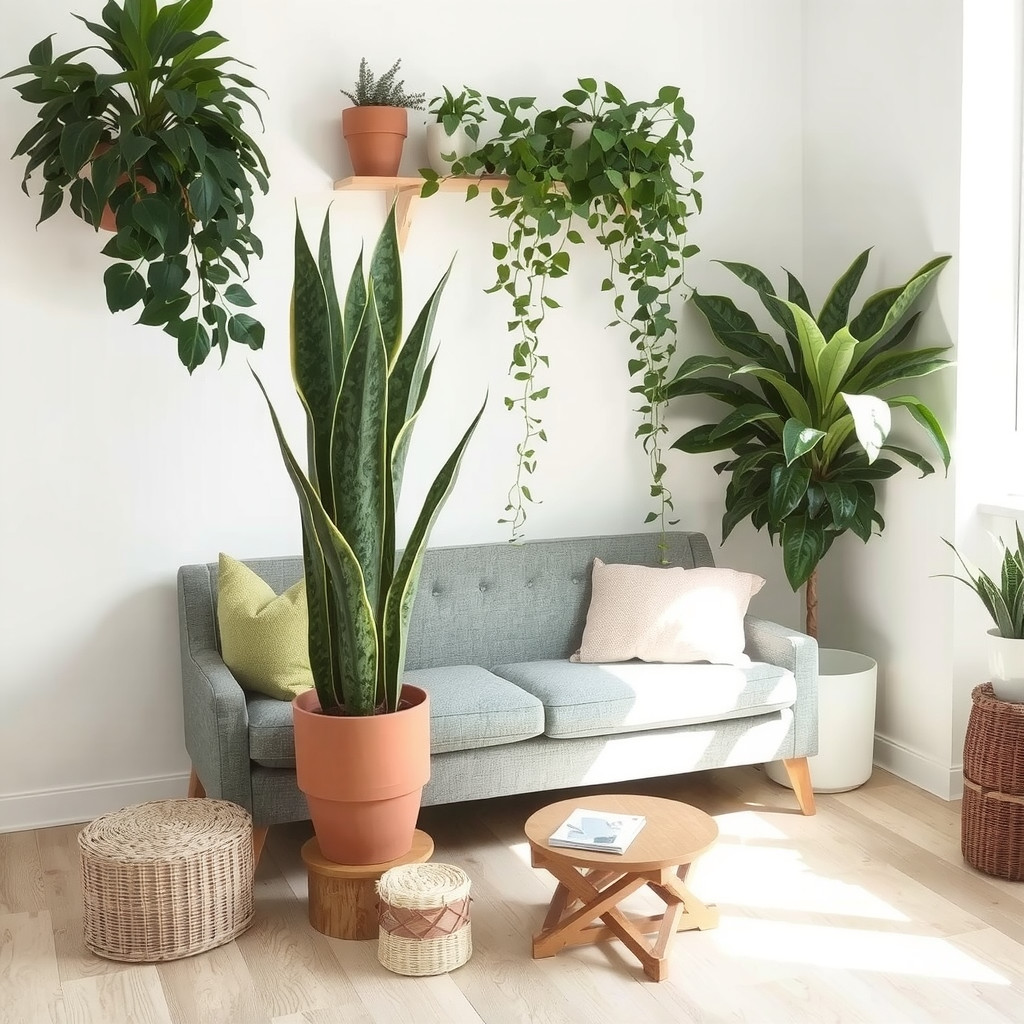
Layer medium plants, such as peace lily or dracaena, at eye level on side tables or consoles. Let easy pothos trail from a high shelf to soften straight lines and draw the eye upward. In tight spaces, use vertical solutions—wall shelves, slim ladder racks, or a single hanging planter—to build height without sacrificing floor space.
Think of plants as you would furniture: group them in odd numbers, vary heights, and leave negative space so each leaf has room to breathe.
Materials and Textiles
The right materials help your indoor jungle feel warm and curated instead of chaotic. Choose planters in a limited palette—matte white ceramic, sand-colored terracotta, and woven baskets—to keep the focus on foliage. 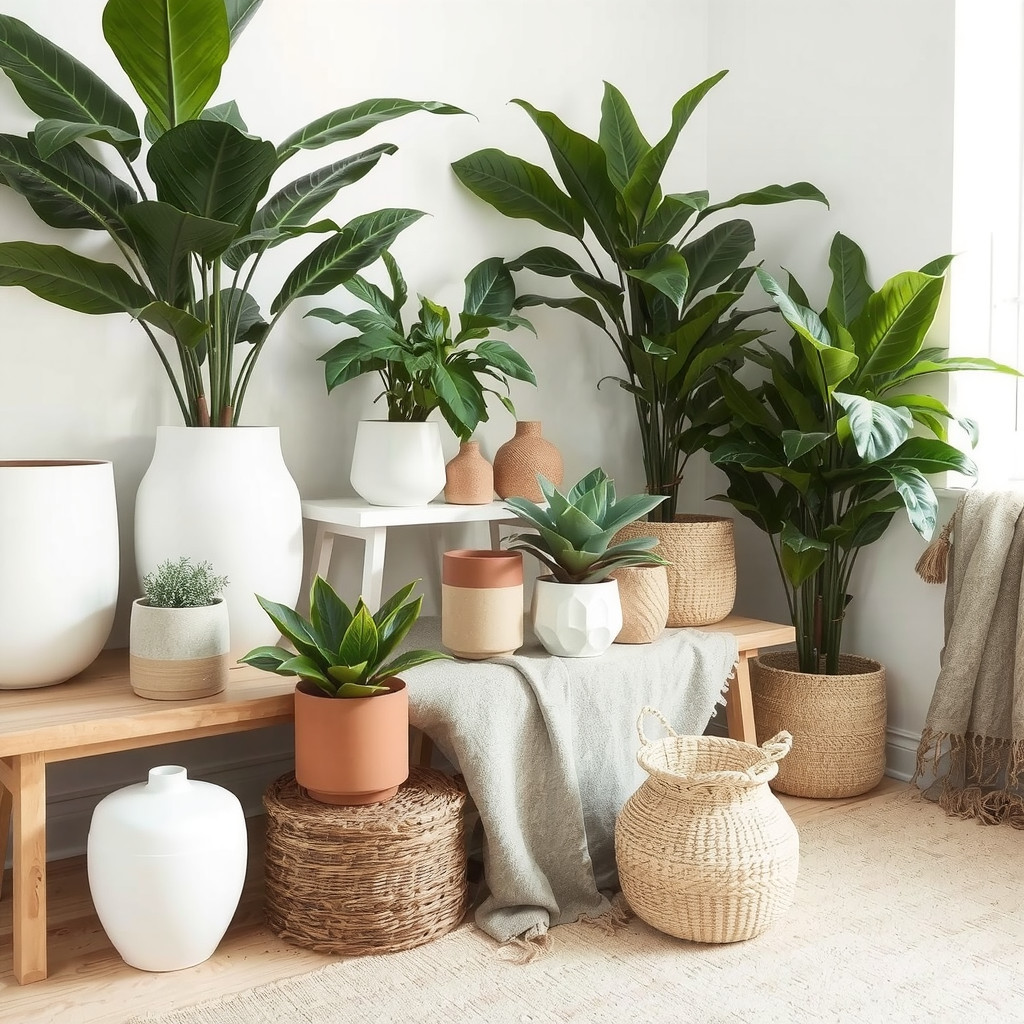
Layer natural textiles nearby to echo the softness of the leaves. A jute rug under your plant cluster, a nubby wool throw over the sofa, and linen cushion covers in earthy tones create a gentle backdrop for your greenery. Mix smooth glazed pots with rough clay, ribbed glass mister bottles, and rattan trays to add tactile interest without overwhelming the room.
Focal Points
Give your eye somewhere to land by creating one or two green focal points instead of scattering plants everywhere. A lush peace lily on a pedestal table can become a serene centerpiece in the living room, its glossy leaves catching the light. 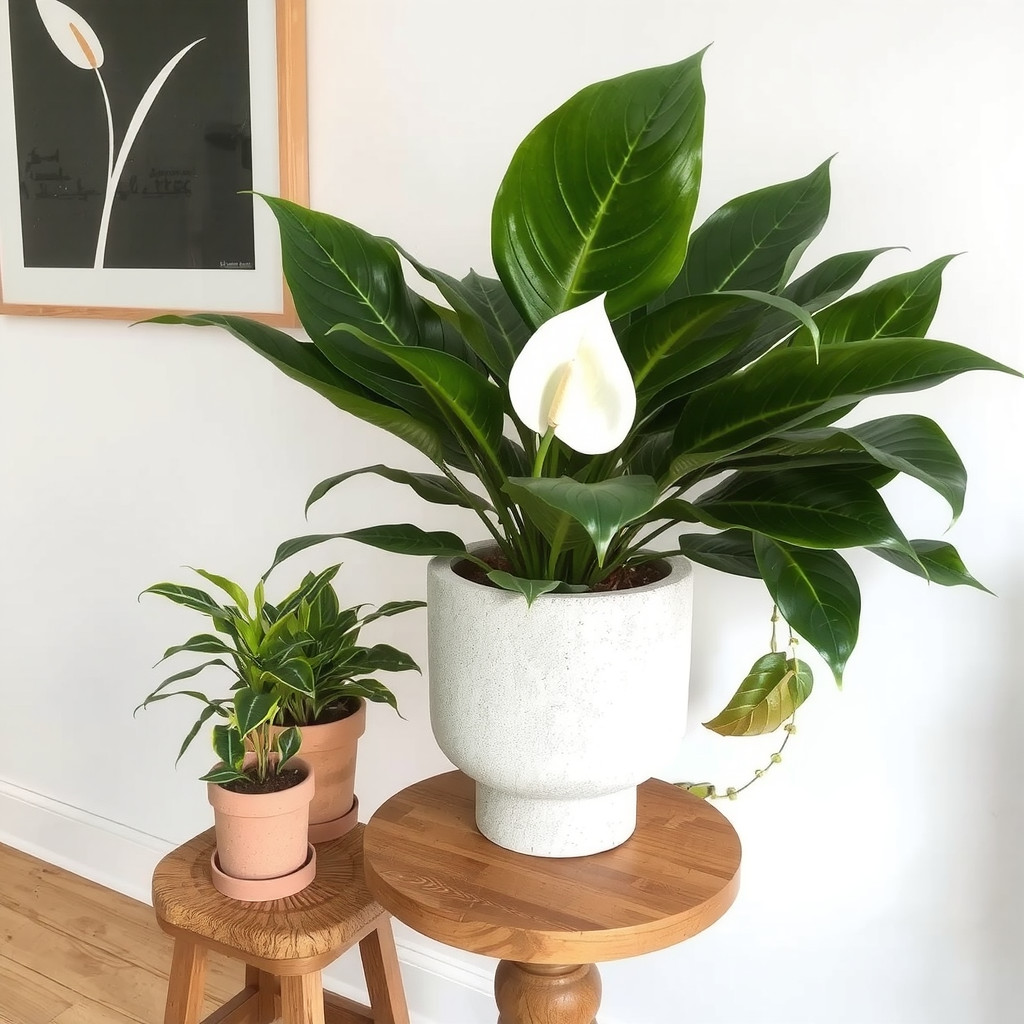
In a bedroom, a single large ZZ plant beside the bed adds height and calm structure, while a small cluster of pothos and philodendron on a dresser provides softness. Use trays or low stools to gather several small pots into one visual moment, making your low-maintenance greenery look intentional and styled.
Lighting
Most easy indoor plants for beginners thrive in bright, indirect light, so start by reading your windows. South- and east-facing windows usually offer the best gentle brightness; place snake plants, pothos, and ZZ plants slightly to the side of these windows rather than directly in front. 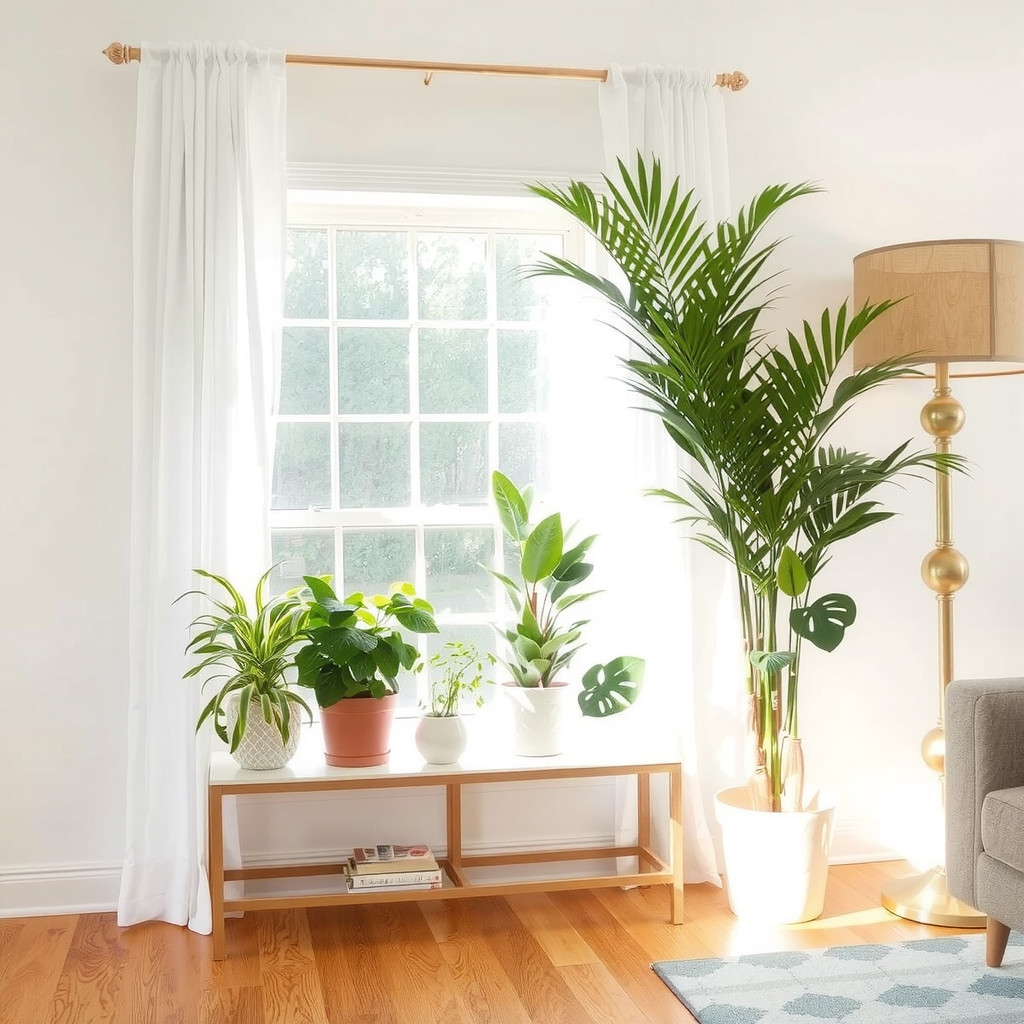
If your home is dim, use warm-toned floor or table lamps with soft shades near plants to mimic dappled daylight. Discreet full-spectrum bulbs tucked into existing fixtures can help peace lilies and pothos stay lush without changing your decor. Avoid harsh overhead-only lighting; instead, layer smaller light sources to create an evening glow that flatters both leaves and living areas.
Greenery
Choose plants that forgive missed waterings and less-than-perfect light. Start with pothos, ZZ plant, snake plant, peace lily, and maybe a sturdy parlor palm. 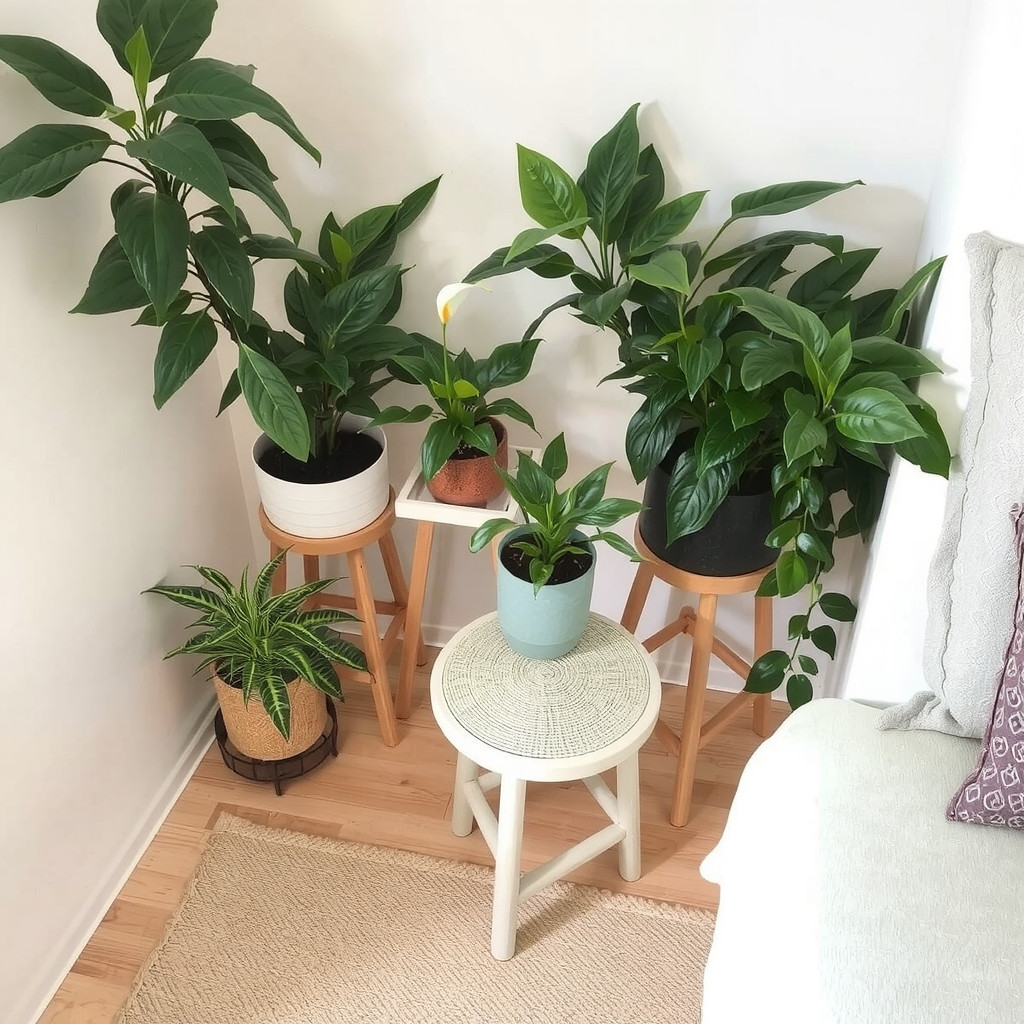
Group plants with similar needs together: low-light lovers in one corner, brighter-light plants near a window. Use plant stands to stagger heights, placing trailing vines higher and upright shapes lower for balance. As your confidence grows, add one new variety at a time so you can learn its rhythm without feeling overwhelmed.
Tips
- Begin with three to five plants, then expand slowly as you learn their habits.
- Keep a simple watering day—once a week—to check soil, dust leaves, and rotate pots.
- Use matching saucers or trays under pots to protect floors and create a tidy look.
- Turn plants a quarter turn every week so they grow evenly toward the light.
- Tuck a moisture meter or labeled spray bottle into a basket so care tools stay handy.
- When in doubt, underwater slightly; most beginner plants prefer a dry spell to soggy soil.
- Step back often and edit, moving plants until your space feels open, calm, and breathable.
ADVERTISEMENT