ADVERTISEMENT
Grounded Serenity: Crafting the Ultimate Earthy Bedroom
Imagine stepping into a space that immediately lowers your heart rate, a sanctuary where the chaos of the outside world dissolves into warm tones and organic textures. An earthy bedroom is more than just a trend; it is a commitment to tranquility. By embracing the palette of the natural world—warm clays, deep mosses, sandy beiges, and soft creams—you create an environment that feels inherently safe and restful. This design philosophy prioritizes tactile comfort and visual silence, allowing you to recharge fully.
Layout and Positioning
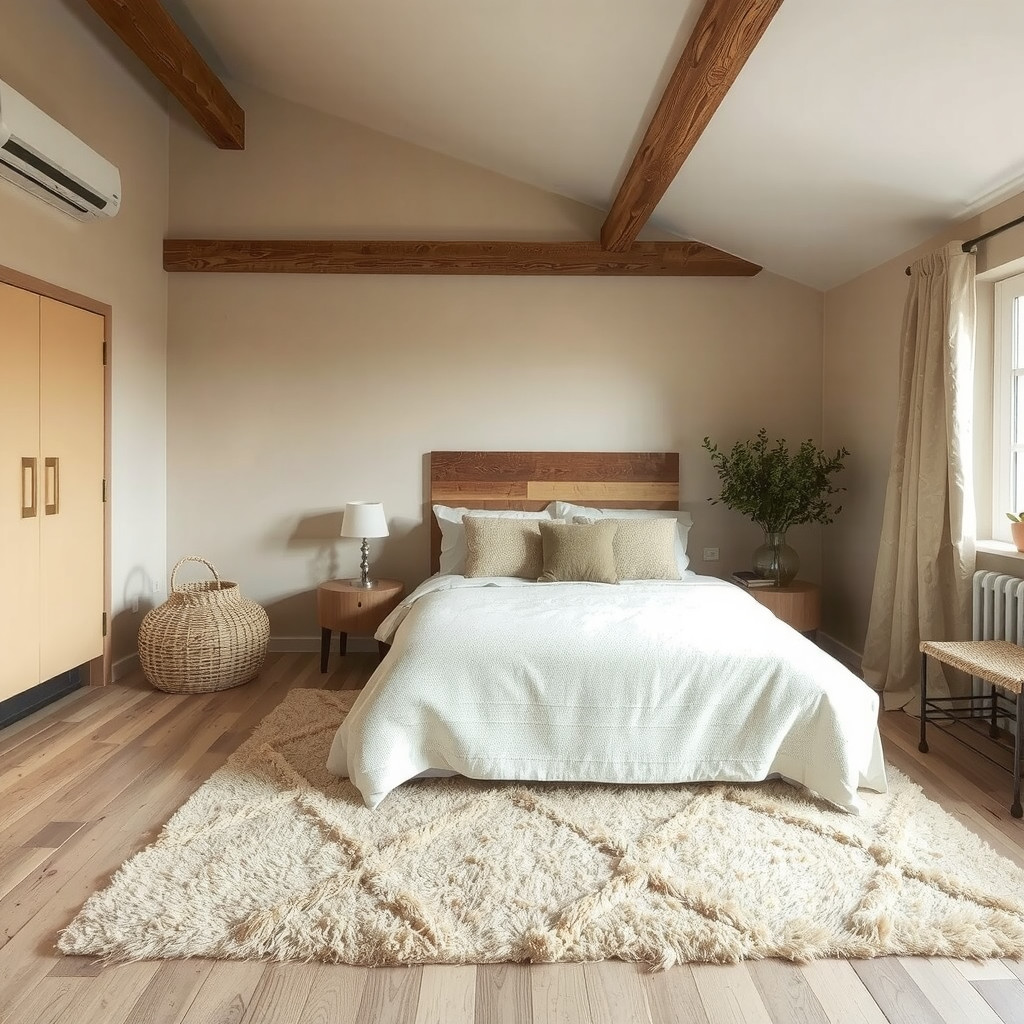
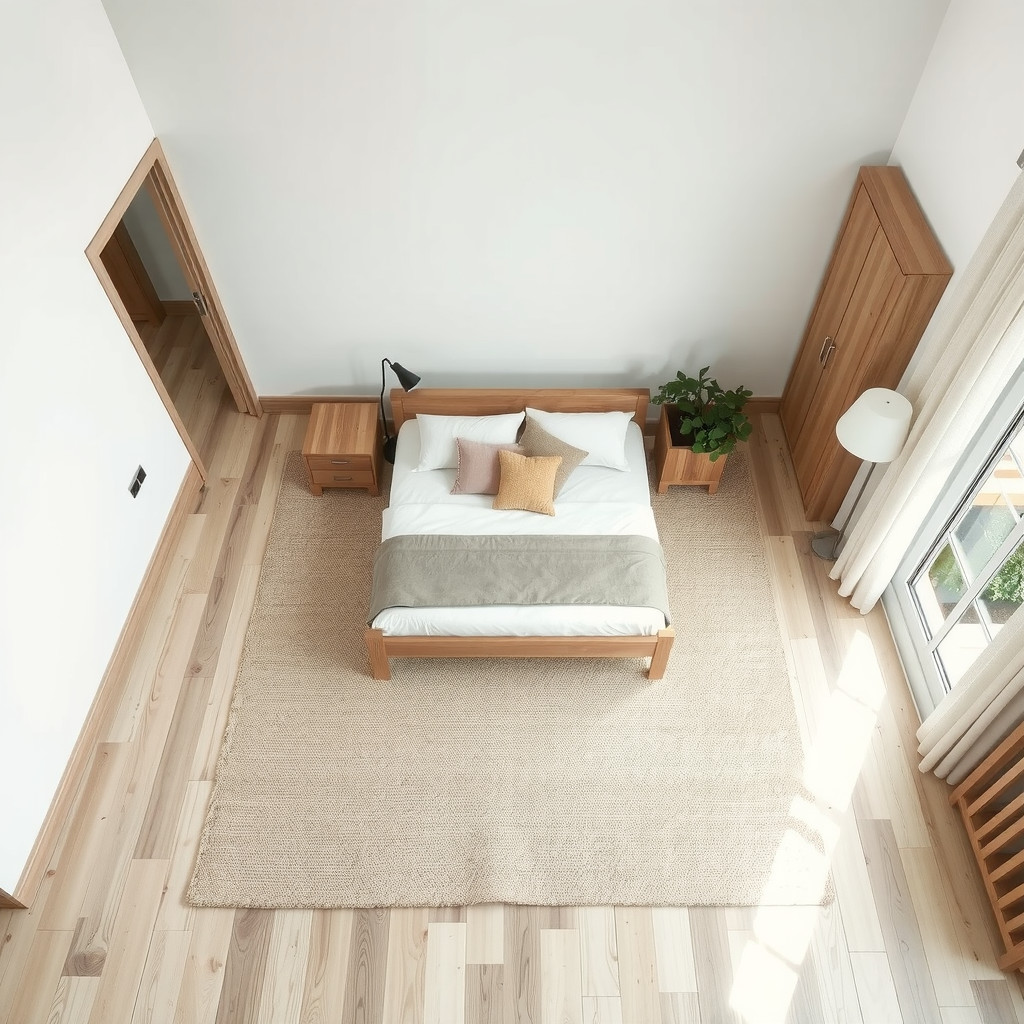
The foundation of a grounded bedroom starts with how you arrange the space. You want to cultivate a sense of openness and flow that mimics a clearing in a forest. Avoid pushing all furniture against the walls; instead, allow your bed to command the room, ideally positioned to face a window or the entry to maximize your line of sight and sense of security.
Consider low-profile furniture to maintain a grounded feeling. A bed frame that sits closer to the floor can make the ceilings feel higher and the room airier. Keep pathways clear of clutter to ensure your movement through the space remains unobstructed and fluid.
Materials and Textiles
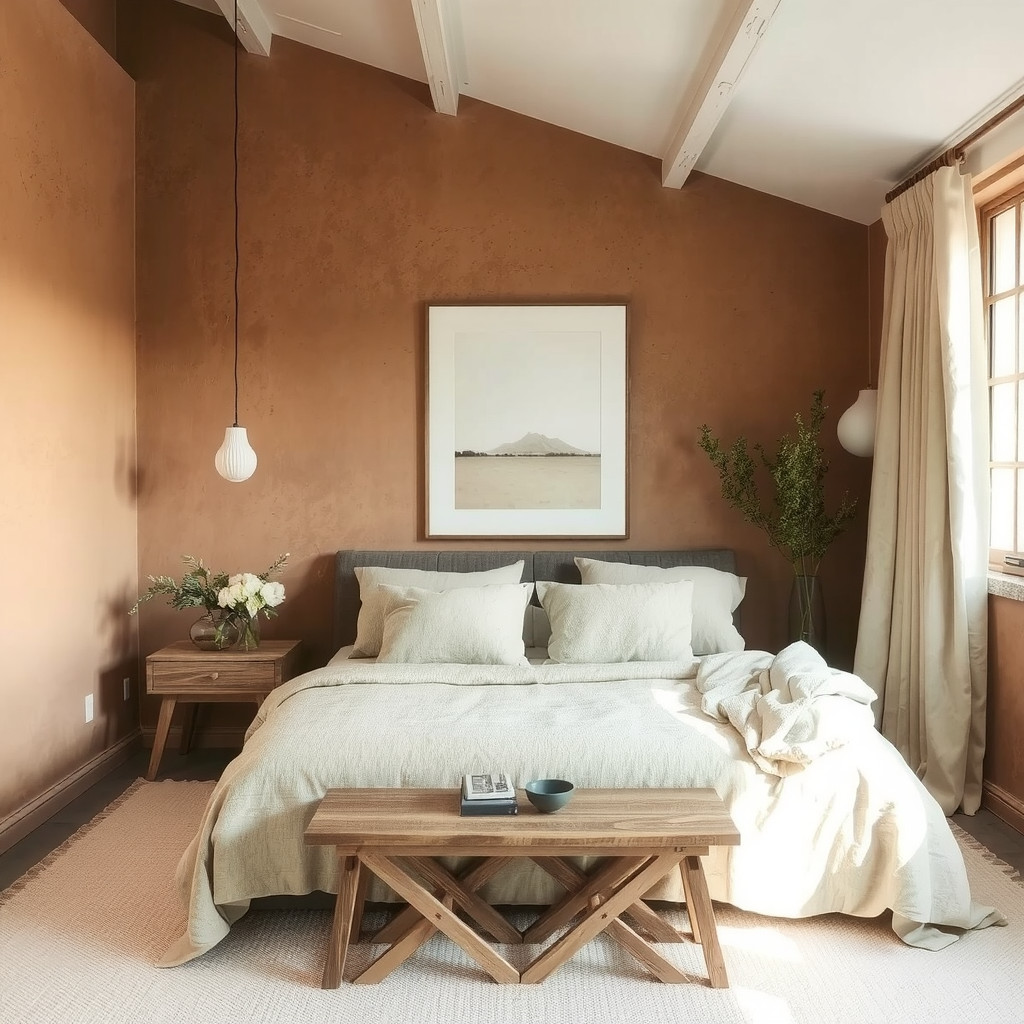
The soul of an earthy bedroom lies in its materials. Your goal is to introduce surfaces that invite touch and age gracefully. Swap out synthetic blends for pure linen or organic cotton bedding in oatmeal, rust, or sage hues. These fabrics breathe well and possess a natural crinkle that adds relaxed sophistication without trying too hard.
Incorporate raw wood elements, such as oak or walnut, which bring warmth and grain patterns that act as natural art. Don’t forget the floor; a chunky jute or wool rug layered under the bed adds immediate softness and anchors the sleeping area. Layering different textures—like a knit throw over a smooth duvet—creates depth and visual interest.

Focal Points
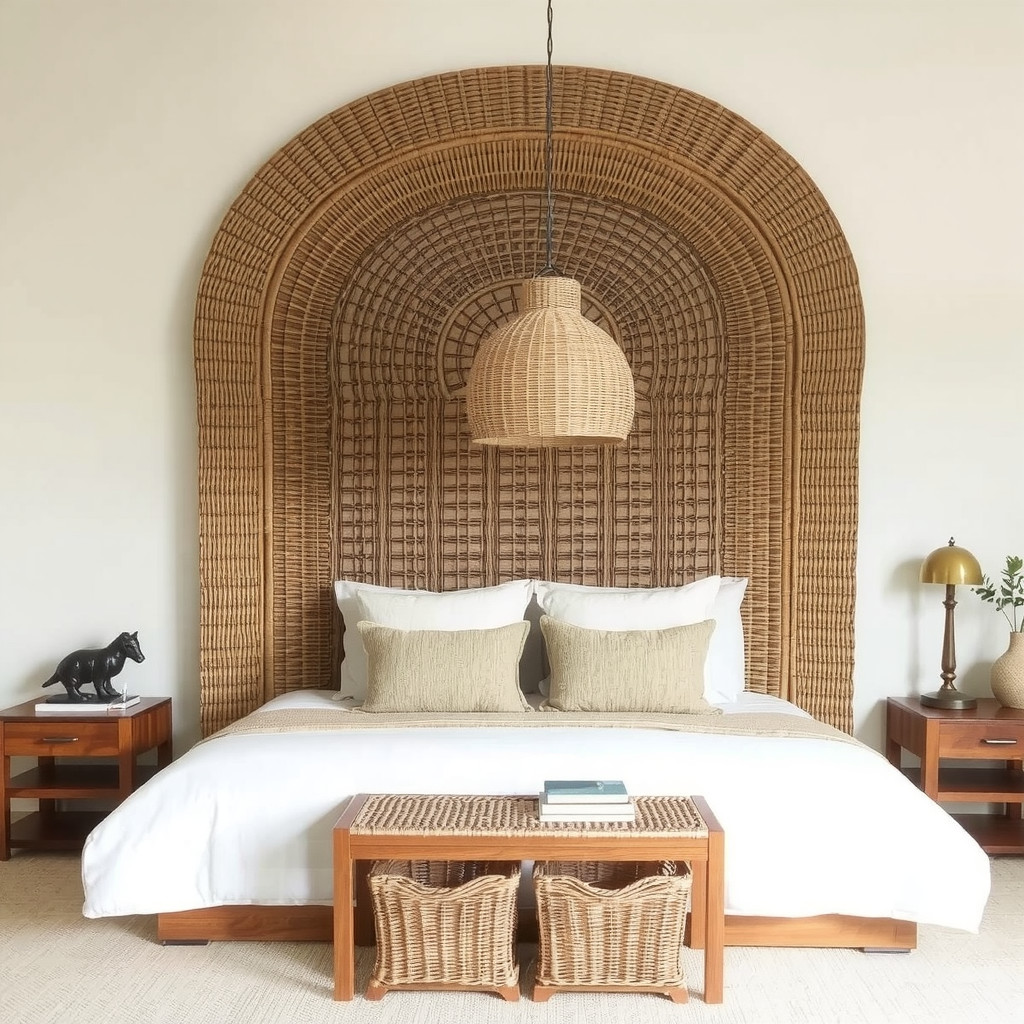
Every room needs an anchor to draw the eye and settle the mind. In an earthy bedroom, this focal point should feel substantial and organic. A statement headboard made of rattan, woven cane, or reclaimed timber can serve as a stunning centerpiece that defines the bed’s importance.
Alternatively, consider a large-scale piece of fiber art or a tapestry hung above the bed. These soft wall hangings absorb sound and contribute to the cozy acoustics of the room. If you prefer a more minimalist approach, an accent wall painted in a deep, lime-wash terracotta can provide a rich, textured backdrop for simple furniture.
Lighting
Lighting in your sanctuary should mimic the sun’s natural progression—bright and functional during the day, warm and dim in the evening. Avoid harsh, cool-toned LEDs that disrupt your circadian rhythm. Instead, opt for bulbs with a warm color temperature (2700K or lower) to create a sunset-like glow.
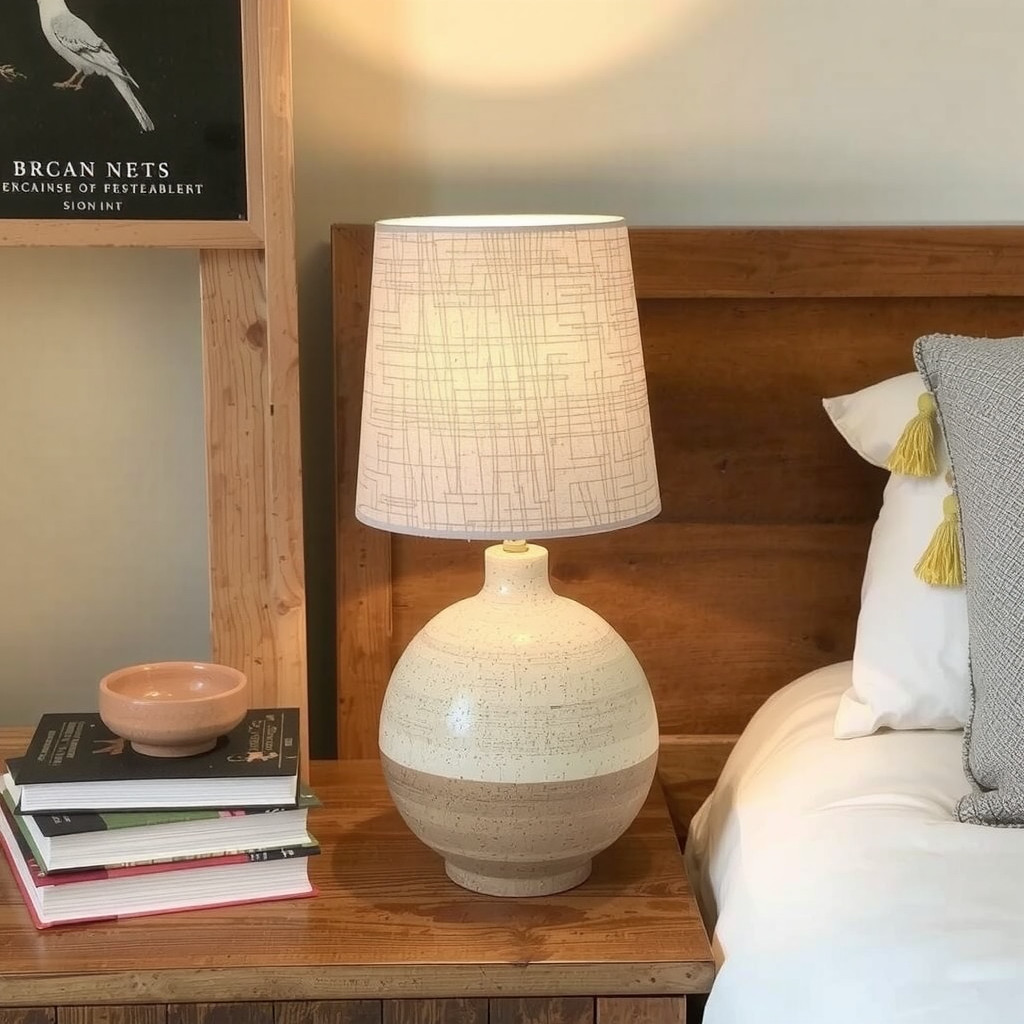
Choose fixtures made from natural materials like ceramic, clay, or paper. A bedside lamp with a stone base and a linen shade diffuses light beautifully, casting a soft, ambient glow rather than a direct beam. Installing dimmer switches is a practical way to control the mood, allowing you to transition effortlessly from reading to sleeping.
Greenery
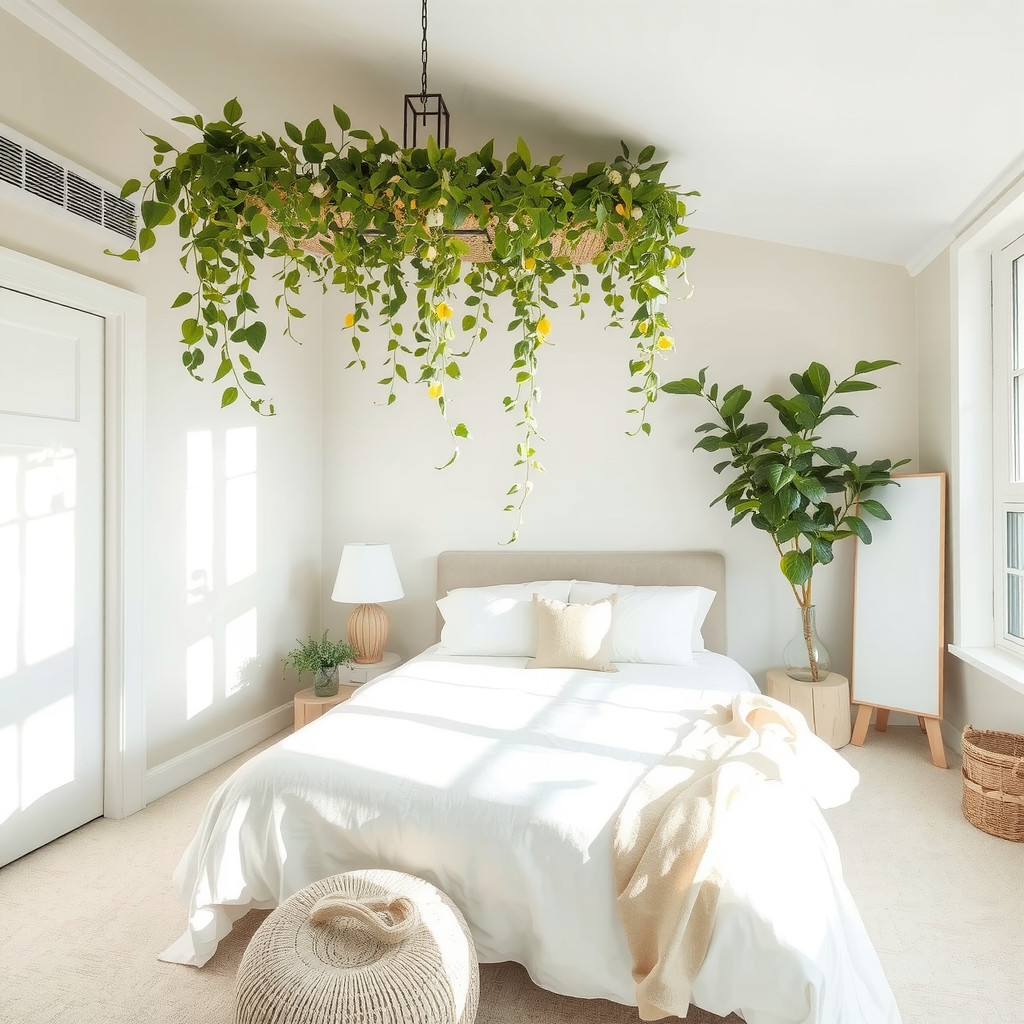
To truly bring the “earthy” concept to life, you must blur the line between indoors and outdoors. Plants are essential decor elements that add vibrancy and improve air quality. They introduce a living energy that static furniture cannot replicate.
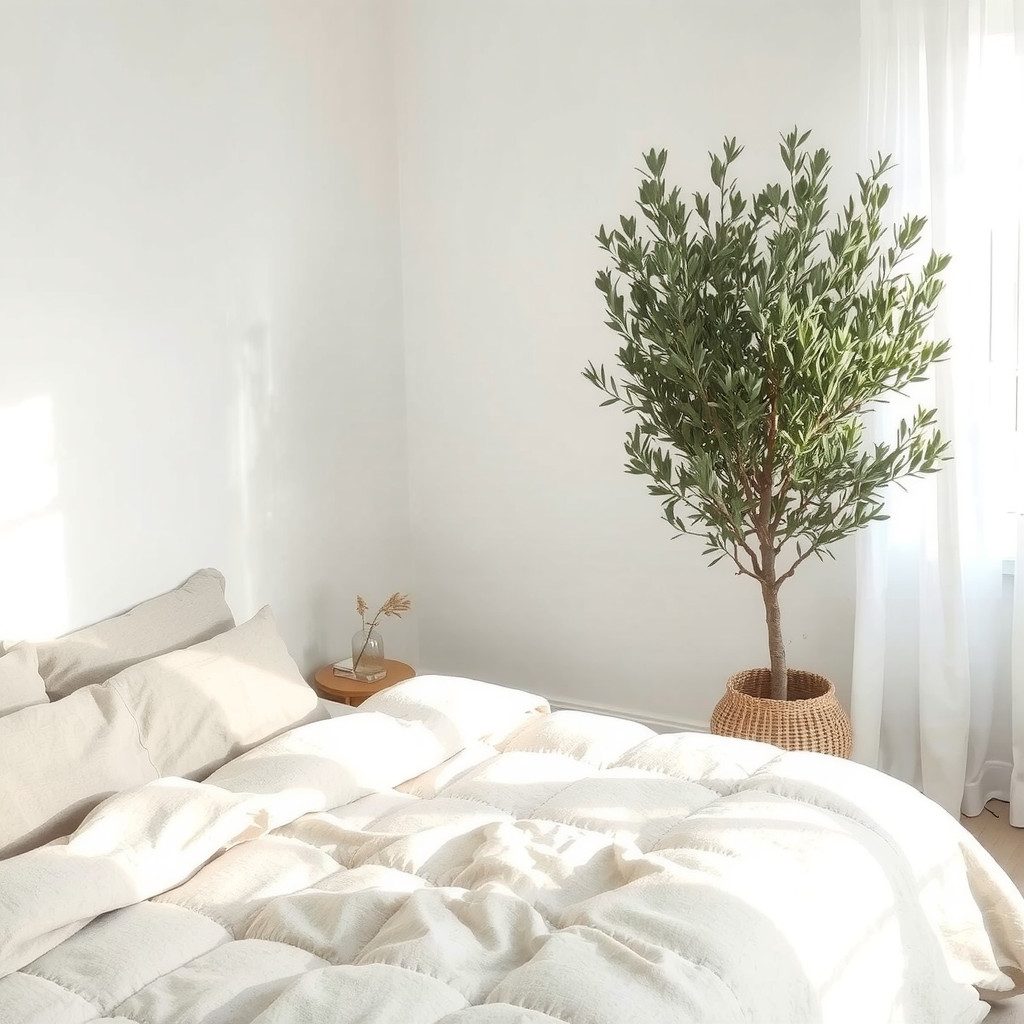
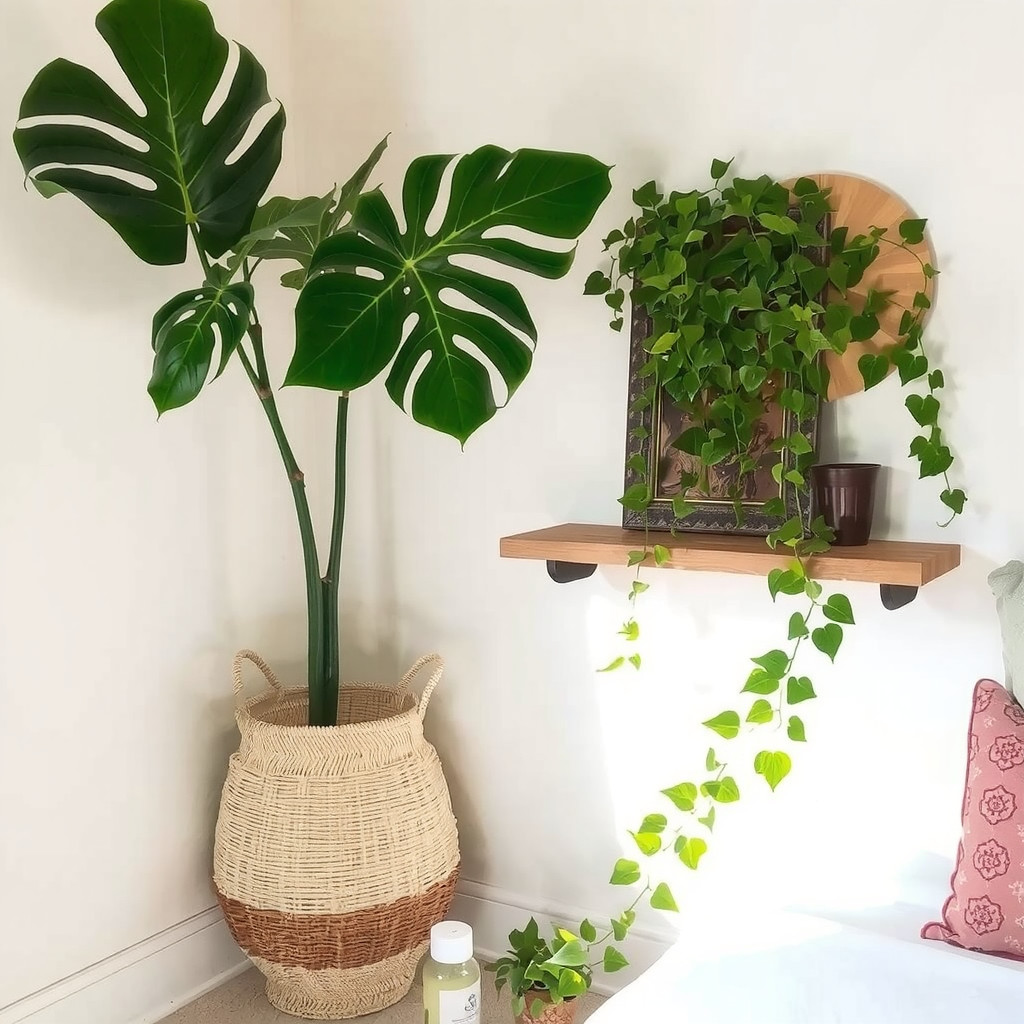
Place a tall statement plant, like a Ficus Audrey or a Snake Plant, in an empty corner to add height and lush green contrast against neutral walls. For smaller spaces, a trailing Pothos on a shelf or a small olive tree on the nightstand can provide that necessary touch of nature. The key is to choose planters in terracotta or woven baskets to maintain the organic material palette.
Tips for a Grounded Space
- Stick to a Palette: Limit your colors to three or four shades found in nature to maintain visual cohesion.
- Hide the Tech: Keep TVs and computers out of the bedroom, or conceal them within armoires to preserve the analog vibe.
- Scent Matters: Use a stone diffuser with essential oils like cedarwood, sandalwood, or lavender to engage the olfactory senses.
- Mix Wood Tones: Don’t be afraid to mix light oak with dark walnut; nature rarely matches perfectly, and neither should your furniture.
- Declutter Ruthlessly: An earthy space thrives on minimalism; keep surfaces clear to let the textures speak for themselves.
ADVERTISEMENT