ADVERTISEMENT
Introduction
You can make a small home feel calm, airy, and beautifully composed with a few deliberate choices. Prioritizing flow, storage, and light lets every corner work harder without feeling cramped. Imagine stepping into a compact space where each piece is purposeful and the mood stays serene. 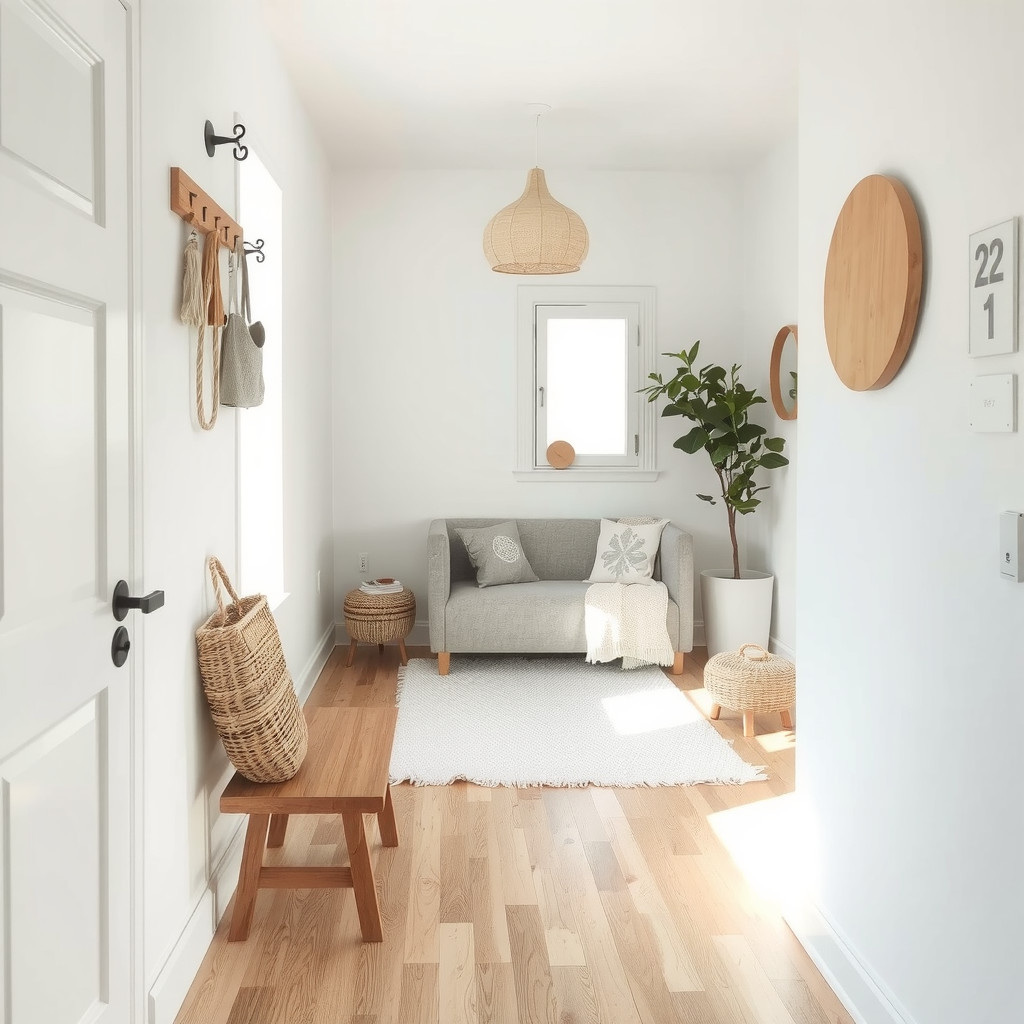
Layout and Positioning
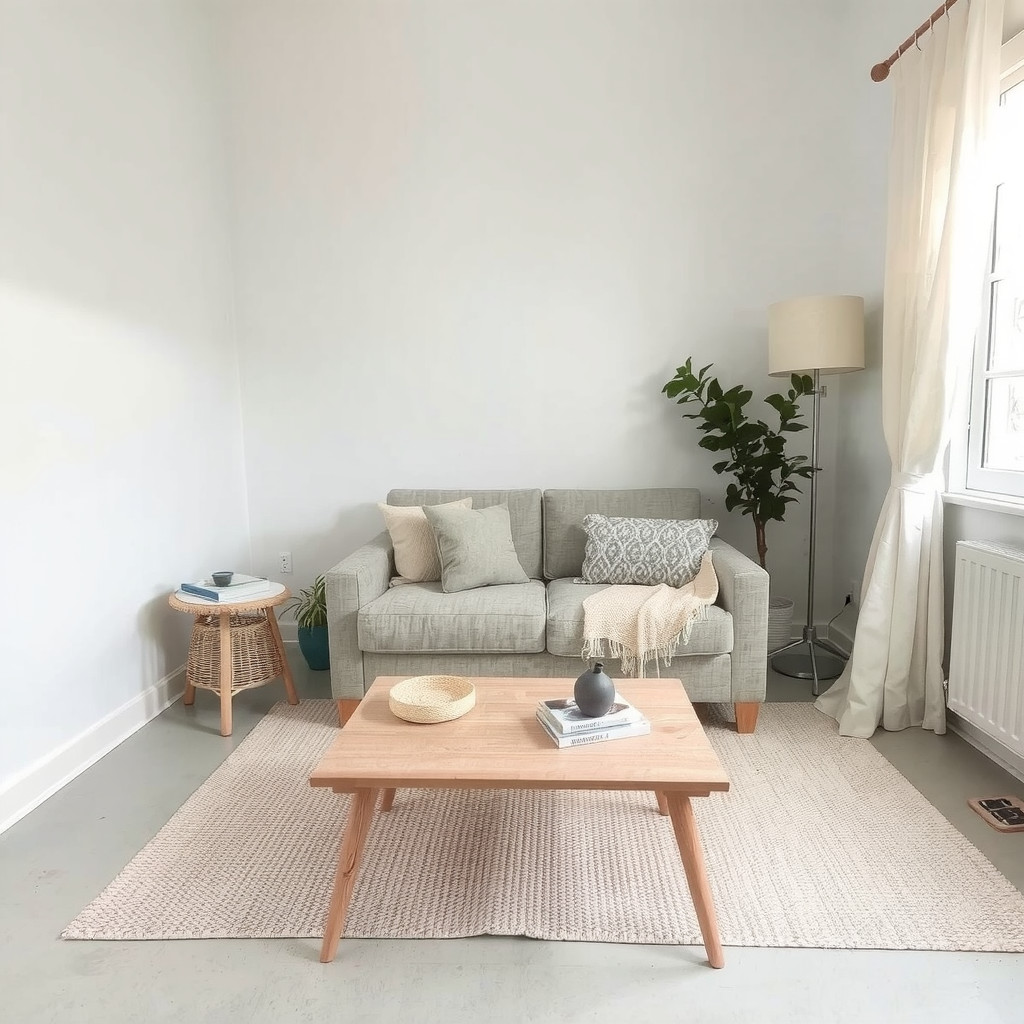
Start by mapping clear pathways so you can move easily from entry to living and dining. Float your sofa slightly off the wall to tuck slim storage or nesting tables behind it. A narrow console at the door doubles as a landing strip and mini desk when needed. 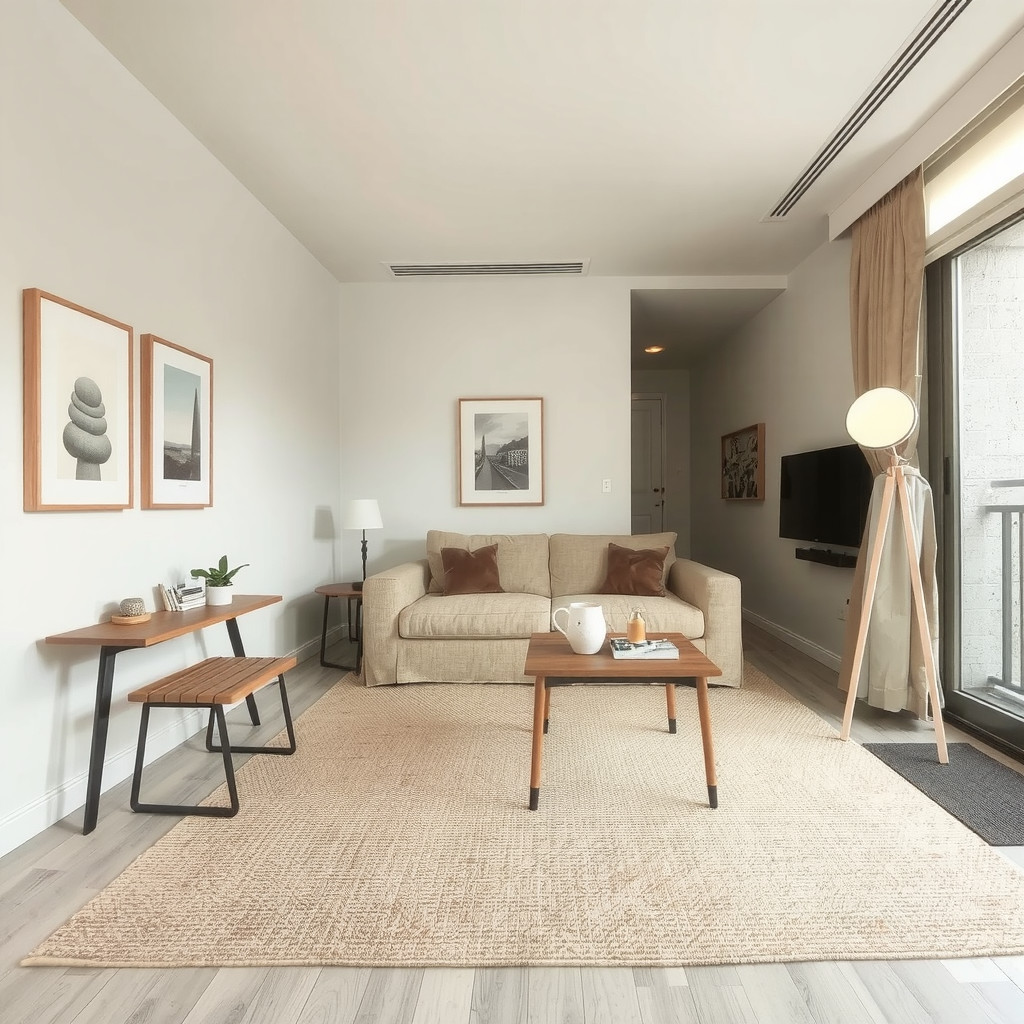 Choose furniture with visible legs and low backs to keep sightlines open. Mount shelves high on the wall to draw the eye upward and free floor space. Use rugs to visually “zone” areas in a studio, giving you a living area, dining spot, and workspace without adding physical barriers.
Materials and Textiles
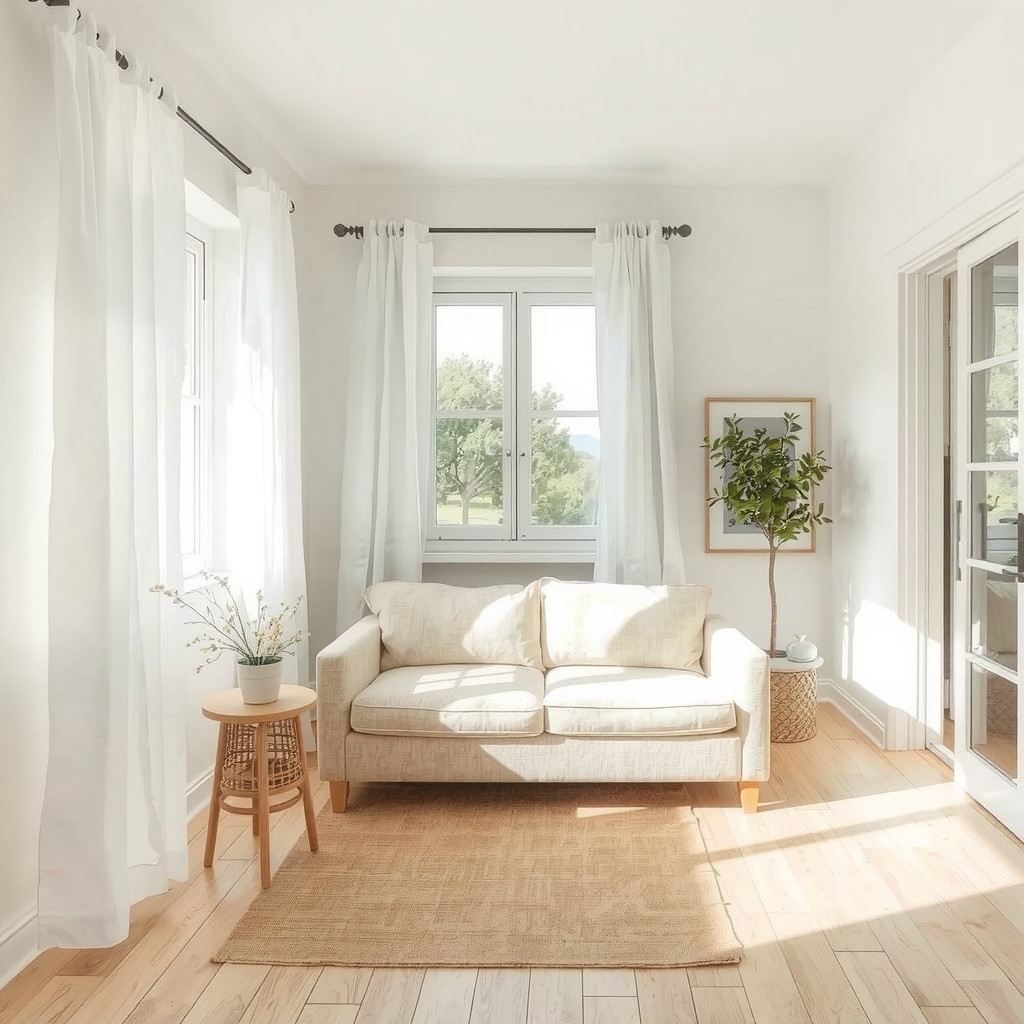
In a small home, every surface influences how open or crowded the space feels. Keep large pieces in light, quiet tones—soft whites, gentle greiges, and pale wood—so the room reads as one continuous, airy canvas. 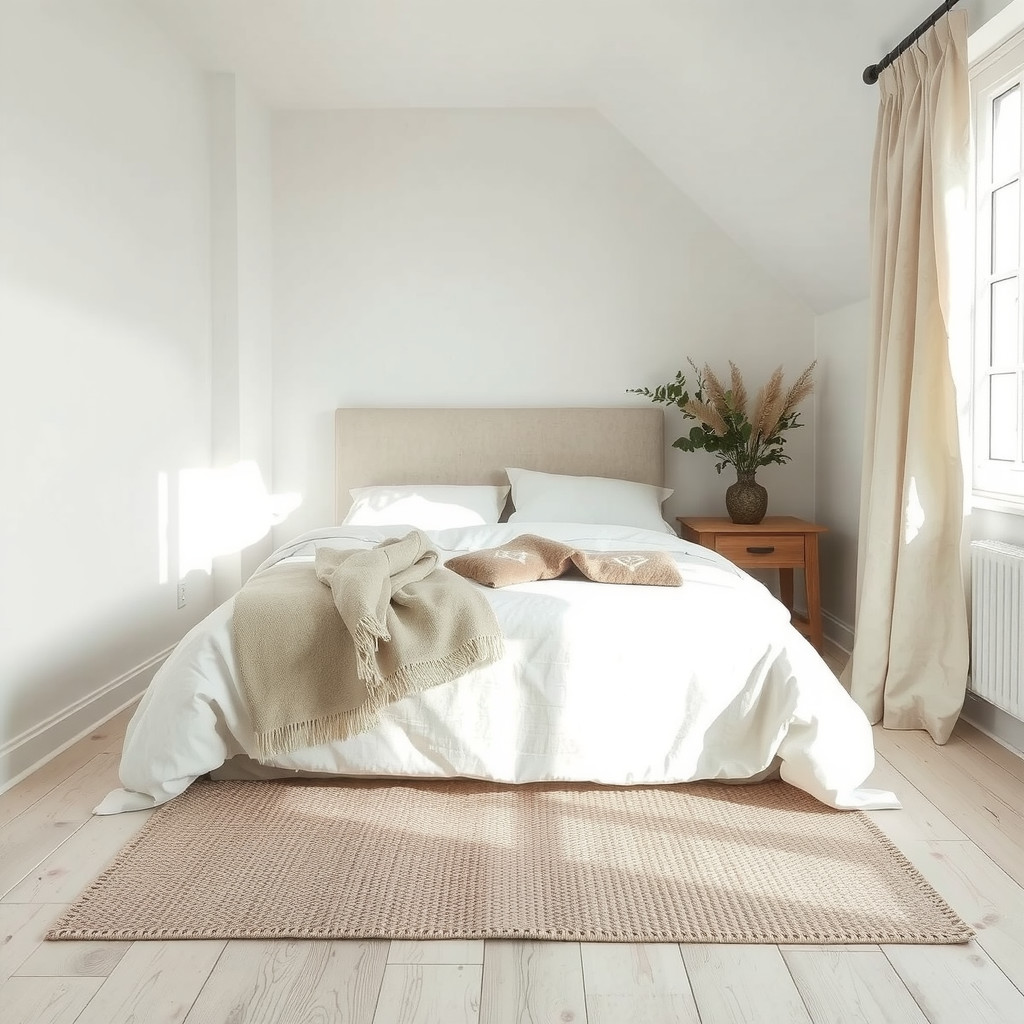 Layer natural textures like linen, wool, and cotton to add depth without heaviness. Choose a flatweave or low-pile rug that is easy to vacuum and visually light. Use a single curtain style throughout; floor-length, sheer panels soften hard edges and filter daylight while maintaining privacy. Add small hits of darker color in cushions or throws to ground the room without shrinking it.
Focal Points
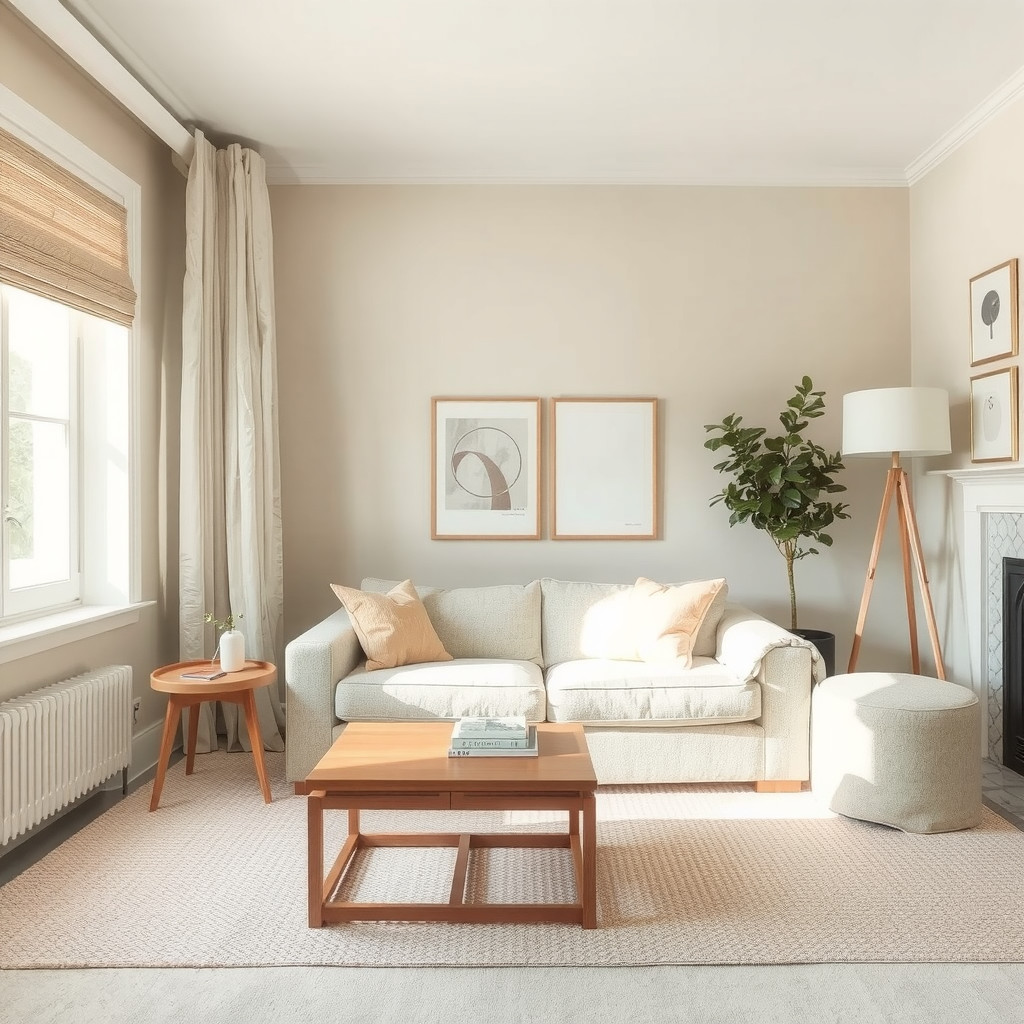
A strong focal point prevents a tiny space from feeling busy. Anchor the main wall with a tightly edited gallery of art in similar frames so your eye reads one organized composition. 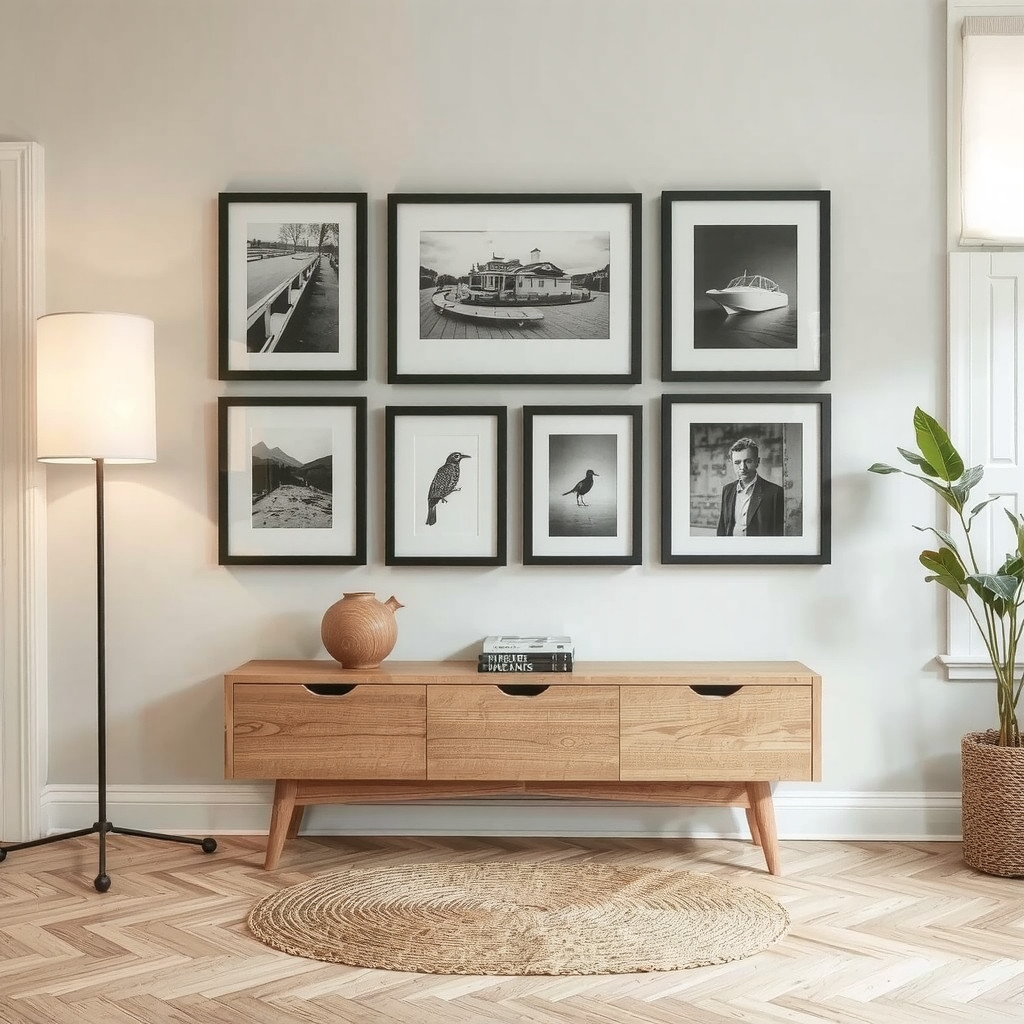 Alternatively, let a single oversized artwork or statement mirror lead the room. Keep the furniture palette restrained around that moment so it stands out clearly. In open-plan studios, use one hero piece—like a sculptural chair or textured headboard—to define “living” versus “sleeping” without adding partitions.
Lighting
Layered lighting keeps a small home from feeling flat or cave-like. Combine an overhead fixture with at least two lower light sources—table lamps, wall sconces, or a slim floor lamp—to create pockets of warmth. 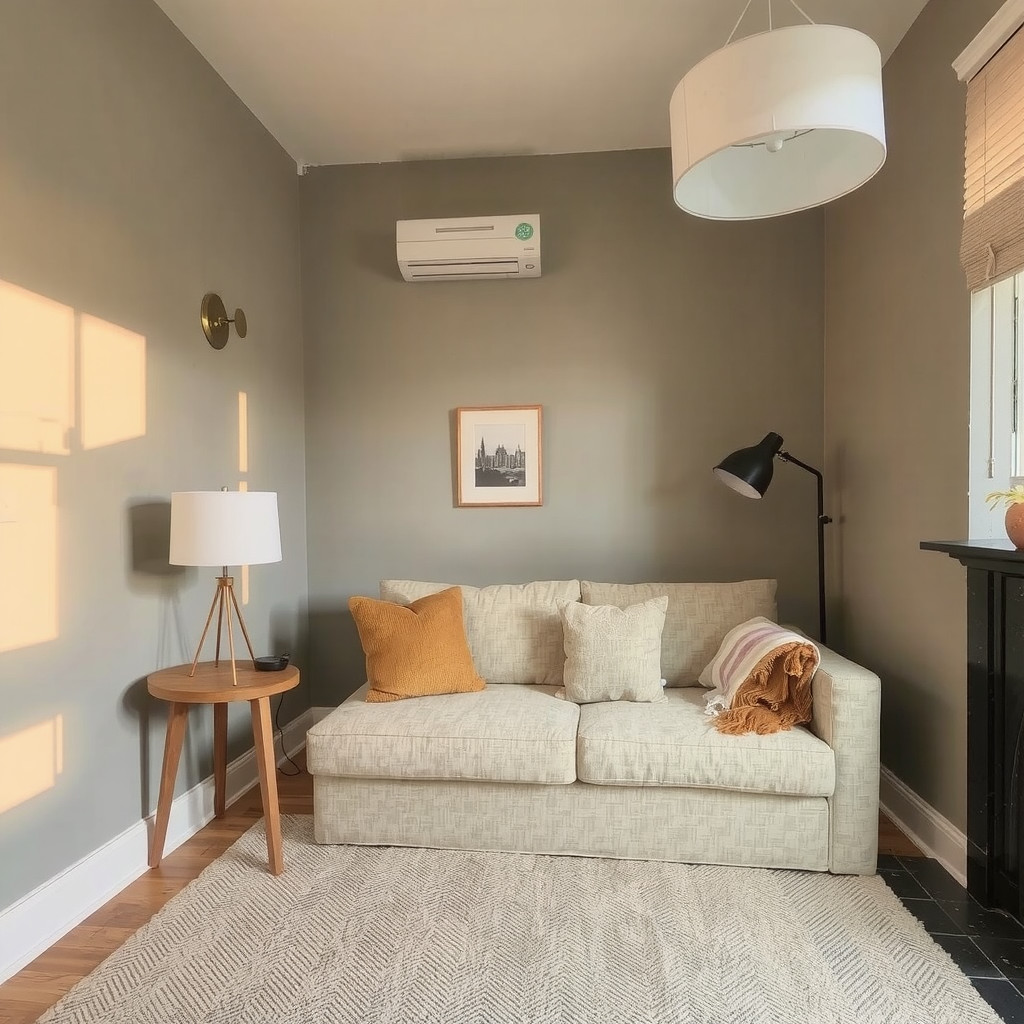 If overhead lighting is harsh, use a simple paper or linen shade to diffuse it. Place a lamp near any dark corner to visually expand the boundaries of the room. Choose warm white bulbs to keep the atmosphere soft. Mirrors opposite windows bounce daylight deeper into the space, making even narrow rooms feel broader.
Greenery
Greenery brings life and softness to tight quarters without demanding much footprint. Cluster a few small plants on a windowsill or wall-mounted ledge instead of scattering them everywhere. 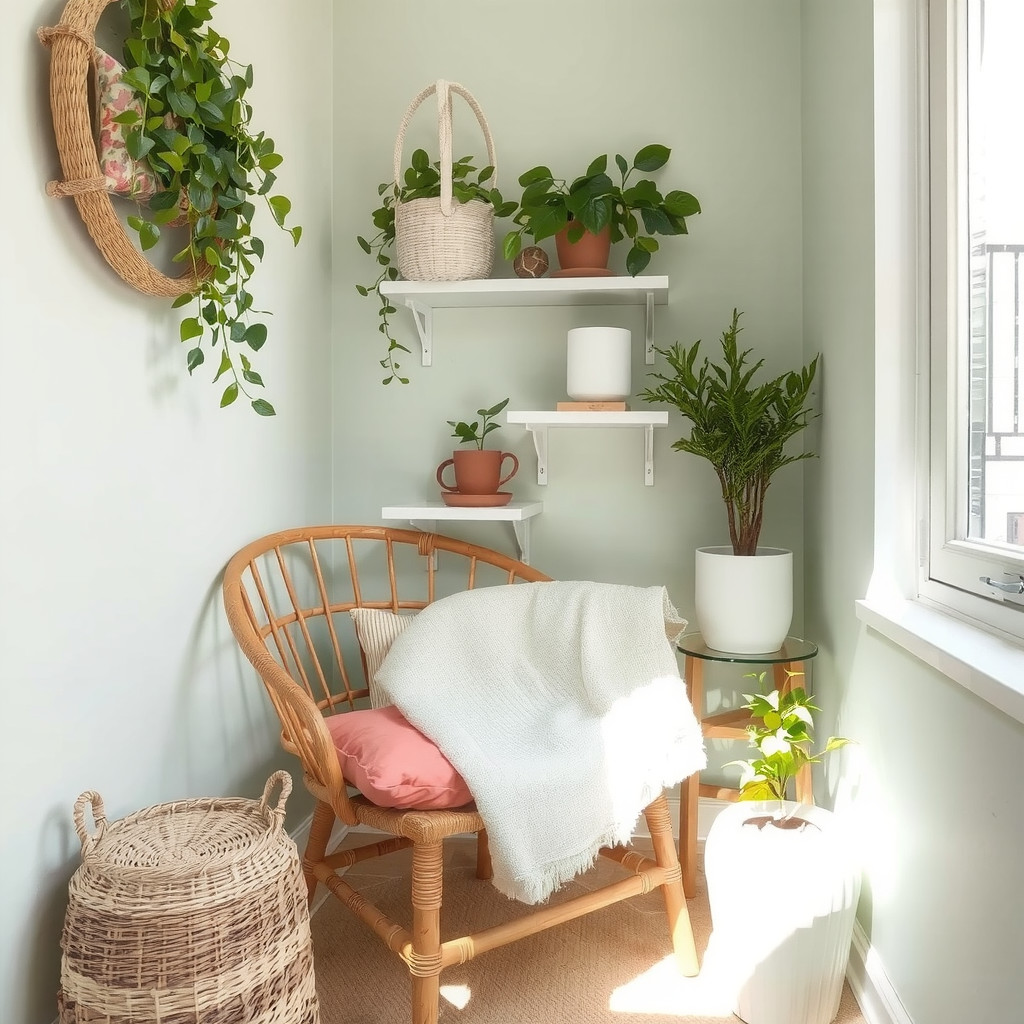 Choose trailing varieties to spill gently from shelves, visually lengthening walls. A slim floor planter in a corner draws the eye vertically while leaving circulation open. Stick to simple, neutral pots so the foliage remains the star and the room doesn’t feel visually noisy.
Tips
- Choose multi-use furniture like storage ottomans, extendable tables, and sofa beds to stretch every square foot.
- Limit your main palette to three or four calm colors, then repeat them from room to room.
- Edit frequently; donate what you no longer use so storage stays breathable, not overstuffed.
- Mount hooks, rails, and shelves high to reclaim vertical space for bags, coats, and everyday essentials.
- Corral small items in baskets and trays to keep surfaces tidy and visually streamlined.
- Keep patterns small-scale and coordinated so they add interest without overwhelming your compact rooms.
- Leave a little negative space on each wall; emptiness is what makes your small home feel spacious.
ADVERTISEMENT