ADVERTISEMENT
Lush Living: Styling Your Living Room with Indoor Plants
Introduction
When you step into your living room, you want it to feel calm, fresh, and welcoming. Indoor plants give you that feeling instantly, softening hard lines and bringing gentle movement to the space. Picture a quiet corner where a tall fiddle-leaf fig anchors the room, its leaves catching the afternoon light. 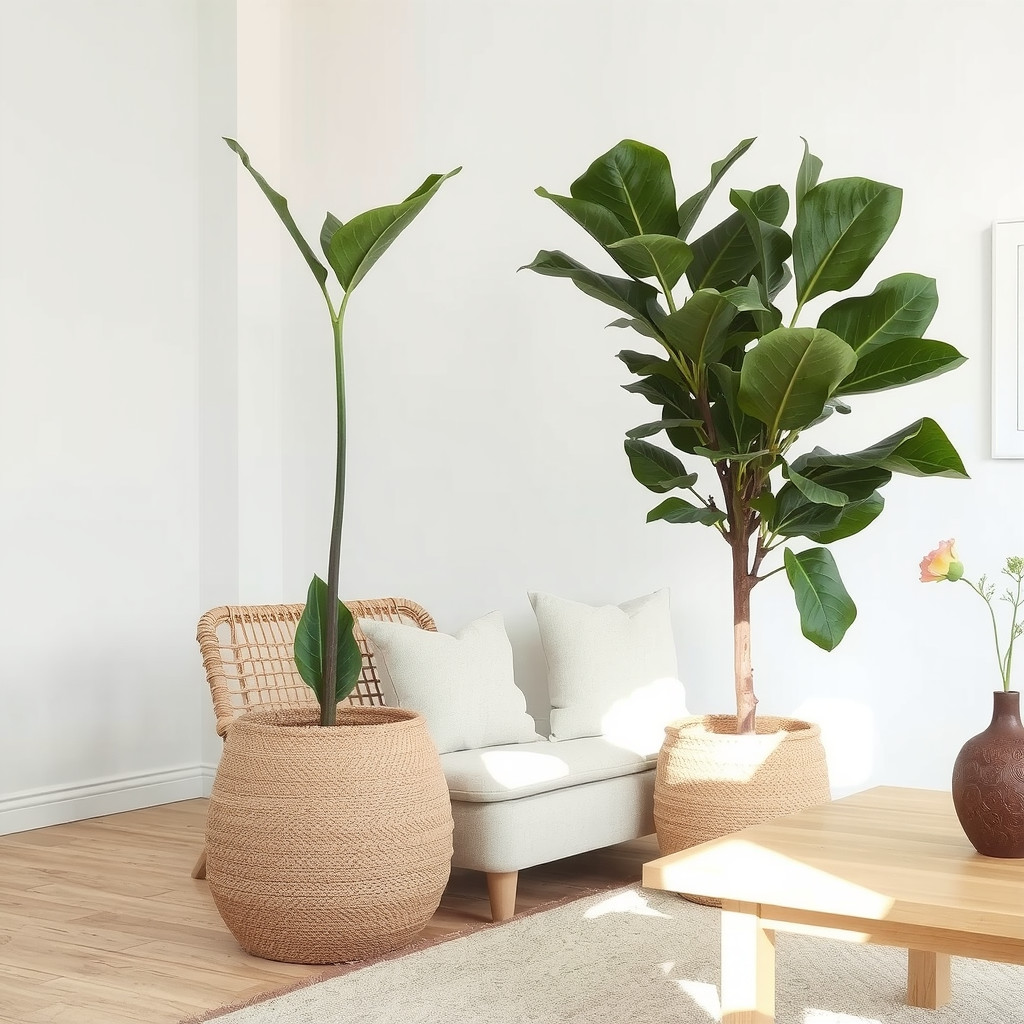
Plants do more than decorate; they shape the mood. Their colors, forms, and textures influence how spacious, cozy, or vibrant your living room feels. With a thoughtful plan, you can layer greenery in a way that looks curated rather than cluttered.
Layout and Positioning
Begin by reading the room like a floor plan, not a plant shop. Notice where your eyes naturally land when you enter. Those spots are perfect for bold greenery, such as a large floor plant beside the sofa or a cluster at the end of a console. 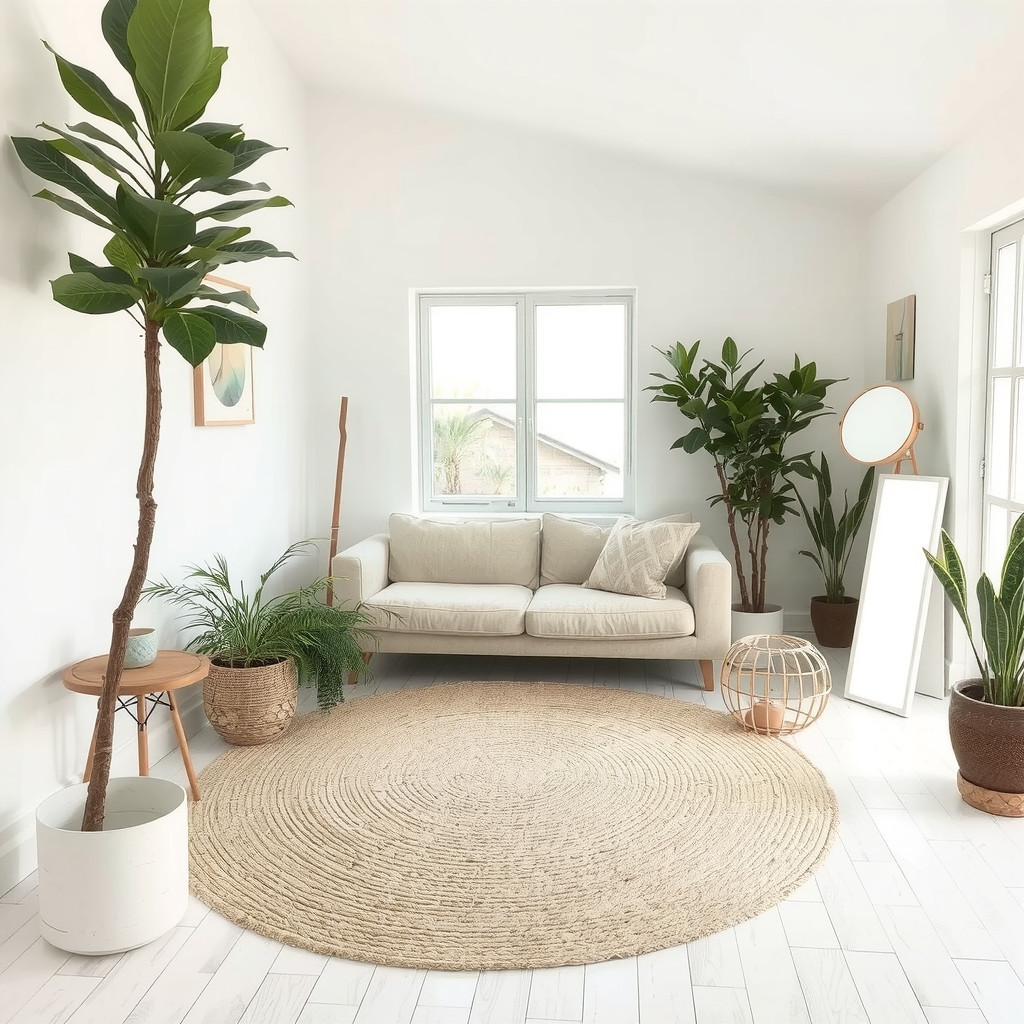
Use plants to guide movement. Flank a doorway with matching planters for subtle symmetry, or soften a sharp corner with a trailing plant on a pedestal. Stagger heights: tall floor plants at the back, mid-height pots on stools, and smaller pieces on side tables. This tiered approach keeps the room feeling balanced and airy.
Materials and Textiles
Your planters and textiles should echo the story your living room is already telling. For a modern, calm look, choose matte ceramic pots, pale oak side tables, and linen cushions in muted neutrals. 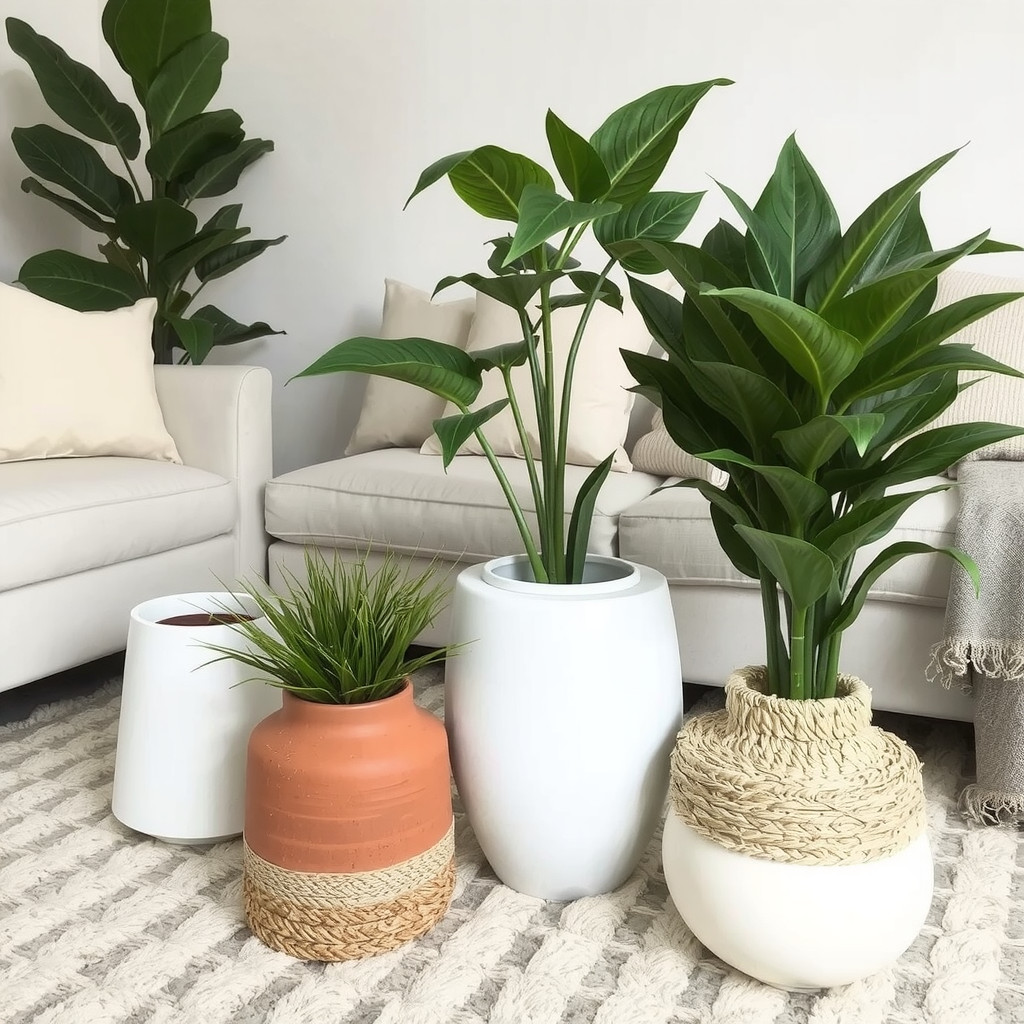
If you love warmth and texture, lean into woven baskets, rattan plant stands, and terracotta pots. Layer them with a chunky wool rug underfoot and slub-cotton throws over the sofa. The contrast between glossy green leaves and tactile materials like jute, bouclé, and raw wood keeps the greenery from feeling flat.
Mix finishes thoughtfully: pair a sleek black metal planter with a soft wool pouf nearby, or place a sculptural ceramic pot on a rustic wooden bench. The variety of textures frames your plants like art.
Focal Points
Every living room benefits from one or two deliberate plant focal points. Start with a hero moment: perhaps a dramatic floor plant beside the media unit, styled with a low stool and a stack of books. 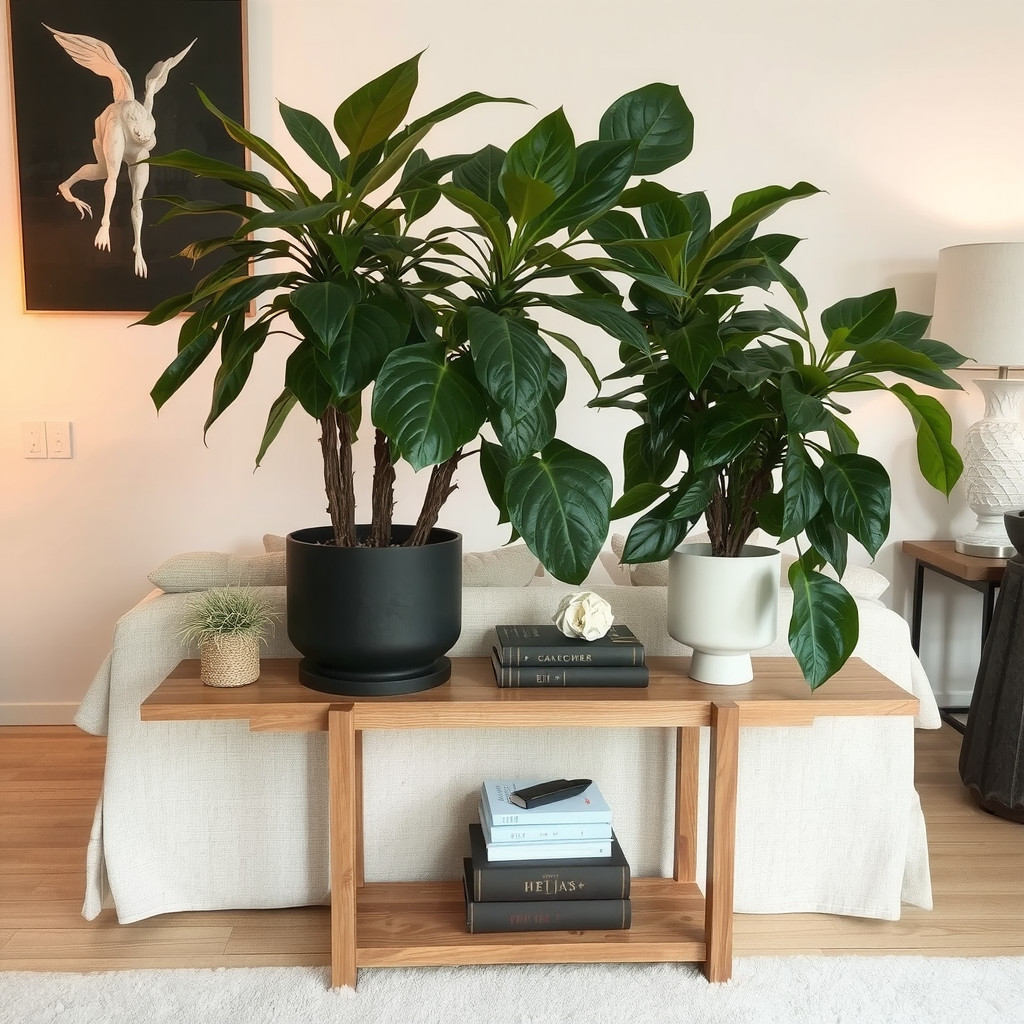
Create smaller vignettes to support that main feature. On a console behind the sofa, arrange a trio of plants with different leaf shapes—one tall, one trailing, one compact. On shelves, repeat greenery every second or third shelf so the eye dances lightly across the wall instead of stopping abruptly.
Think about sightlines from your sofa as well as from the entrance. A well-placed grouping near the window can become the living room’s “view,” drawing attention outward and making the space feel larger.
Lighting
Light is the quiet partner in your plant styling. Start by mapping your natural light: bright, indirect light near a south- or west-facing window suits many popular houseplants. Place light-loving varieties near sheer curtains, letting sunlight filter softly through leaves. 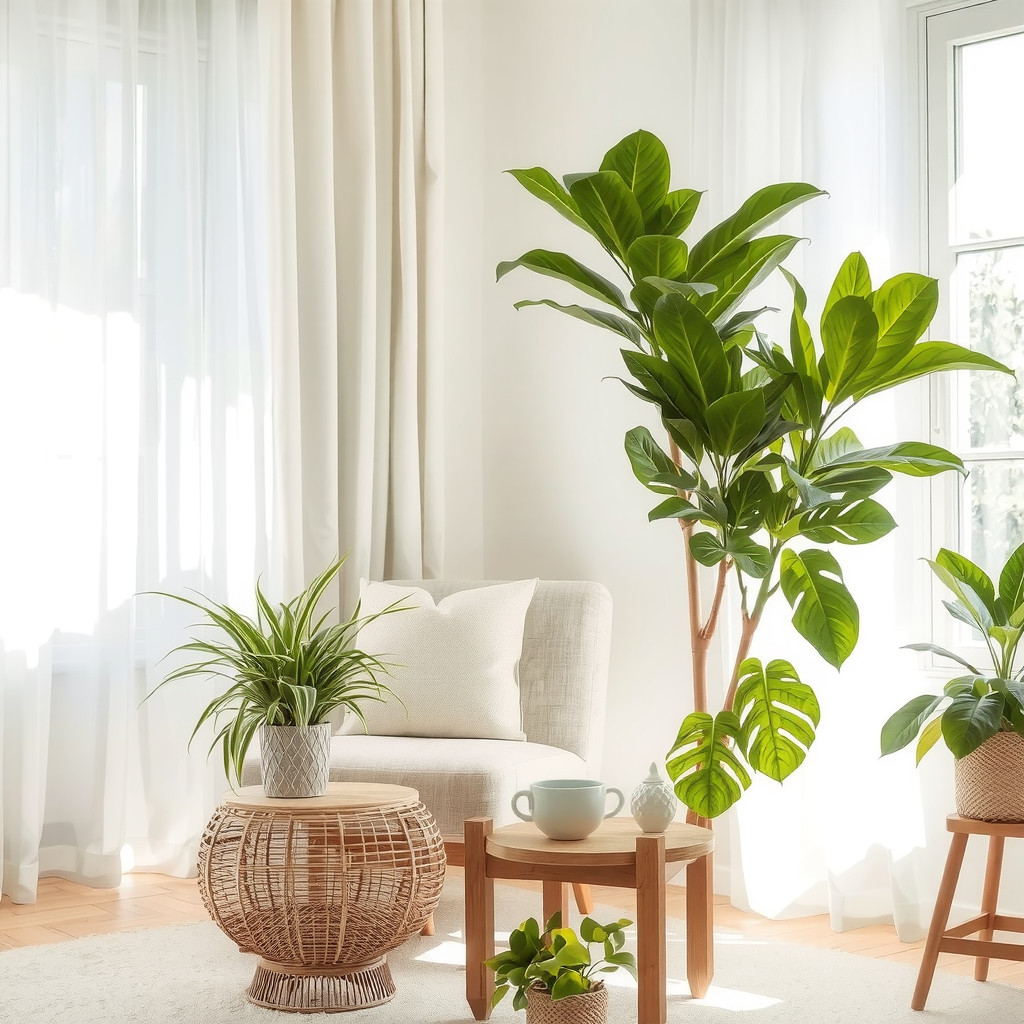
For deeper corners, use warm-toned floor lamps or table lamps to highlight foliage in the evenings. A slim uplight behind a tall plant creates beautiful leaf silhouettes on the wall. If a nook feels too dim for living plants, mix one or two high-quality faux stems with a real plant nearby; the shared greenery keeps everything feeling cohesive.
Greenery
Curate your plant mix like a wardrobe. Combine tall statement plants, medium accent plants, and small, easy-to-move pieces. Choose a few signature foliage styles and repeat them: glossy, broad leaves for a modern look, or fine, feathery fronds for something softer. 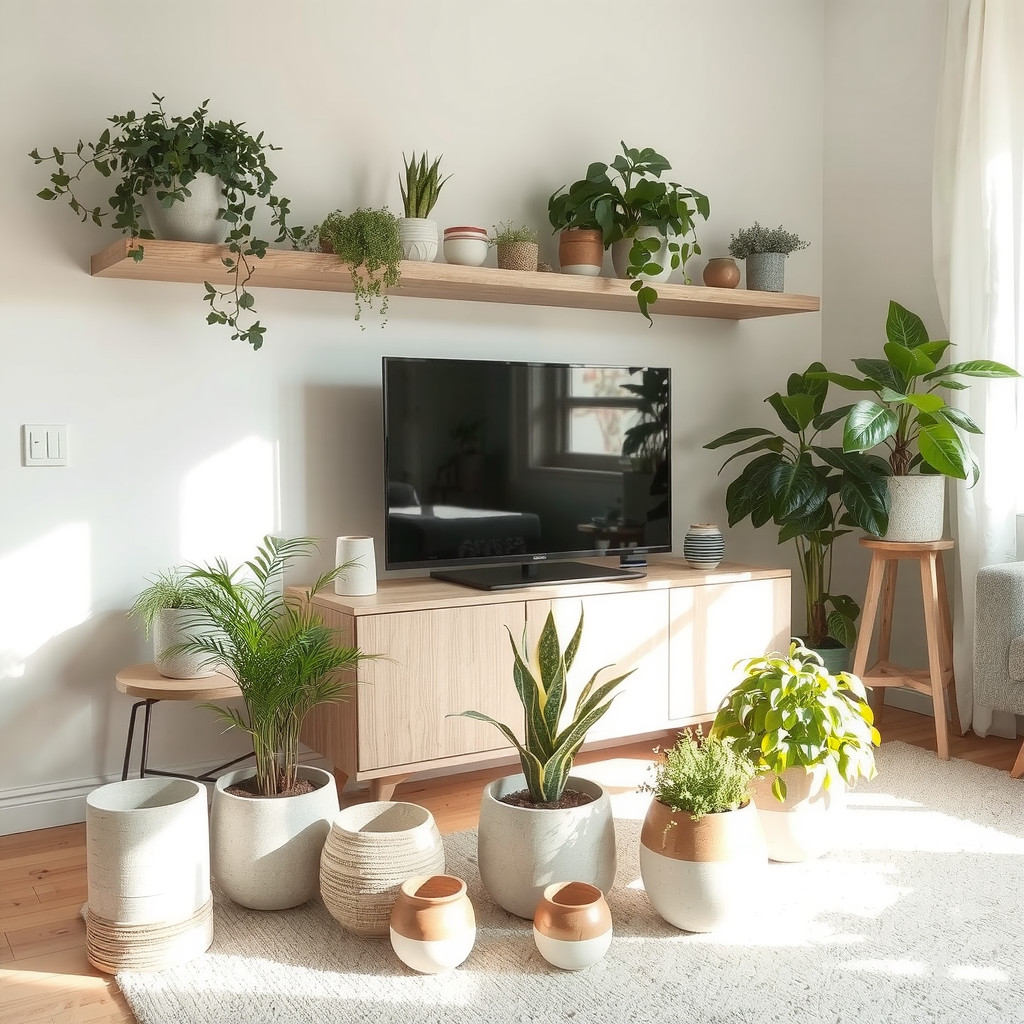
Play with tone as well as texture. Deep emerald leaves, soft sage, and hints of burgundy create depth against neutral walls. Trailing varieties, such as pothos or string of hearts, soften high shelves and window ledges, while upright forms ground low furniture. Keep care needs realistic; group plants with similar light and watering habits so your beautiful layout is easy to maintain.
Tips
- Start with one focal plant, then add supporting pieces slowly instead of buying everything at once.
- Vary heights using stands, stools, and stacks of books to avoid a flat, lined-up look.
- Repeat planter materials and colors to keep the room cohesive, even with many plant types.
- Leave negative space around key groupings so each cluster can breathe visually.
- Rotate plants seasonally to give each one time in the best light and refresh the room’s look.
ADVERTISEMENT