ADVERTISEMENT
The Art of Grounding: Creating an Earth-Toned Bedroom Sanctuary
Transforming your bedroom into an earthy retreat is about more than just painting the walls brown. It is a deliberate practice of bringing the grounding, restorative qualities of nature indoors. By focusing on organic textures, muted palettes, and intentional design, you create a space that feels like a deep exhale at the end of a long day.
Layout and Positioning
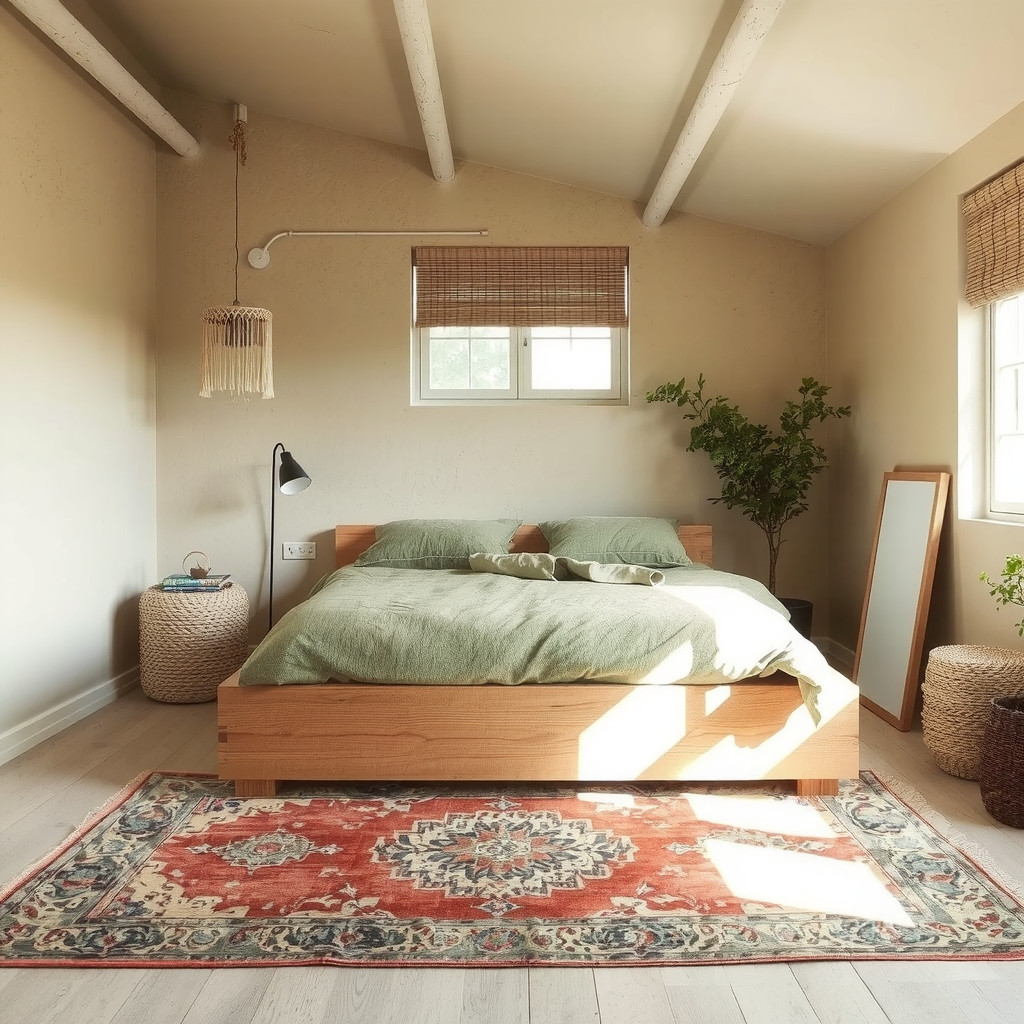
Your journey to a grounded space begins with the floor plan. In an earthy bedroom, the flow should feel as natural as a river. Avoid pushing all furniture against the walls; instead, allow your bed to command the space, anchored centrally to provide a sense of stability.
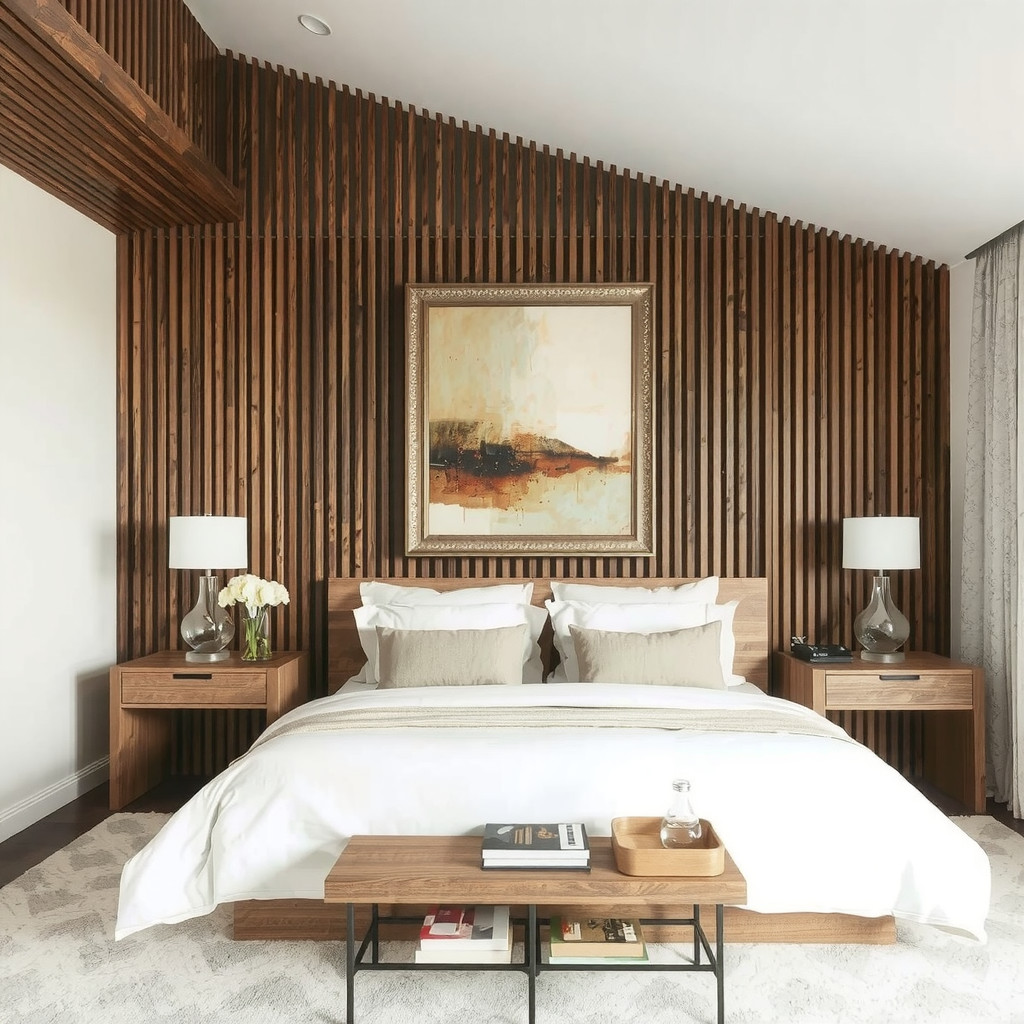
Choose low-profile furniture to maintain a connection to the ground. A platform bed frame creates a relaxed, unpretentious vibe that aligns perfectly with this aesthetic. Ensure there is ample negative space around your key pieces to let the energy circulate freely, preventing the room from feeling heavy or cluttered.
Materials and Textiles
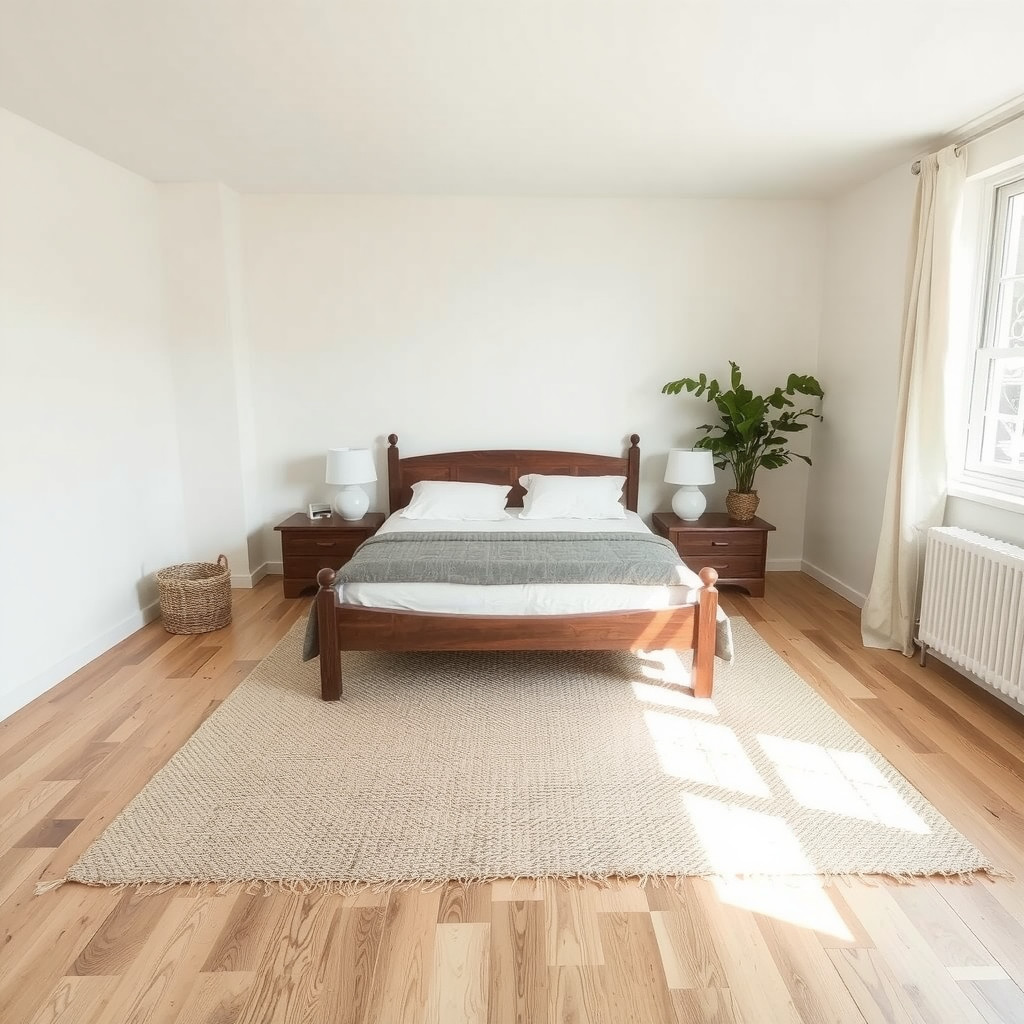
The soul of an earthy bedroom lies in its tactile experience. You want materials that feel real and raw against your skin. Move away from synthetics and embrace the imperfections of nature. Think of unbleached linen sheets that soften with every wash, chunky wool throws, and furniture made from reclaimed wood where the grain tells a story.
Layering is essential here. Combine a flat-weave jute rug with a soft sheepskin for contrast underfoot. Mix smooth ceramics with rough-hewn timber. These disparities in texture add depth and visual interest without needing loud colors, keeping the environment calm yet sophisticated.

Focal Points
Every room needs an anchor, but in an earthy design, this focal point should be subtle rather than shouting for attention. Your bed’s headboard is the natural candidate. Consider a piece made from woven cane, rattan, or a live-edge slab of wood. These elements act as a centerpiece that immediately signals the room’s connection to the outdoors.
Alternatively, treat the wall behind your bed as a canvas for texture. A lime-wash paint treatment can add a cloud-like, velvety depth to the walls, or a wooden slat feature can introduce rhythm and warmth.
Lighting
Lighting dictates the mood. For an earthy sanctuary, you want to mimic the warm, golden glow of sunset rather than the harsh brightness of midday. Avoid cool white bulbs entirely. Instead, opt for fixtures made from natural materials that filter light softly.
Woven basket pendants, paper lanterns, or ceramic sconces work beautifully. They cast intricate shadows and diffuse light in a way that feels organic and cozy. Install dimmer switches to control the intensity, allowing you to transition your space from a bright reading nook to a slumber-ready cave.

Greenery
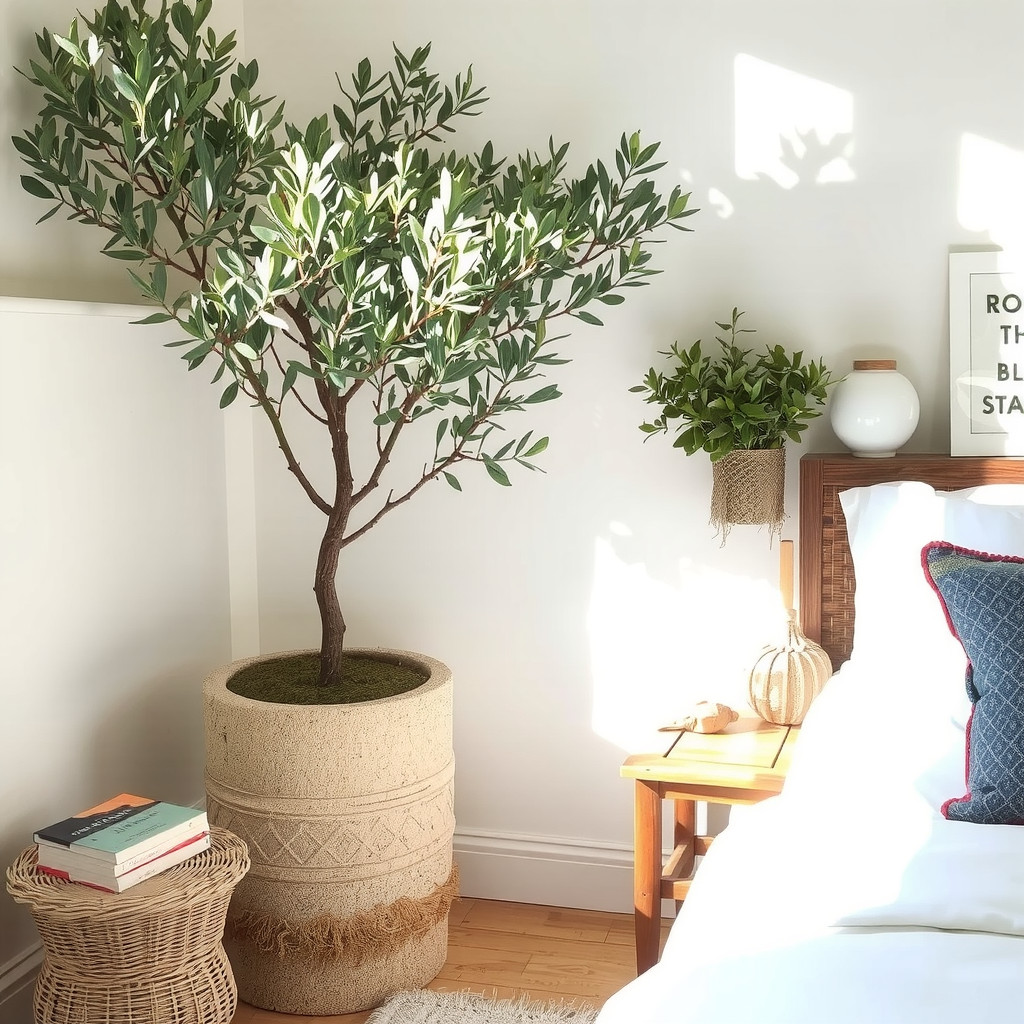
No earthy bedroom is complete without living elements. Plants are not just decor; they are companions that purify the air and boost your mood. They bridge the gap between your interior and the world outside.
Don’t just place a small succulent on the windowsill. Go for structural plants that make a statement, like a tall Ficus or a sprawling Monstera. Place them in terracotta or stone pots to maintain the material consistency. The vibrant green leaves provide the perfect pop of color against your neutral backdrop.
Tips
- Stick to a Tonal Palette: Use shades of terracotta, sage, clay, oatmeal, and warm gray to keep the visual noise low.
- Engage the Senses: Incorporate a stone oil diffuser with scents like cedarwood, sandalwood, or eucalyptus.
- Hide Technology: Keep TVs and charging stations out of sight to maintain the primitive, restful energy of the room.
- Maximize Natural Light: Use sheer linen curtains that offer privacy while letting the sunlight wash over your natural textures.
ADVERTISEMENT