ADVERTISEMENT
Introduction
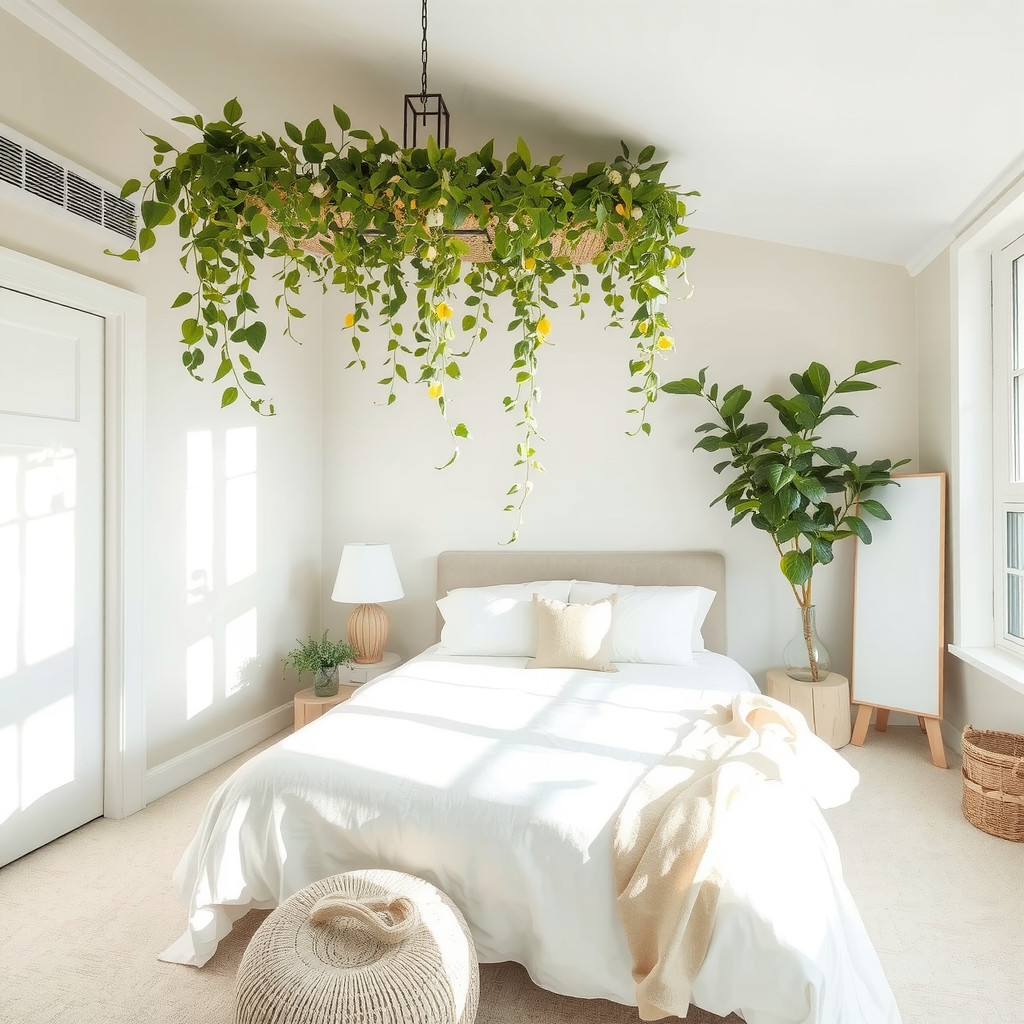
You deserve a bedroom that feels like a quiet greenhouse retreat, not just a place to sleep. With a thoughtful mix of plants, soft textures, and gentle light, your space can capture the same serenity promised by endless “best bedroom plants” lists—without feeling like a jungle. Picture a calm room where trailing vines frame the headboard, leaves cast dappled shadows on linen sheets, and the air feels fresher the moment you exhale.
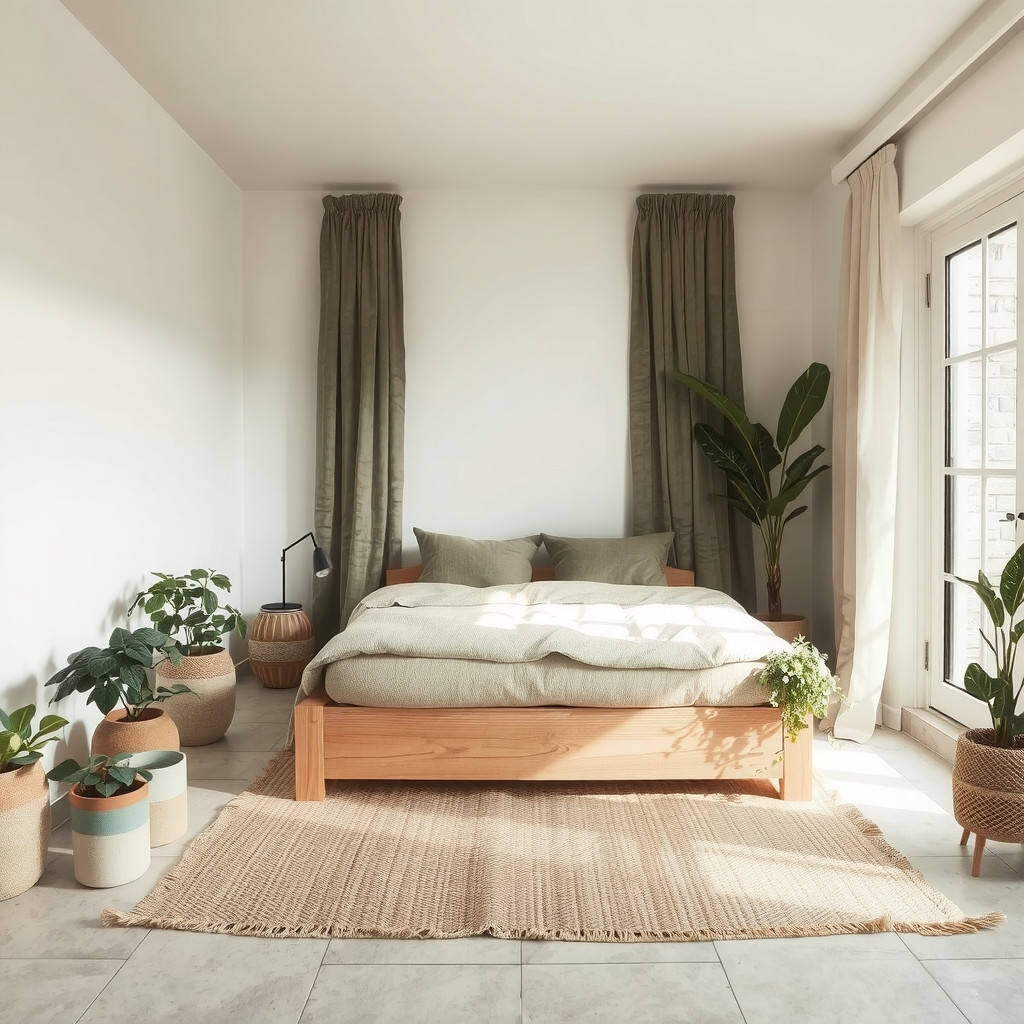
In this sanctuary, every leaf, basket, and curtain is placed with intention. Instead of cramming in dozens of species, you curate a handful of hardworking plants and soothing materials that support deep rest.
Layout and Positioning
Begin with the bones of your room before adding a single pot. Keep the bed as the anchor, ideally facing the doorway with a solid wall behind you for a sense of calm stability. Then, let your greenery orbit this core piece.
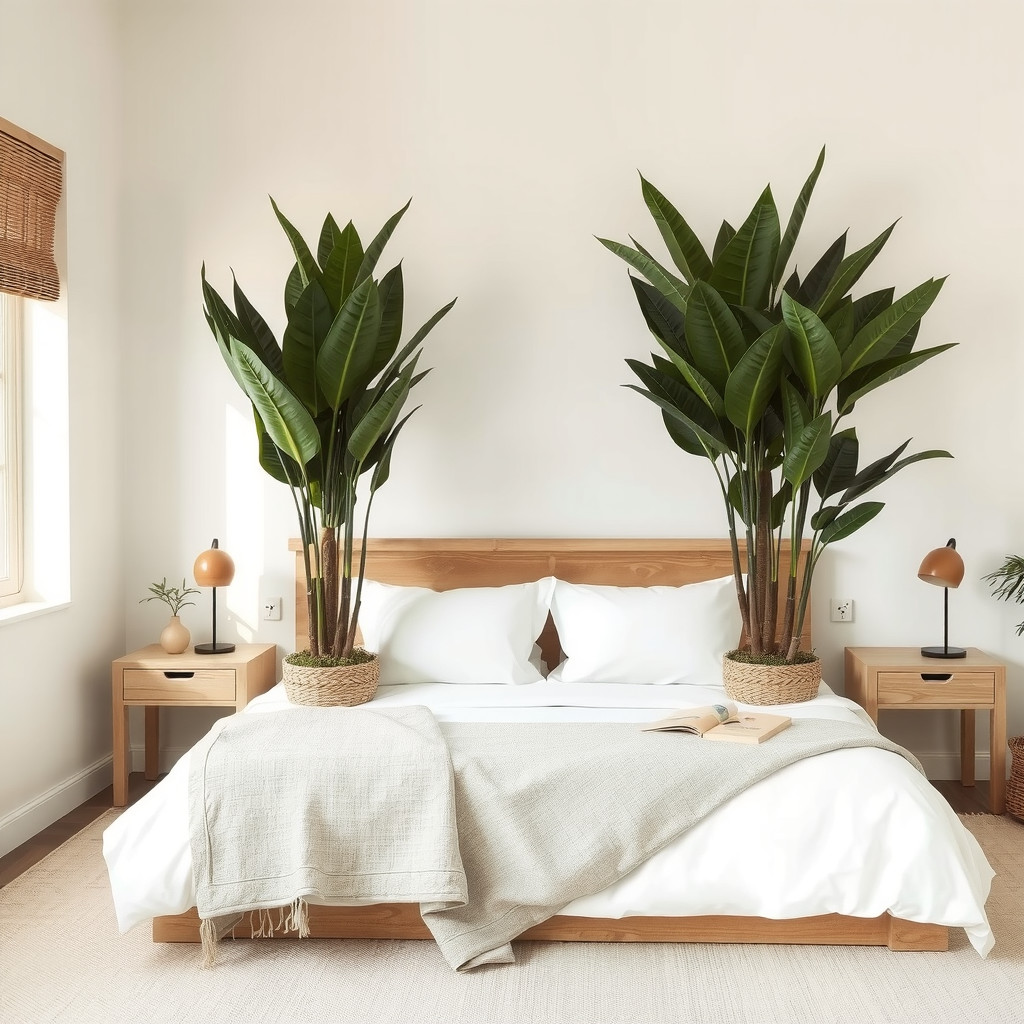
Use vertical space beside the headboard for tall floor plants like snake plants or rubber trees, leaving enough breathing room so foliage never brushes your face while you sleep. A low bench or slim console at the foot of the bed becomes a stage for medium plants in woven baskets, while a single hanging planter near the window softens edges without blocking light. Strive for open pathways; you want flowing energy, not a maze of pots.
Materials and Textiles
The textures you choose will either amplify your plants’ calm or compete with it. Lean into natural fibers that echo stems, bark, and soil. A pale oak or ash bed frame pairs beautifully with stone-colored linen sheets, inviting you to sink in the moment you lie down.
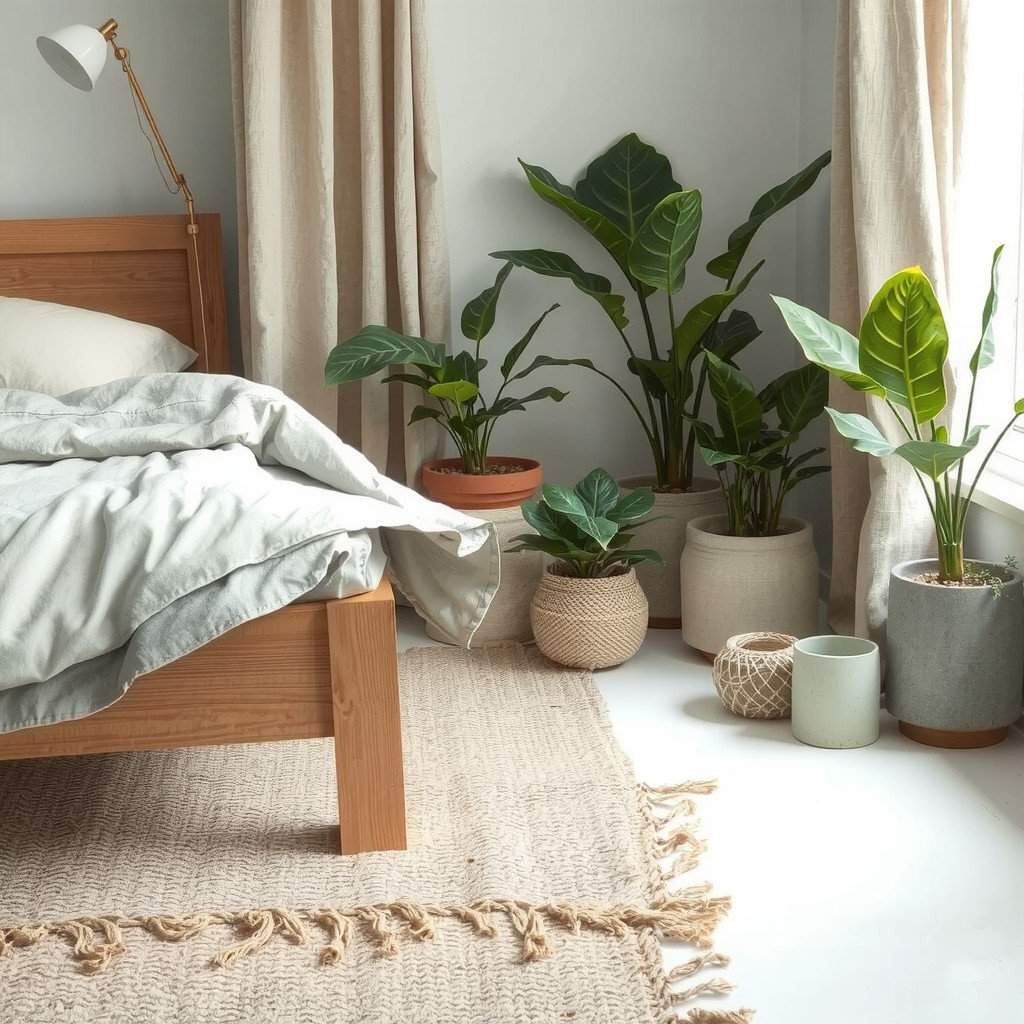
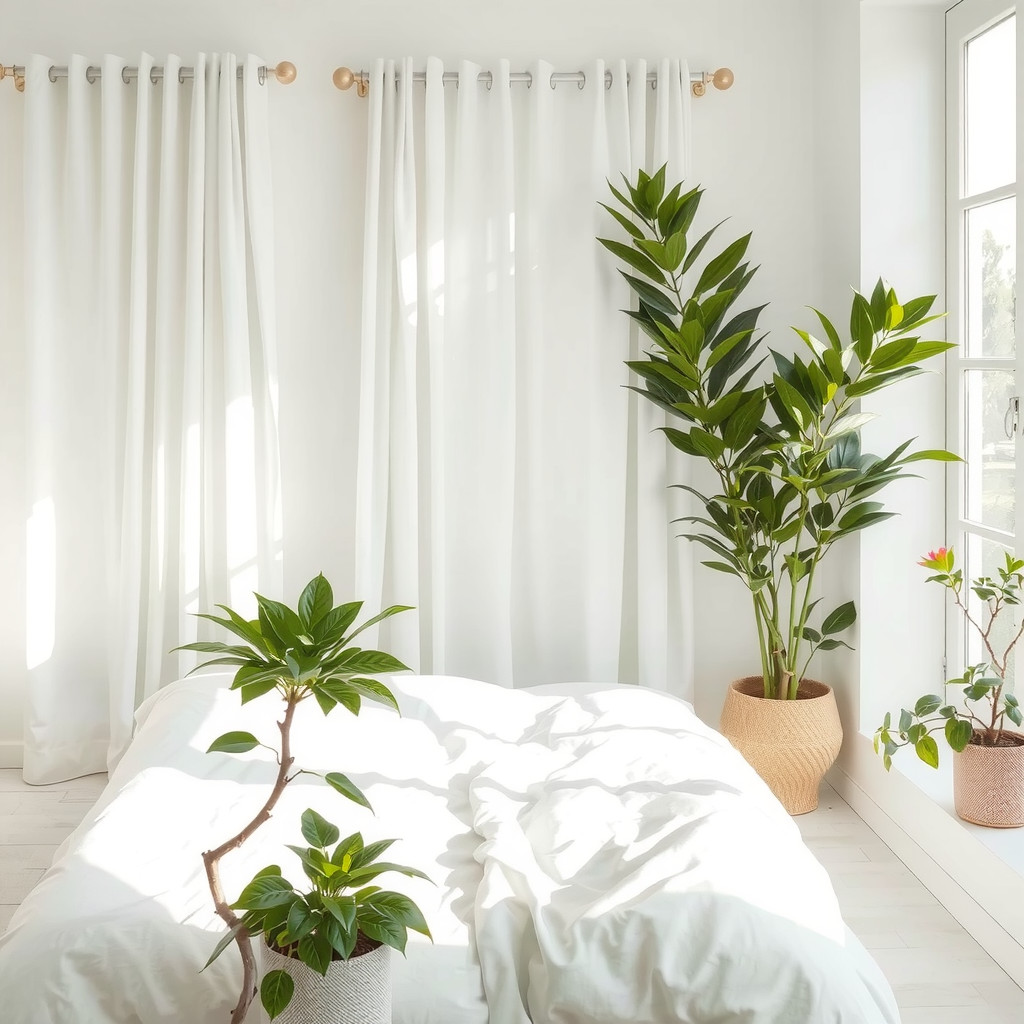
Layer a low-pile wool or jute rug underfoot so every step feels grounded and warm. Linen or cotton gauze curtains let light filter through in soft, milky rays, flattering every green leaf. On cushions and throws, keep patterns subtle: narrow stripes, fine grids, or tone-on-tone weaves in sand, clay, and sage. Plant pots can repeat these textures—matte ceramic, unglazed terracotta, ribbed stone, and handwoven baskets that quietly echo your bedding.
Focal Points
Instead of scattering plants everywhere, choose one or two living focal points that draw the eye and calm the mind. A wide dresser styled as a mini indoor garden makes a beautiful centerpiece: taller plants toward the back, trailing pothos or philodendron spilling forward, and a single sculptural lamp to one side.
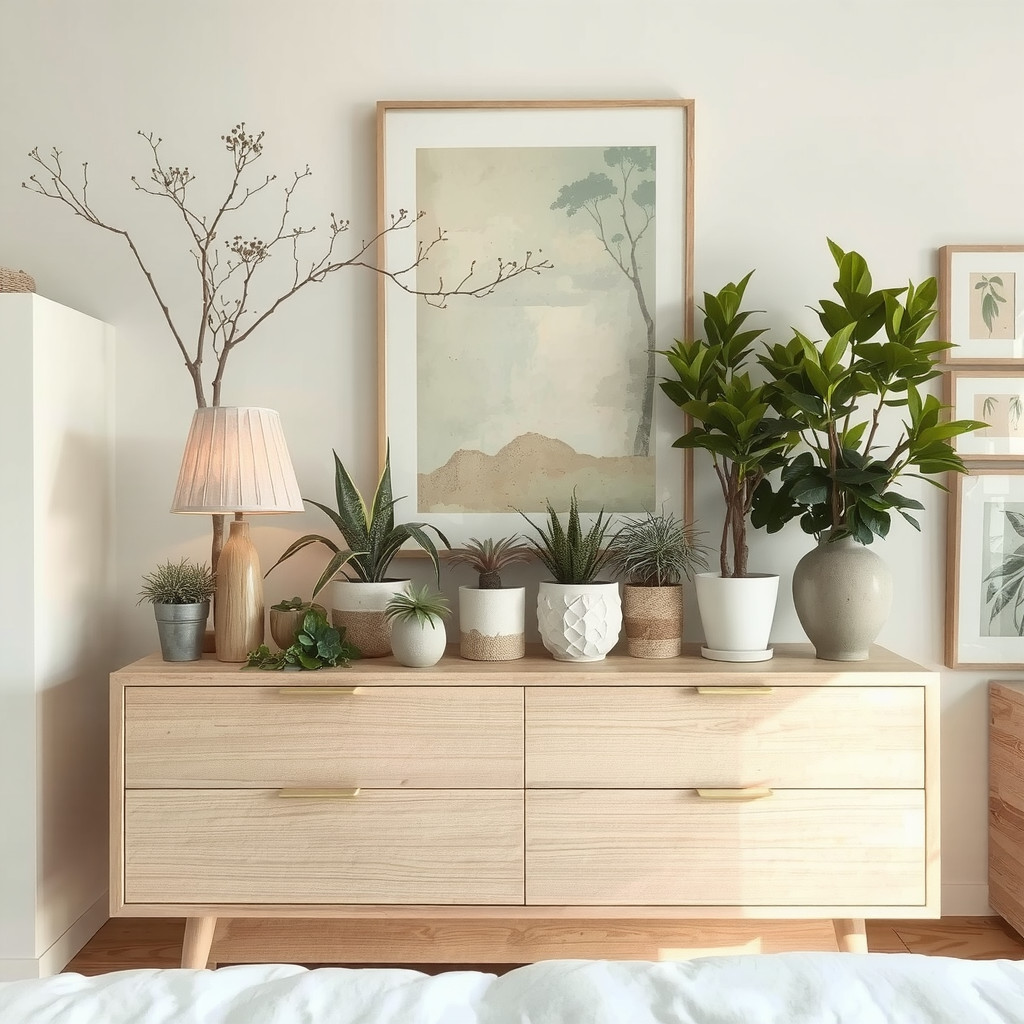
Above the bed, keep artwork minimal so the greenery does the talking. A simple, oversized print in muted tones or a slim wooden shelf with two or three carefully chosen plants creates a quiet statement. In a corner, a reading chair flanked by a floor lamp and one dramatic plant—like a fiddle leaf fig or bird of paradise—feels like your own private retreat inside the room.
Lighting
Calm bedrooms rely on soft, layered light rather than a single bright overhead source. Start with warm white bulbs in the 2700–3000K range to flatter both skin and foliage. A small bedside lamp with a linen shade, a low-glow floor lamp, and perhaps a slim wall sconce together create pools of light instead of glare.
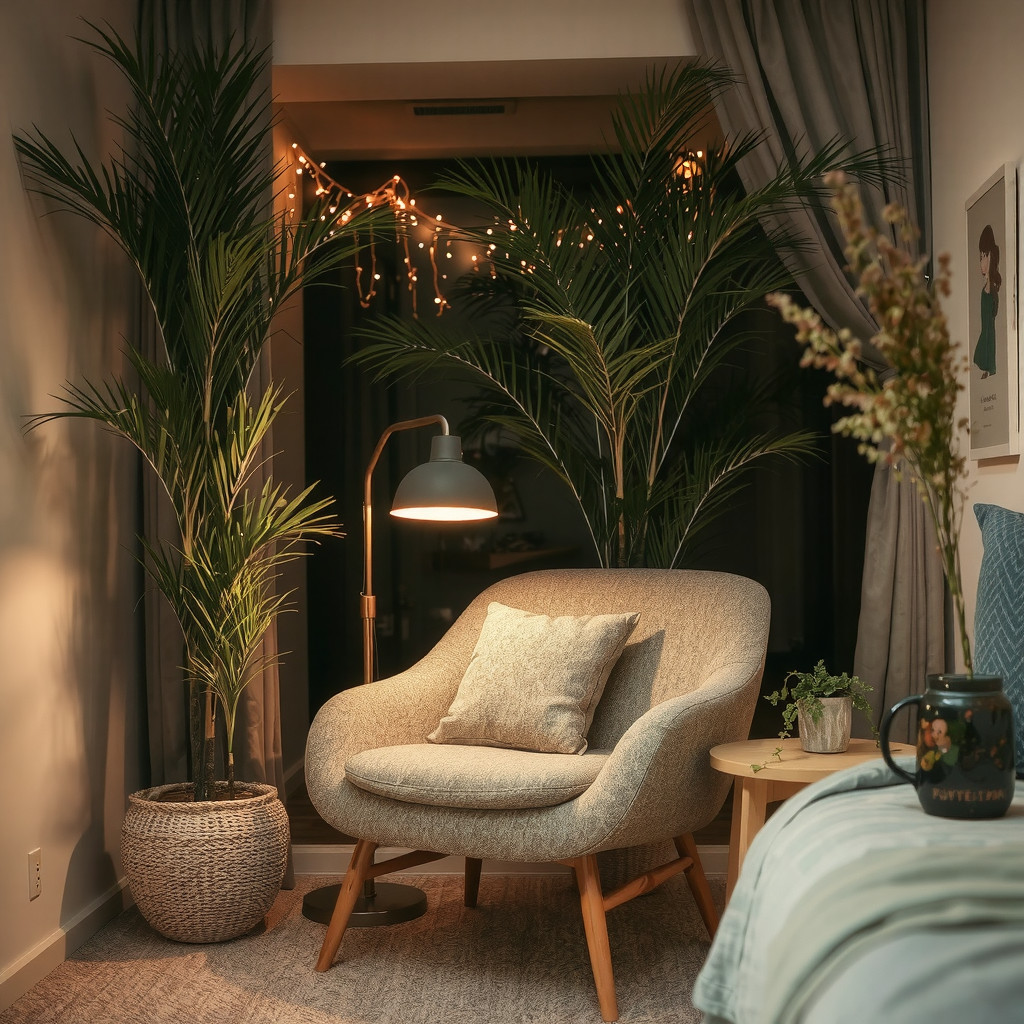
Place light near plants that enjoy bright, indirect sun, but avoid baking tender leaves with harsh beams. In the evening, dimmers and warm fairy lights along a curtain rod or bed canopy add a gentle shimmer around your greenery, echoing starlight rather than stage lights. Let the brightest area be near the window, gradually softening as your eye moves toward the bed.
Greenery
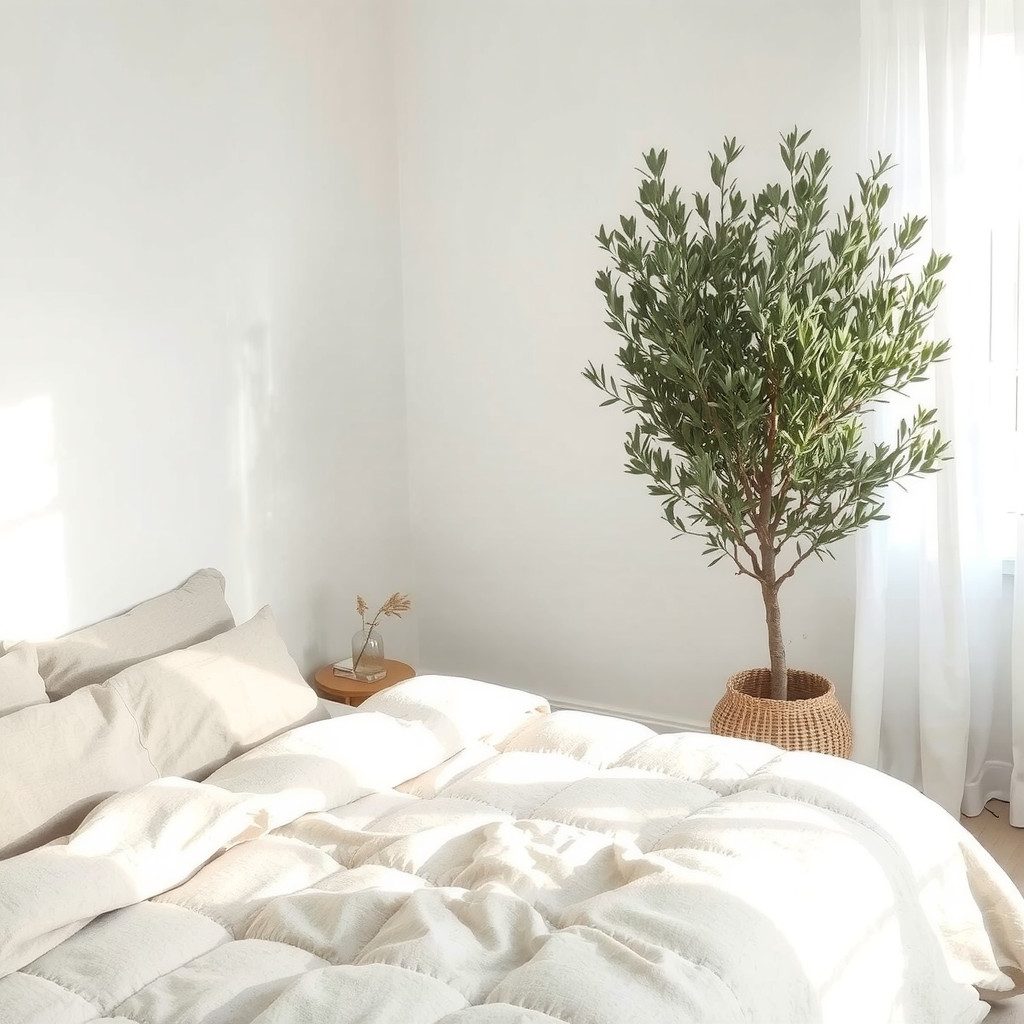
Think of your plants as characters with roles, not random extras. Near the window, group sun-lovers like succulents, jade, or a compact olive tree. In shadier corners, rely on forgiving species such as ZZ plants, snake plants, or pothos that stay lush with minimal fuss.
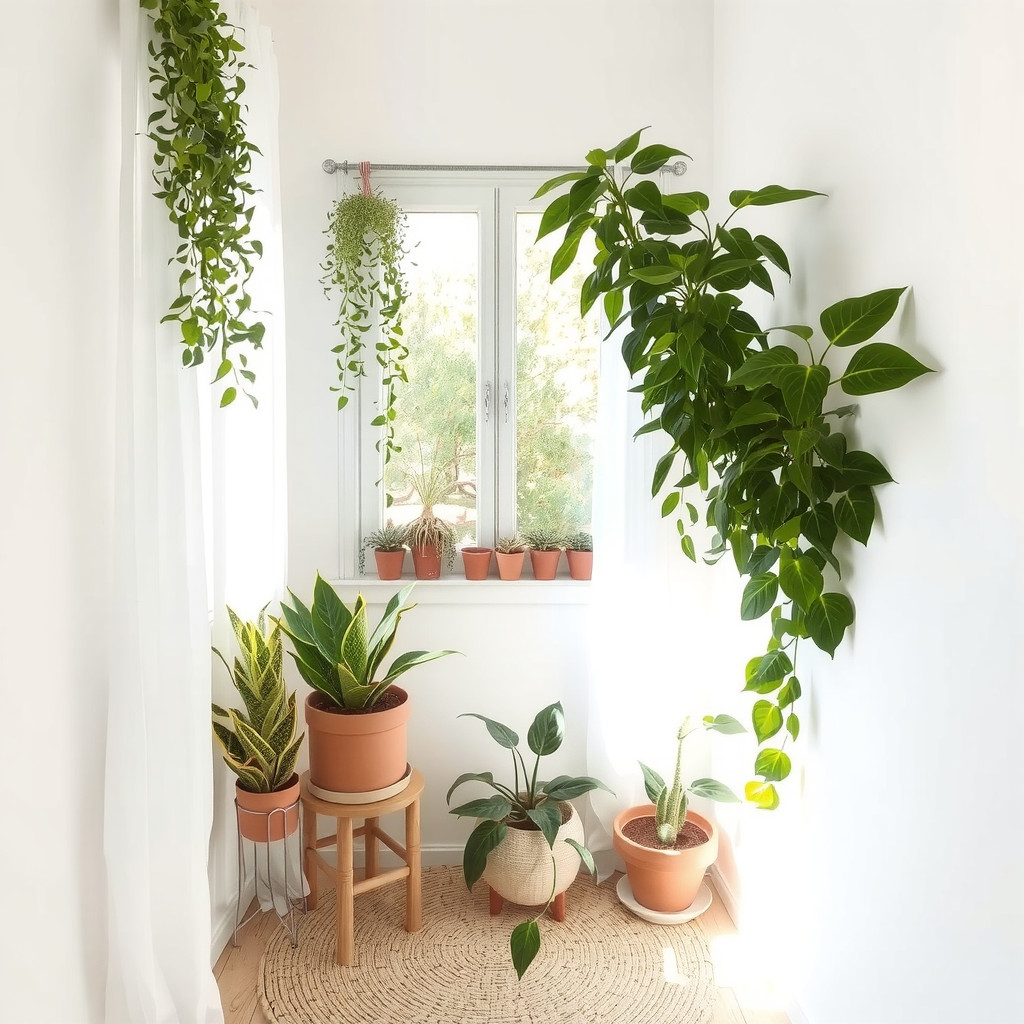
Mix forms and heights: upright spears, broad glossy leaves, delicate fronds, and cascading vines. Keep soil lines tidy, prune yellowing leaves promptly, and rotate pots occasionally so growth stays balanced. A tiny vase of cut foliage on the nightstand, a single trailing plant over a bookshelf, or a low bowl of moss on a tray can bring just as much peace as an overcrowded plant shelf—without visual noise.
Tips
- Keep at least one side of the bed mostly plant-free so the space still feels airy and accessible.
- Use trays to corral pots on dressers or nightstands, preventing soil spills and visual clutter.
- Choose breathable linens and low-pile rugs so dust doesn’t cling around planters and stands.
- Group plants with similar light and water needs to simplify your care routine.
- Open windows regularly to balance humidity and keep the air feeling fresh and restorative.
ADVERTISEMENT