ADVERTISEMENT
The Art of Modern Organic Living: Soft Minimalism Meets Nature
Introduction
Imagine walking into a space that instantly lowers your heart rate. The chaos of the outside world melts away, replaced by a serenity that feels both curated and effortlessly natural. This is the essence of modern organic design—a style that marries the clean lines of minimalism with the raw, imperfect beauty of nature. It is not about stark emptiness but about choosing pieces that speak to the senses through texture and form.
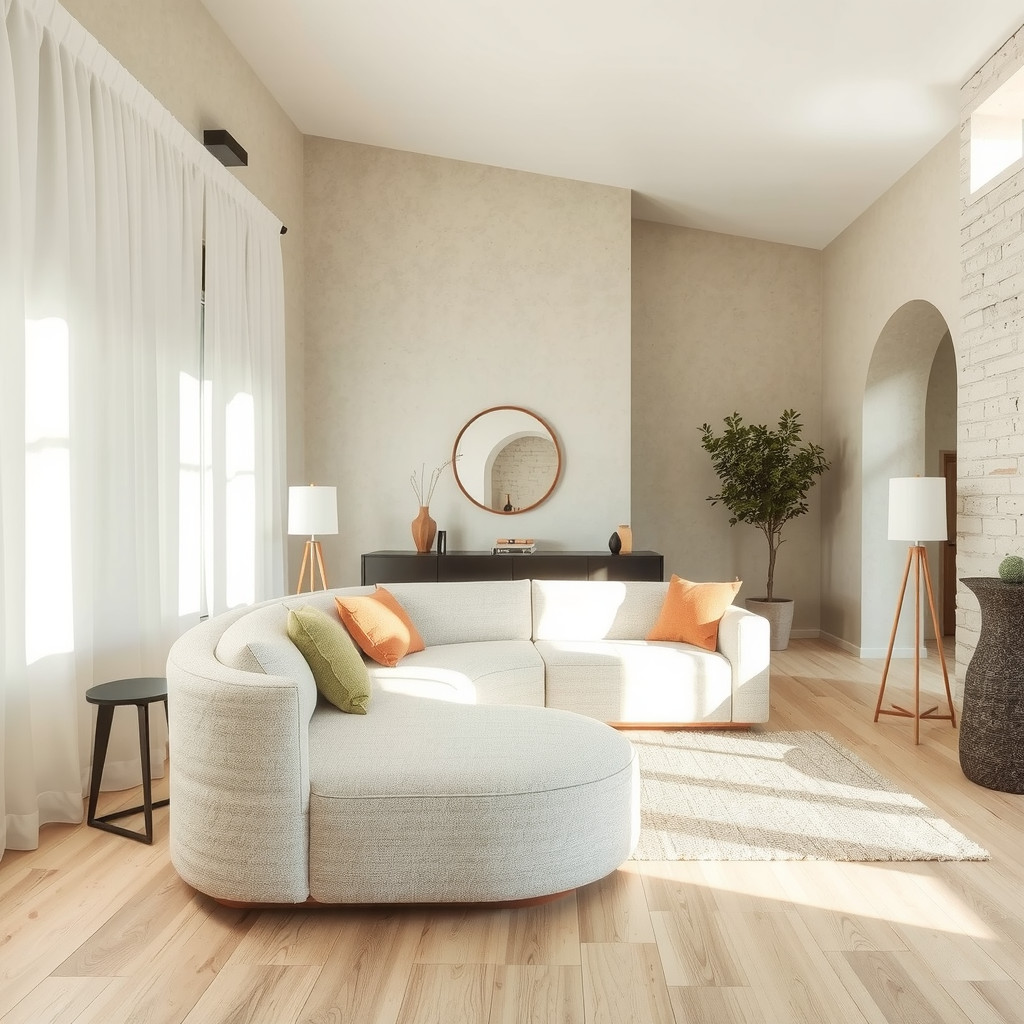
Your living room is more than just a seating area; it is the sanctuary where your daily life unfolds. By embracing earthy palettes and tactile materials, you create an environment that feels grounded. This guide explores how to balance structural elegance with organic warmth to transform your main gathering space.
Layout and Positioning
The way you arrange your furniture dictates the energy of the room. Resist the urge to push everything against the walls, which often creates a disconnected, “waiting room” vibe. Instead, pull your seating pieces toward the center to create an intimate conversation island.
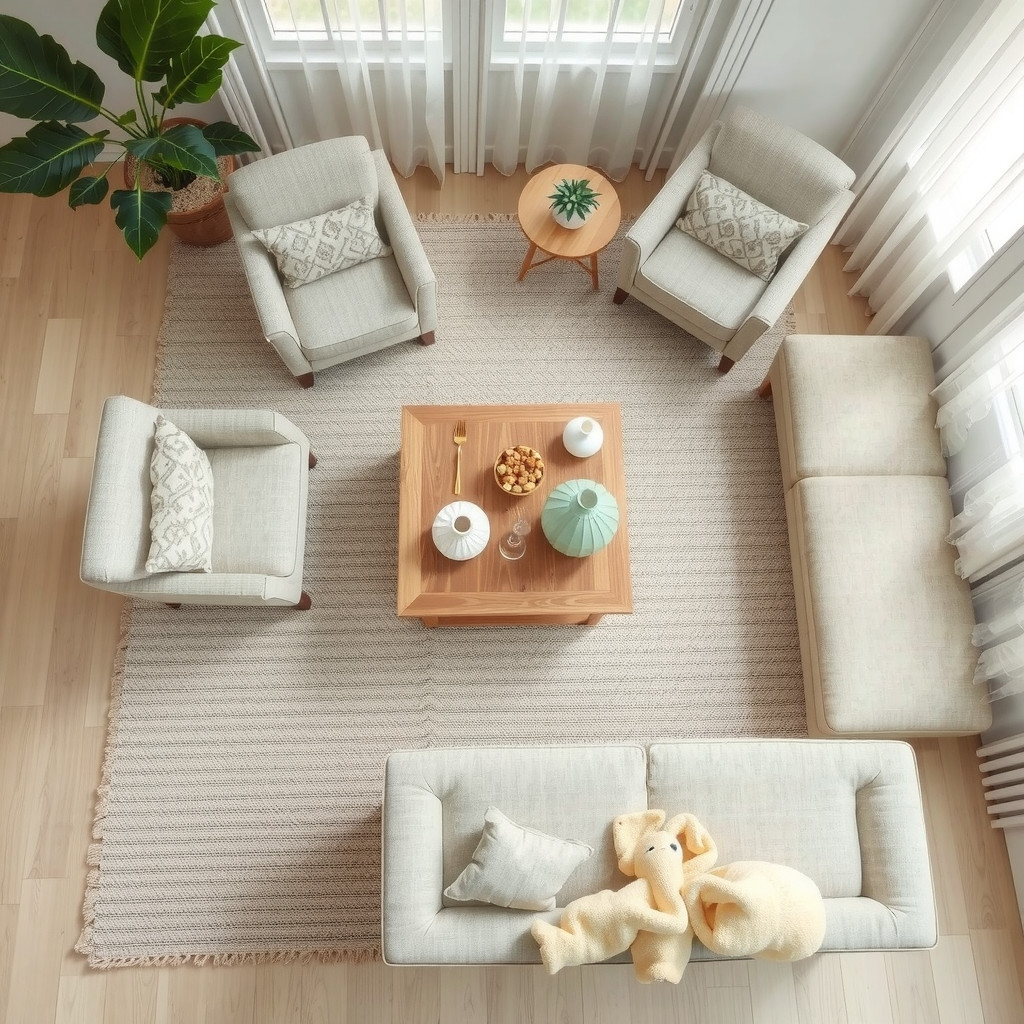
Consider the flow of traffic. You want a path that meanders gently rather than cutting straight through the energy of the space. Use a large area rug to anchor this central zone, ensuring the front legs of all major furniture pieces sit comfortably upon it. This simple trick visually unifies the group, making the arrangement feel intentional and cohesive.
Materials and Textiles
In a space with a neutral color palette, texture becomes your primary language. If everything is smooth and flat, the room will feel cold. You must introduce a variety of surfaces to build depth and visual interest. Think of the contrast between a rough travertine coffee table and a soft, boucle sofa.
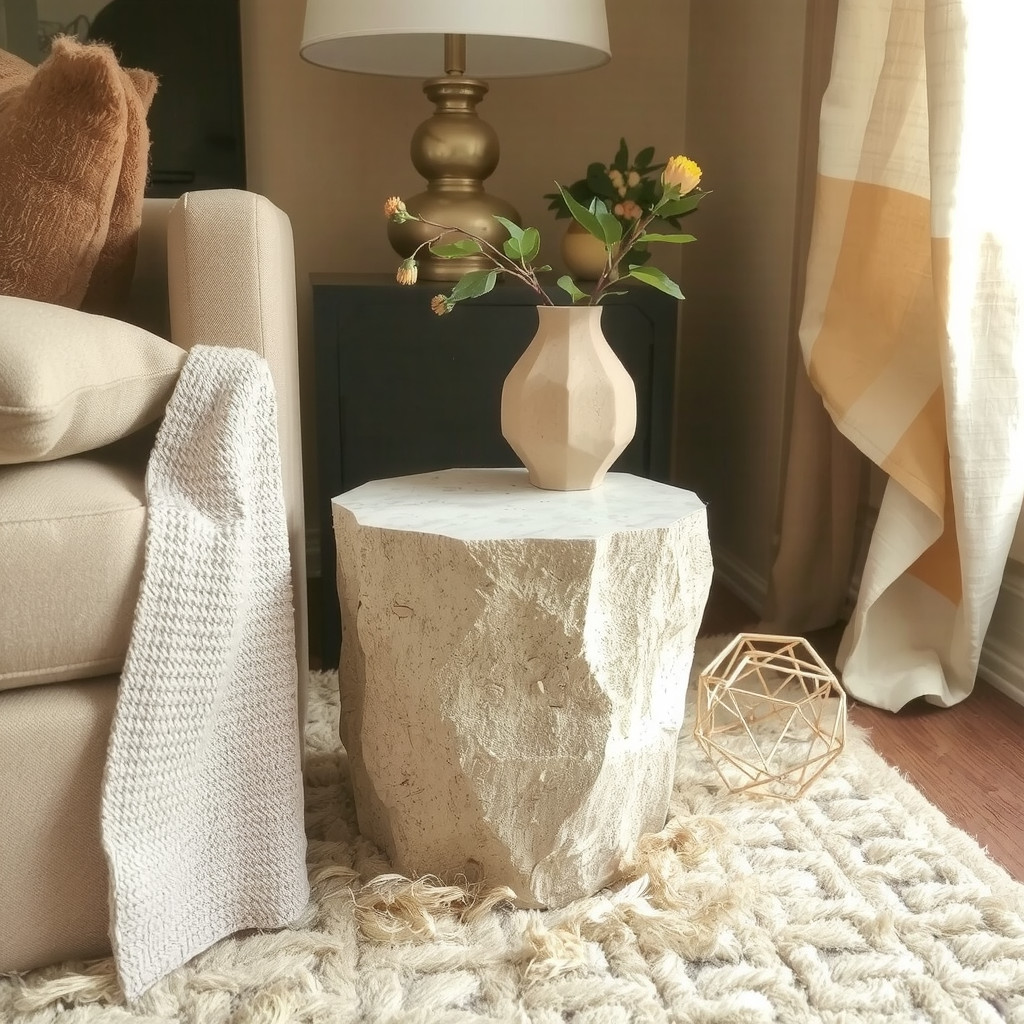
Layering is key here. Start with a jute or wool rug for a natural foundation. Add throw pillows in washed linen, chunky knits, or velvet to invite touch. Incorporate wood elements—perhaps a walnut sideboard or oak shelving—to bring warmth. The goal is to create a tactile landscape that invites you to run your hand across every surface.
Focal Points
Every room needs a moment that captures the eye and grounds the space. In a modern organic living room, this shouldn’t be a television screen. Ideally, your focal point connects back to the architecture or nature. A fireplace treated with lime wash or textured plaster creates a stunning vertical anchor.
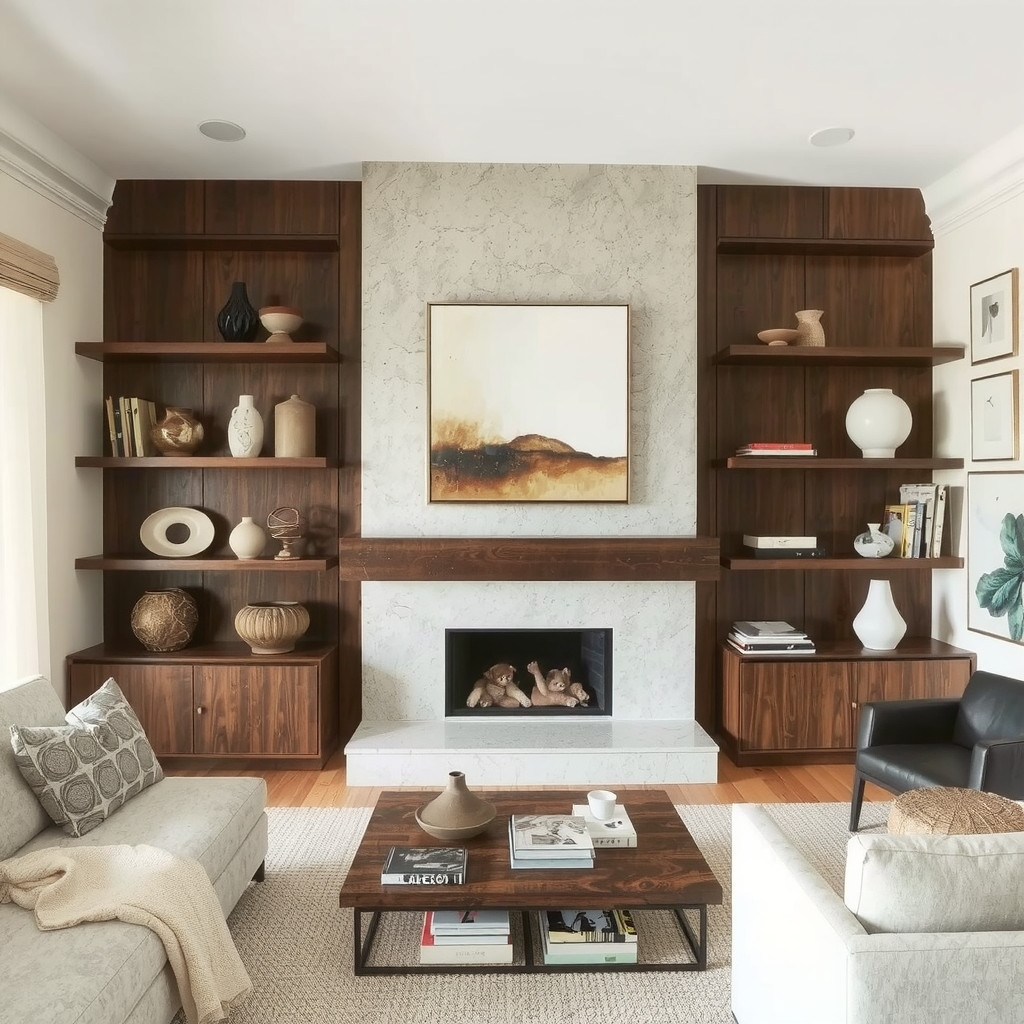
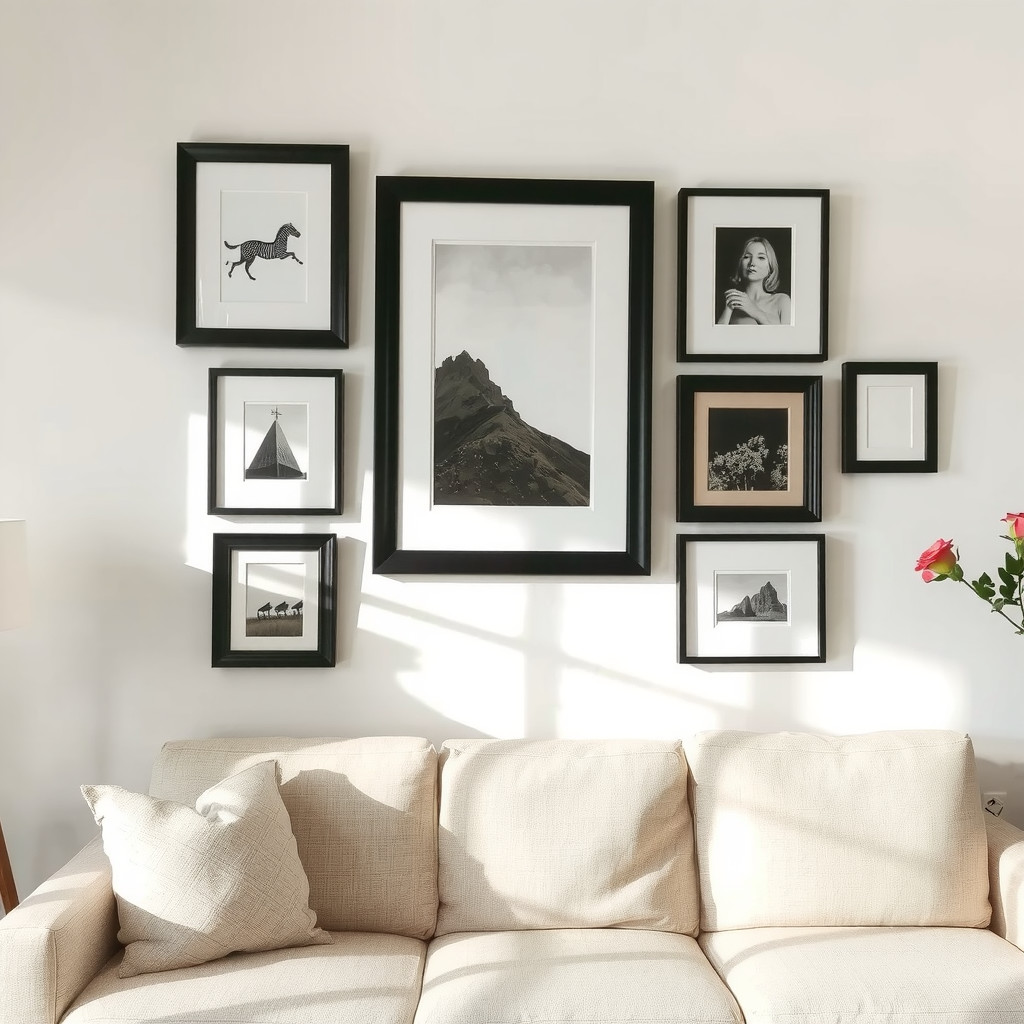
If you lack a fireplace, use a large-scale piece of art or a picture window framing a view. Arrange your furniture to honor this feature. By orienting your seating toward a beautiful architectural element rather than a black screen, you shift the room’s purpose from passive consumption to active appreciation and relaxation.
Lighting
Lighting transforms the mood of your living room more than any piece of furniture. Avoid relying solely on a single overhead fixture, which creates harsh shadows and flattens the room’s dimensions. Instead, adopt a layered approach that creates pools of warm illumination.
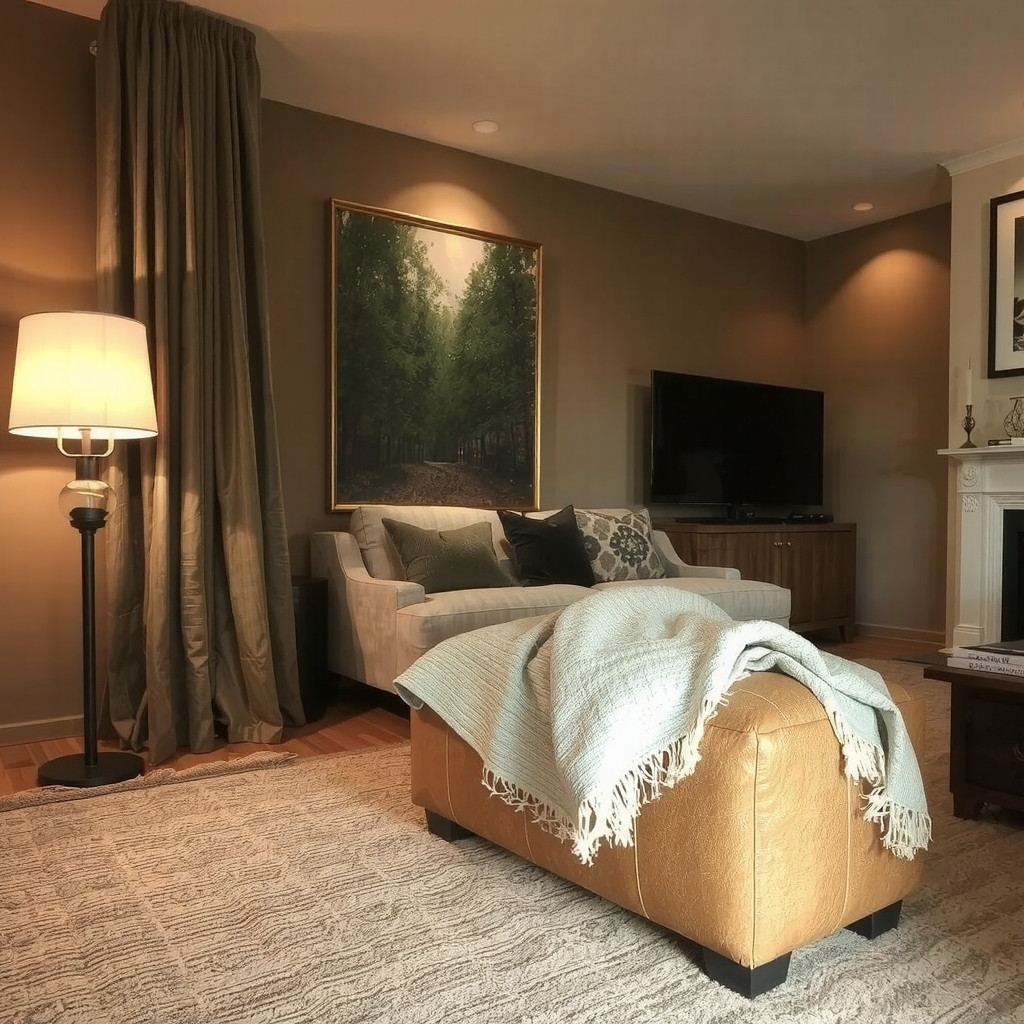
Combine floor lamps, table lamps, and wall sconces to distribute light at different heights. Choose bulbs with a warm color temperature (2700K-3000K) to mimic the glow of candlelight or sunset. Use dimmers to adjust the intensity, allowing the room to transition from a bright, functional space during the day to a moody, cozy retreat at night.
Greenery
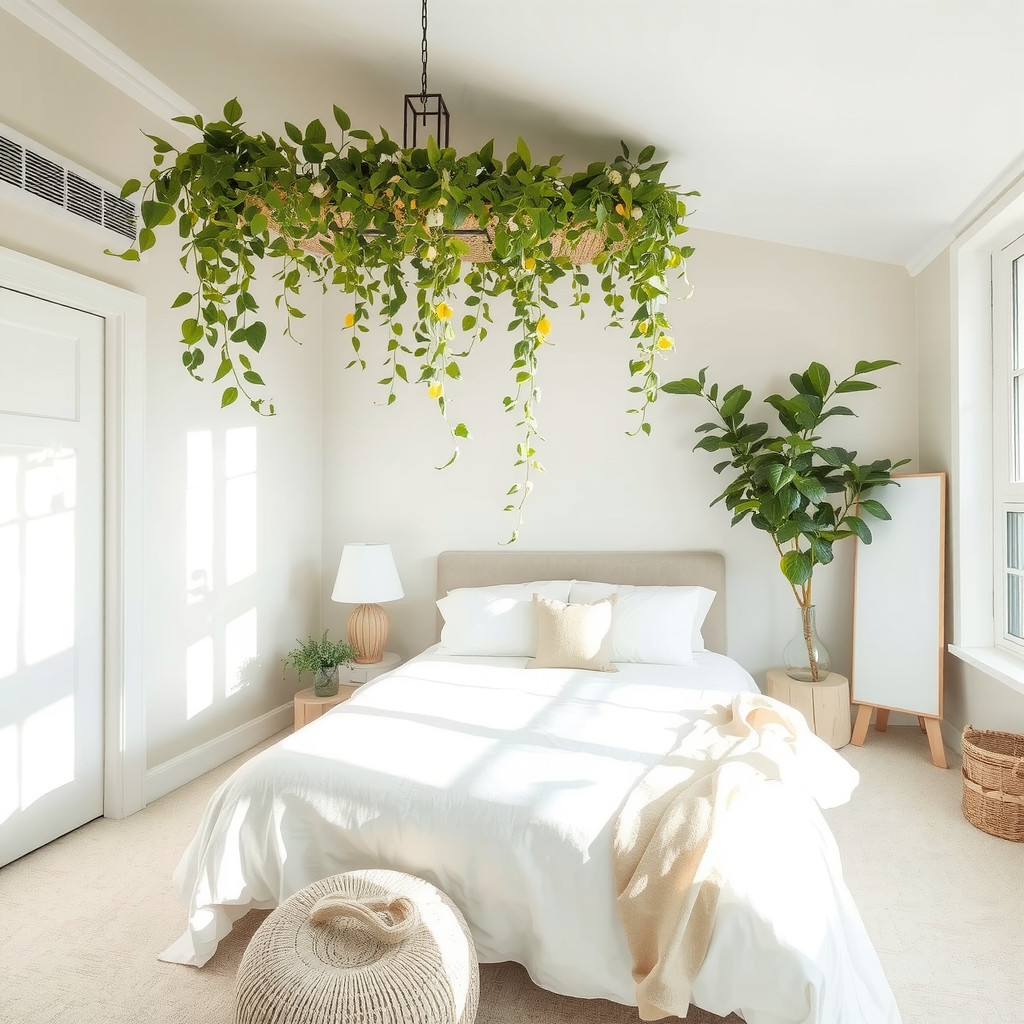
No organic space is complete without life. Plants are not just decorations; they are living sculptures that purify the air and soften architectural edges. However, avoid the clutter of too many small pots.
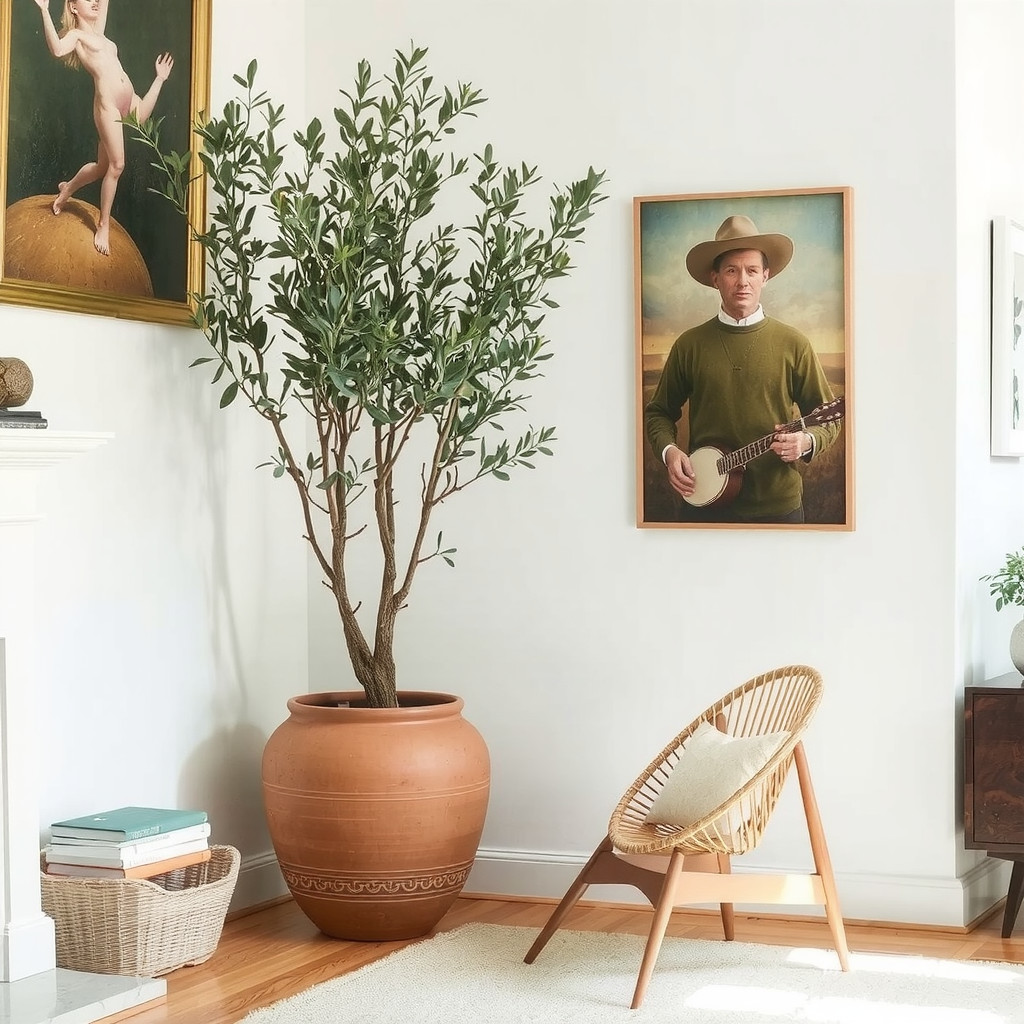
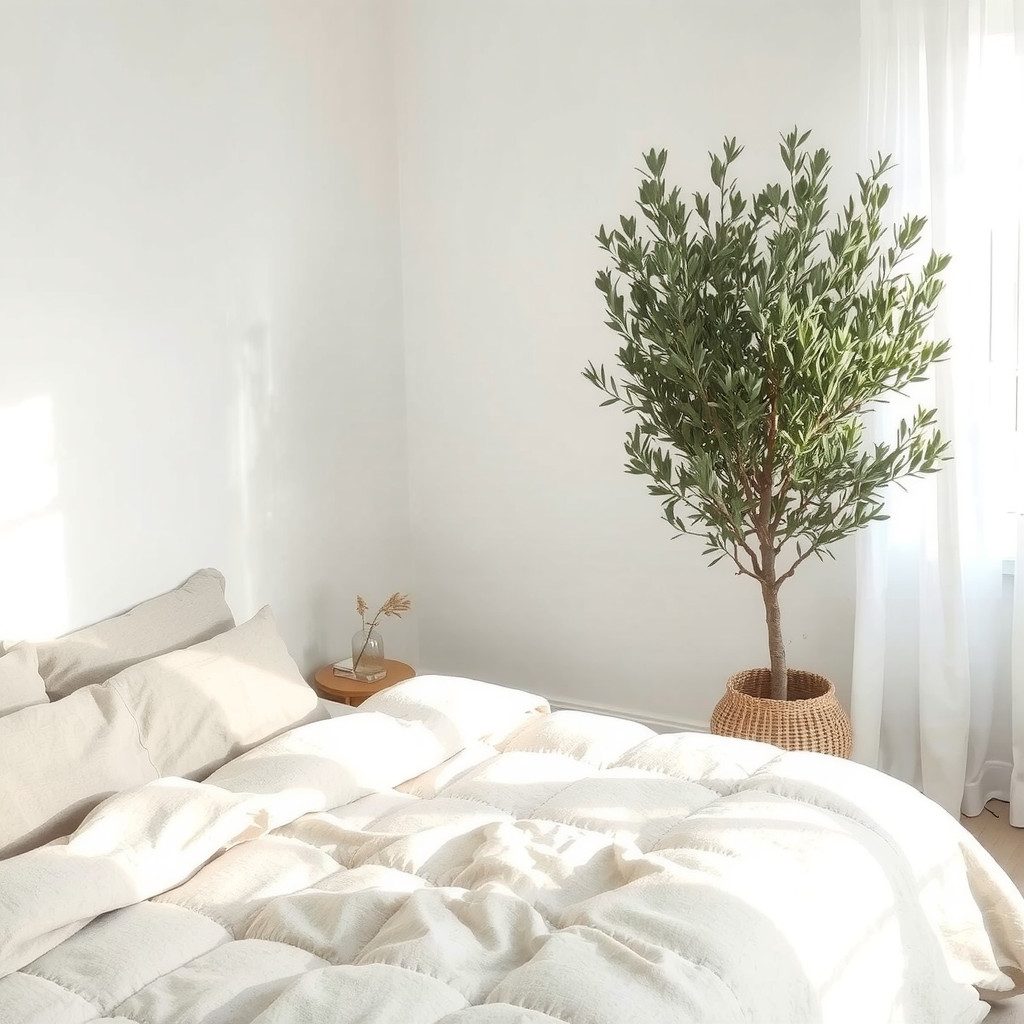
Select one or two substantial plants to make a statement. A tall Ficus Audrey or an Olive tree in a weathered ceramic pot adds verticality and organic chaos that breaks up rigid straight lines. Place them near natural light sources where their shadows can play against the walls, adding another layer of visual movement to your design.
Tips
- Stick to Earth Tones: Use varying shades of beige, cream, rust, and sage to keep the palette cohesive yet interesting.
- Embrace Imperfection: Look for handmade pottery or vintage wood items where wabi-sabi imperfections add character.
- Hide the Tech: Use concealed cabinetry or frame TVs to blend them into the decor, keeping the focus on conversation and calm.
- Scent Matters: Enhance the sensory experience with a diffuser using essential oils like cedarwood, bergamot, or vetiver.
ADVERTISEMENT